Lung Cancer: 854 Real Stories

854 stories match lung cancer. 428 of them mention chemotherapy.

A patient, who was diagnosed with Lung AdenocarcinomaLung Cancer

EGFR-mutant lung adenocarcinoma in Li-Fraumeni syndrome: relapse-free after lobectomy and chemotherapy

Patient Info: Anonymized, Female, 40s

Biomarkers: Lung tumor had EGFR exon 19 deletion. Germline TP53 variant was consistent with Li-Fraumeni syndrome; prior breast cancers were HER2 positive.

As of July 2024, she was free of relapse 2 years after left inferior lobectomy and pemetrexed/cisplatin for EGFR exon 19 deletion lung adenocarcinoma.

PubMed Central
OutcomeCancer-Free / NED
A patient, who was diagnosed with Small Cell Lung CancerLung Cancer

Small cell lung cancer presenting with SVC stenosis and pulmonary emboli: stenting and anticoagulation before oncology follow-up

Patient Info: Anonymized, Female, 50s

Biomarkers: Synaptophysin-positive; chromogranin-positive; CD56-positive; TTF1-positive; BCL-2-positive

As of June 2024, symptoms from SVC stenosis had nearly resolved after SVC stenting, venoplasty, and anticoagulation, and outpatient oncology follow-up for newly diagnosed small cell lung cancer was planned.

PubMed Central
OutcomeCare Ongoing
A patient, who was diagnosed with Stage IV Lung AdenocarcinomaLung Cancer

MET-Positive Metastatic Lung Cancer That First Appeared as a Breast Mass

Patient Info: Anonymized, Female, 70+ | Stage IV

Biomarkers: MET exon 14 skipping mutation; acquired MET and resistance mutations

Metastatic Site: breast, liver, right adrenal gland

Capmatinib produced a marked response across most disease sites at 3 months, but a right adrenal metastasis progressed by 6 months while other sites continued responding.

PubMed Central
OutcomeSetback / Progression
A patient, who was diagnosed with Stage IV Lung AdenocarcinomaLung Cancer

EGFR-mutated lung cancer treated with osimertinib during tuberculosis therapy

Patient Info: Anonymized, female, 70+ | Stage IV

Biomarkers: EGFR exon 19 deletion; acquired EGFR T790M mutation

Metastatic Site: pleura, left axillary lymph node

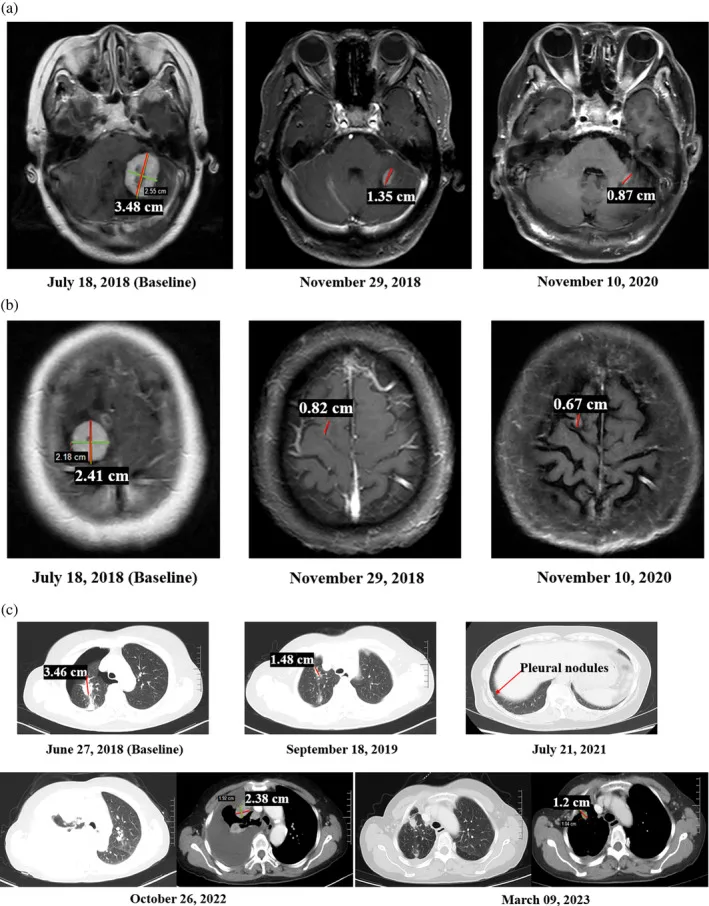
Osimertinib maintained a partial response throughout 9 months of tuberculosis treatment, with no new abdominal or brain lesions. By the end of tuberculosis treatment, she was more than 7 years from her original lung-cancer diagnosis.

PubMed Central
OutcomeResponding Well
A patient, who was diagnosed with Stage IV Small Cell Lung CancerLung Cancer

EGFR-mutated lung cancer with later small-cell transformation

Patient Info: Anonymized, male, 60s | Stage IV

Biomarkers: EGFR L858R mutation; acquired EGFR T790M mutation

Metastatic Site: pleura/chest wall, ribs, brain, meninges,…

Disease progressed through multiple lines of therapy with brain and meningeal involvement. He died in September 2021, more than 9 years after his original 2012 diagnosis.

PubMed Central
OutcomeIn Memory
A patient, who was diagnosed with Stage IV Lung AdenocarcinomaLung Cancer

More than five years with EGFR-mutated lung cancer and untreated brain metastases

Patient Info: Anonymized, female, 60s | Stage IV

Biomarkers: EGFR L858R mutation; acquired EGFR T790M mutation

Metastatic Site: brain, pleura

Zorifertinib produced partial responses in both brain and extracranial disease, with 3 years of progression-free survival and more than 4 years of intracranial control. By December 2023, she remained alive on aumolertinib with overall survival of more than 65 months, or 5+ years, from treatment start.

PubMed Central
OutcomeResponding Well
A patient, who was diagnosed with Stage IV Lung AdenocarcinomaLung Cancer

Stage IVA lung adenocarcinoma with solitary brain metastasis: pCR after brain surgery, chemoradiation, immunotherapy, and lobectomy

Patient Info: Anonymized, Male, 70+ | Stage IV

Biomarkers: PD-L1 75%; negative for driver gene mutations and translocations

Metastatic Site: brain

As of May 2024, he had no recurrence after brain metastasis resection and radiation, carboplatin/pemetrexed/atezolizumab, robot-assisted right upper lobectomy with pathologic complete response, and 13 cycles of maintenance atezolizumab.

PubMed Central
OutcomeCancer-Free / NED
A patient, who was diagnosed with Stage IV Lung AdenocarcinomaLung Cancer

Metastatic lung adenocarcinoma presenting as a pituitary mass

Patient Info: Anonymized, Female, 60s | Stage IV

Biomarkers: Lung adenocarcinoma with ERBB2 plus other mutations, PD-L1 TPS 1%

Metastatic Site: pituitary gland

As of May 2024, metastatic lung adenocarcinoma to the pituitary/sellar region had been diagnosed pathologically; systemic treatment, recurrence status, and longer follow-up were not described.

PubMed Central
OutcomeLiving With Cancer
Daniel, who was diagnosed with Stage II Non-Small Cell Lung CancerLung Cancer

Stage II EGFR Non-Small Cell Lung Cancer: Daniel's Survivor Story

Patient Info: Daniel West, Male | Stage II

Biomarkers: EGFR alteration

At the latest report, Daniel had no evidence of active cancer; small lung nodules were being monitored without progression while he continued osimertinib.

AACR
OutcomeCancer-Free / NED
A patient, who was diagnosed with Stage IV Lung AdenocarcinomaLung Cancer

Stage 4 lung adenocarcinoma: complete response on immunotherapy combination

Patient Info: Anonymized, Male | Stage IV

Biomarkers: No targetable mutation found. Tissue showed TP53/ARID1A; liquid biopsy added KEAP1, and SMARCA4. PD-L1 not evaluable.

Metastatic Site: bilateral lung nodules, left adrenal gland

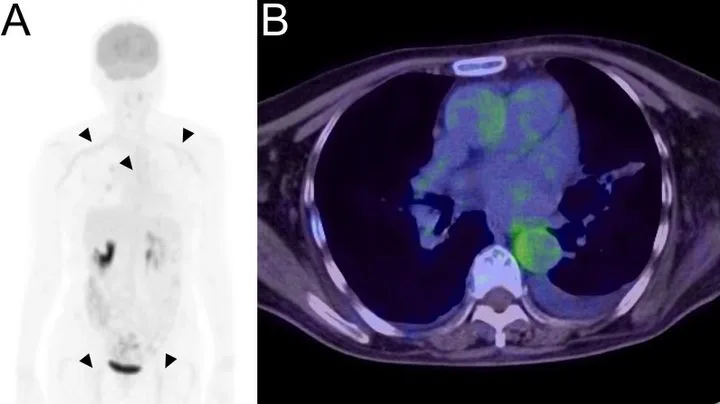
As of May 2024, metastatic lung adenocarcinoma had a complete radiologic response lasting more than 14 months on pembrolizumab maintenance, and a new PET-avid lung nodule was benign inflammation rather than cancer.

PubMed Central
OutcomeCancer-Free / NED
A patient, who was diagnosed with Stage IV Lung AdenocarcinomaLung Cancer

Stage IV lung adenocarcinoma with brain metastases and an aortic blood clot

Patient Info: Anonymized, female, 60s | Stage IV

Biomarkers: KRAS ; EIF1AZ mutation; PD-L1 30%

Metastatic Site: brain

She remained in active care after whole-brain radiation, with systemic chemo-immunotherapy planned for Stage IV lung adenocarcinoma.

PubMed Central
OutcomeCare Ongoing
A patient, who was diagnosed with Stage IV Small Cell Lung CancerLung Cancer

Stage 4 lung cancer stable on durvalumab immunotherapy

Patient Info: Anonymized, Female, 40s | Stage IV

Metastatic Site: brain, pancreas, liver

Stage IV small cell lung cancer remained stable after durvalumab, platinum chemotherapy, radiation, and 1 year of durvalumab monotherapy; severe right sternoclavicular joint arthritis resolved after infliximab, and immunotherapy was suspended for 1 year.

PubMed Central
OutcomeLiving With Cancer
A patient, who was diagnosed with Stage IV Non-Small Cell Lung CancerLung Cancer

Stage 4 lung adenocarcinoma: brain surgery followed by immunotherapy response

Patient Info: Anonymized, Male, 60s | Stage IV

Biomarkers: PD-L1-positive; EGFR wild-type/no mutation; ALK rearrangement not detected; TTF-1-positive; Napsin A-positive

Metastatic Site: brain

As of March 2024, after 31 cycles of zimberelimab, the lung lesion had shown partial response, brain metastasis had not recurred, and the patient had 24-month progression-free and intracranial recurrence-free survival with normal quality of life.

PubMed Central
OutcomeResponding Well
Niko, who was diagnosed with Stage IV Lung AdenocarcinomaLung Cancer

Stage IV ALK Lung Adenocarcinoma: Niko's Patient Story

Patient Info: Niko, Female | Stage IV

Biomarkers: ALK mutation/rearrangement

Metastatic Site: Lymph nodes; Brain

As of May 2024, Niko’s Stage IV ALK-positive lung adenocarcinoma was controlled on ALK-targeted therapy, with no brain lesion seen on follow-up MRI/PET-CT and active disease described as dormant/stable.

YouTube (ZH search)
OutcomeResponding Well