Gemcitabine for Lung Cancer: 17 Real Stories

17 stories match lung cancer and gemcitabine. 16 of them mention chemotherapy.

A patient, who was diagnosed with Stage IV Lung AdenocarcinomaLung Cancer

KRAS G12C Stage IV lung adenocarcinoma with synchronous urothelial carcinoma and durable response

Patient Info: Anonymized, Male, 70+ | Stage IV

Biomarkers: Lung adenocarcinoma: KRAS ; PD-L1 TPS 5%. Urothelial carcinoma: GATA3-positive; CK7-positive; TTF1-negative.

Metastatic Site: homolateral pulmonary metastases and N2 lymph nodes…

After enfortumab vedotin, the urothelial carcinoma reached complete radiologic response and the lung cancer remained partially responding/stable; treatment was stopped after 16 months, and PET 2 months later showed complete metabolic response.

PubMed Central
OutcomeResponding Well
A patient, who was diagnosed with Stage I Lung AdenocarcinomaLung Cancer

Second primary Stage I lung adenocarcinoma treated with segmentectomy and adjuvant pembrolizumab

Patient Info: Anonymized, Female, 70+ | Stage I

Biomarkers: PD-L1 <1%; no common targetable lung cancer changes found in EGFR, ALK, KRAS, BRAF, MET, PIK3CA, RET, ROS1, or NTRK.

At 6-month oncologic follow-up, PET-CT showed complete metabolic response with no evidence of residual disease after segmentectomy and adjuvant pembrolizumab.

PubMed Central
OutcomeCancer-Free / NED
A patient, who was diagnosed with Stage IV Non-Small Cell Lung CancerLung Cancer

Metastatic lung adenocarcinoma with HER2 V659E/amplification responding to trastuzumab deruxtecan

Patient Info: Anonymized, Female, 50s | Stage IV

Biomarkers: Initial lung testing showed no EGFR/ALK/ROS1 and PD-L1 TPS 3%. Later biopsy found HER2 V659E plus HER2 amplification.

Metastatic Site: liver, bone, brain

As of September 2024, metastatic lung adenocarcinoma had a sustained partial response to trastuzumab deruxtecan after HER2 V659E mutation and HER2 amplification were identified.

PubMed Central
OutcomeResponding Well
A patient, who was diagnosed with Stage IV Non-Small Cell Lung CancerLung Cancer

Metastatic NSCLC with ATM mutations: 28-month response to olaparib before progression

Patient Info: Anonymized, Male, 70+ | Stage IV

Biomarkers: cfDNA showed ATM and ATM mutations. Common NSCLC drivers were negative; initial tumor markers were negative.

Metastatic Site: liver, left pubic bone, bilateral pulmonary nodules,…

After 28 months of remission and improved quality of life on olaparib, June 2024 PET-CT showed progression with a new 1.2 cm hypermetabolic left lower-lobe pulmonary nodule; olaparib was still being continued at the October 2024 clinic visit.

PubMed Central
OutcomeSetback / Progression
A patient, who was diagnosed with Stage IV Lung CancerLung Cancer

Stage I Pleomorphic Lung Cancer Recurring With Bone Metastasis Within Five Months

Patient Info: Anonymized, male, 60s | Stage IV

Biomarkers: PD-L1 high; no detected driver mutation

Metastatic Site: bone

PET-CT in December 2024 showed a partial response. As of February 2025, he remained on sintilimab and bevacizumab maintenance with about 9 months of progression-free survival after recurrence treatment.

PubMed Central
OutcomeResponding Well
A patient, who was diagnosed with Stage IV Non-Small Cell Lung CancerLung Cancer

Stage 4 SMARCA4-deficient lung cancer: ongoing treatment response

Patient Info: Anonymized, Male, 50s | Stage IV

Biomarkers: SMARCA4-deficient lung cancer with BRG-1 loss, CK/CK7 positive, Ki-67 >40%. CEA

Metastatic Site: sigmoid colon, left adrenal gland

After colon metastasis surgery, continued radiotherapy, and later gemcitabine/nedaplatin/bevacizumab/camrelizumab for adrenal metastasis, the cancer showed a favorable response with no further recurrence or new metastasis reported.

PubMed Central
OutcomeResponding Well
A patient, who was diagnosed with Stage IV Lung AdenocarcinomaLung Cancer

Lung Adenocarcinoma With Immune-Related Abdominal Inflammation and Later Bone Progression

Patient Info: Anonymized, male | Stage IV

Biomarkers: PD-L1 30%; KRAS G13X mutation; EGFR/ALK/ROS1 negative

Metastatic Site: bone

After several periods of response or stability, lymph-node progression recurred and bone progression was documented in July 2024. Another treatment line was being planned.

PubMed Central
OutcomeSetback / Progression
A patient, who was diagnosed with Stage IV Non-Small Cell Lung CancerLung Cancer

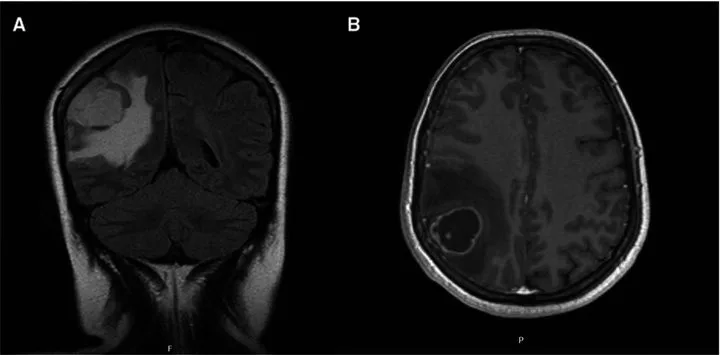
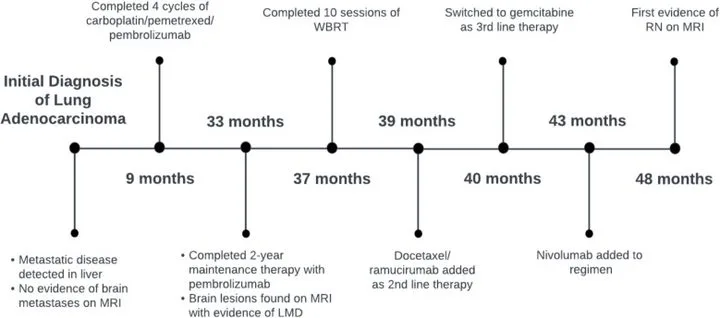
Brain radiation therapy complication (radionecrosis) potentially linked to combined chemo-immunotherapy

Patient Info: Anonymized, Female | Stage IV

Biomarkers: PD-L1 0%; tumour mutational burden 33 mutations/Mb; TP53 mutation at diagnosis; later ctDNA included KEAP1 and NOTCH3 alterations

Metastatic Site: brain; presumed leptomeningeal disease

She recovered completely from surgery for radiation necrosis, resumed cancer treatment and remained neurologically intact at 18 months. She was found deceased 9 months later; the cause of death was unknown.

PubMed Central
OutcomeIn Memory
A patient, who was diagnosed with Stage IV Lung AdenocarcinomaLung Cancer

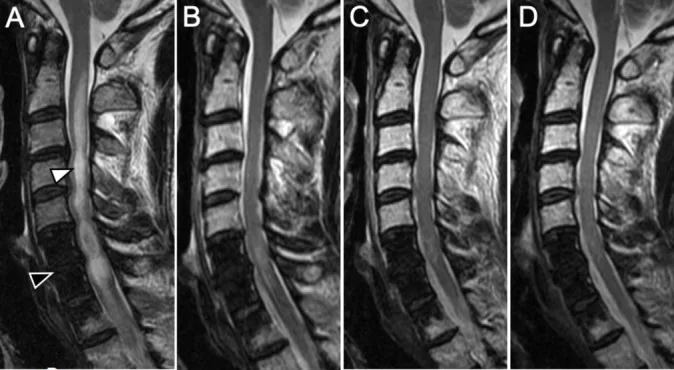
Osimertinib Improved Spinal Cord Metastases in Long-Standing Lung Cancer

Patient Info: Anonymized, Male, 50s | Stage IV

Biomarkers: Initial surgical specimen: no detected EGFR mutation and ALK-negative. Later pleural-fluid tumor: acquired EGFR T790M mutation with no other detected EGFR mutation.

Metastatic Site: cervical and mediastinal lymph nodes; bone; brain;…

Osimertinib improved neurologic function and kept the lung cancer stable for 14 months; he later died from bacterial pneumonia.

PubMed Central
OutcomeIn Memory
A patient, who was diagnosed with Stage IV Lung AdenocarcinomaLung Cancer

Delayed Adrenal Insufficiency After Nivolumab for Stage IV Lung Cancer

Patient Info: Anonymized, Male, 70+ | Stage IV

Biomarkers: EGFR unmutated; ALK unmutated; ROS1 unmutated

His weakness, fatigue, weight loss, and orthostatic hypotension resolved after hormone replacement, and he returned home independently.

PubMed Central
OutcomeNot reported
A patient, who was diagnosed with Stage III Lung AdenocarcinomaLung Cancer

Stage IIIB lung adenocarcinoma with separate papillary renal cell carcinoma: doing well more than 6 years after revised diagnosis

Patient Info: Anonymized, Female, 40s | Stage III

Biomarkers: Lung tumor: TTF-1-positive; PET-avid. Kidney lesion: PET-negative; later papillary renal cell carcinoma. No lung molecular biomarkers reported.

As of February 2014, she was doing well more than 6 years after the initial diagnosis, after the diagnosis was revised from presumed Stage IV lung cancer to Stage IIIB lung adenocarcinoma plus a separate papillary renal cell carcinoma.

PubMed Central
OutcomeSurvivorship / Completed Treatment
A patient, who was diagnosed with Stage IV Lung CancerLung Cancer

Stage IV EBV-positive lymphoepithelioma-like lung cancer with brain metastasis

Patient Info: Anonymized, Female, 50s | Stage IV

Biomarkers: EBV-positive by in-situ hybridization

Metastatic Site: brain, retroperitoneal/posterior mediastinal soft…

Remained well and disease-free 6 months after resection of the retroperitoneal/posterior mediastinal metastasis and 8 years after initial presentation.

PubMed Central
OutcomeCancer-Free / NED