Osimertinib for Lung Cancer: 75 Real Stories

75 stories match lung cancer and osimertinib. 74 of them mention targeted therapy.

Bill, who was diagnosed with Stage IV Non-Small Cell Lung CancerLung Cancer

Stage IV EGFR Non-Small Cell Lung Cancer: Bill's Patient Story

Patient Info: Bill, Male | Stage IV

Biomarkers: EGFR exon 21 mutation

Metastatic Site: Spine; brain; hips/bone

Stage IV EGFR exon 21 lung cancer improved in brain and spine on osimertinib, but later lung-mass growth led to clinical-trial treatment; Bill remained active in advocacy and felt positive about progress.

Lung Cancer Research Foundation
OutcomeSetback / Progression
Joanne, who was diagnosed with Non-Small Cell Lung CancerLung Cancer

EGFR Non-Small Cell Lung Cancer: Joanne's Patient Story

Patient Info: Joanne, Female, 60s

Biomarkers: EGFR exon deletion 19 mutation

Ongoing care after right upper-lobe resection, 4 rounds of chemotherapy, and daily Tagrisso for EGFR exon 19 deletion lung adenocarcinoma; formal stage is not stated in the story.

Lung Cancer Research Foundation
OutcomeCare Ongoing
Julie, who was diagnosed with Stage I Lung AdenocarcinomaLung Cancer

Stage I EGFR Lung Adenocarcinoma: Julie's Patient Story

Patient Info: Julie, Female, 40s | Stage I

Biomarkers: EGFR exon 19 deletion

Ongoing care after Stage IB EGFR exon 19 lung adenocarcinoma treated with lower left lobectomy and Tagrisso/osimertinib, with CT and MRI surveillance; no recurrence/NED statement is explicitly provided.

Lung Cancer Research Foundation
OutcomeCare Ongoing
Rhonda, who was diagnosed with Stage IV Non-Small Cell Lung CancerLung Cancer

Stage IV EGFR Non-Small Cell Lung Cancer: Rhonda's Patient Story

Patient Info: Rhonda Martin, Female | Stage IV

Biomarkers: EGFR-positive mutation

Metastatic Site: Brain; spine; hip bone; lymph nodes; cerebrospinal…

Rhonda Martin passed away on January 9, 2023 from complications of Stage IV EGFR-positive lung cancer, nearly 5 years after diagnosis in March 2018.

Lung Cancer Research Foundation
OutcomeIn Memory
A patient, who was diagnosed with Stage IV Lung Squamous Cell CarcinomaLung Cancer

EGFR-mutated Stage IV squamous lung cancer treated with osimertinib

Patient Info: Anonymized, Male, 70+ | Stage IV

Biomarkers: EGFR L858R mutation; PD-L1 TPS 5%

Metastatic Site: pleura, bone

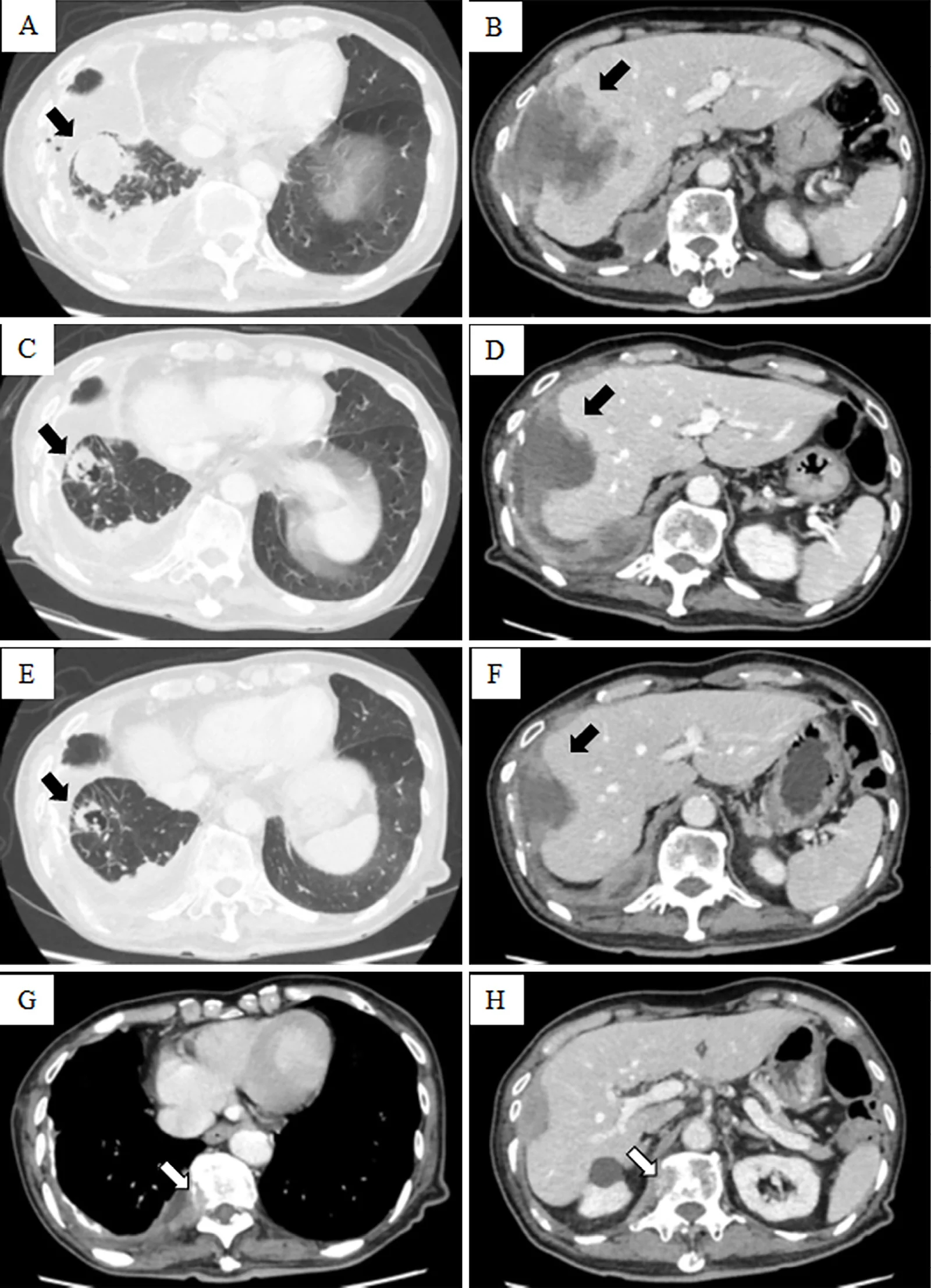
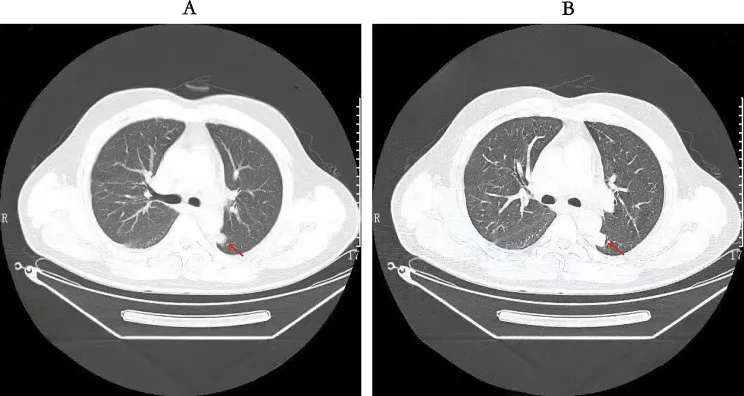
Osimertinib produced an early partial response, but new vertebral bone metastases appeared after 12 weeks. He declined cytotoxic chemotherapy and continued osimertinib.

PubMed Central
OutcomeSetback / Progression
Rosee, who was diagnosed with Stage IV Non-Small Cell Lung CancerLung Cancer

Stage IV EGFR Non-Small Cell Lung Cancer: Rosee's Patient Story

Patient Info: Rosee, Female | Stage IV

Biomarkers: EGFR mutation; specific variant not reported

Metastatic Site: brain

Within weeks of starting osimertinib, Rosee’s tumors shrank significantly, migraines and vertigo resolved, and hearing began to return; she remained on treatment and active in advocacy.

Lung Cancer Research Foundation
OutcomeResponding Well
A patient, who was diagnosed with Stage IV Non-Small Cell Lung CancerLung Cancer

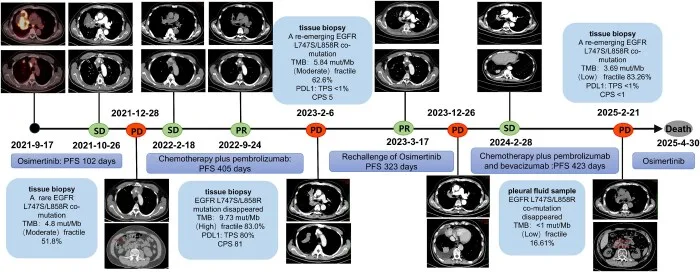
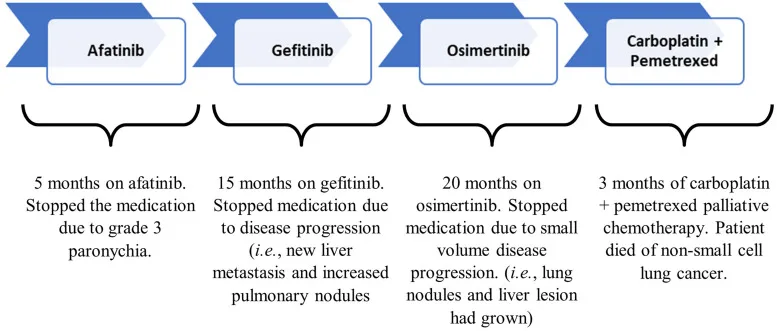
Stage IVA EGFR-mutant lung adenocarcinoma: clonal evolution, chemoimmunotherapy response, osimertinib rechallenge, and death after progression

Patient Info: Anonymized, Male, 60s | Stage IV

Biomarkers: Markers changed over time: started with EGFR L747S/L858R; later MET-amplified, PD-L1 TPS 80%, high TMB clone; later EGFR reappeared.

Metastatic Site: pleura, peritoneal nodule, retroperitoneal lymph nodes

The patient died on 30 April 2025 after progression through multiple lines and infection related to treatment-associated myelosuppression.

PubMed Central
OutcomeIn Memory
A patient, who was diagnosed with Stage IV Lung AdenocarcinomaLung Cancer

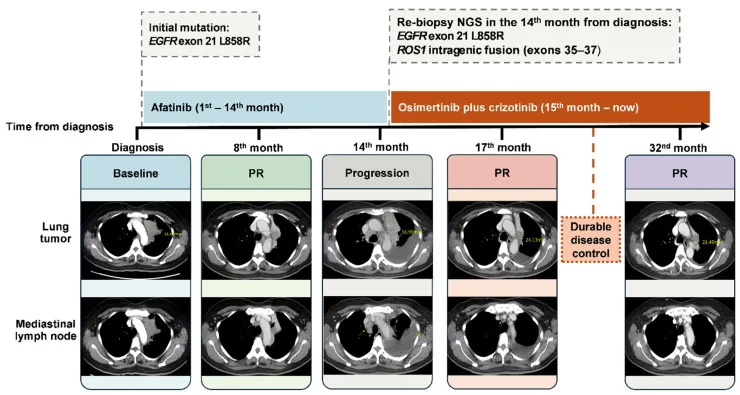
EGFR-mutated lung cancer responds after acquired ROS1 resistance

Patient Info: Anonymized, Female, 50s | Stage IV

Biomarkers: EGFR L858R mutation; acquired ROS1 rearrangement

Metastatic Site: pleura

She remained on osimertinib plus crizotinib with a sustained clinical and radiologic response for more than 18 months.

PubMed Central
OutcomeResponding Well
A patient, who was diagnosed with Stage IV Lung AdenocarcinomaLung Cancer

Stage IV EGFR-mutated lung cancer responds after targeted therapy intolerance

Patient Info: Anonymized, Female, 50s | Stage IV

Biomarkers: EGFR L858R mutation; PIK3CA E545K mutation; acquired ROS1 rearrangement

Metastatic Site: pleura|pericardium|bone|lungs

Chemotherapy produced a partial response that remained sustained for 7 months at the latest follow-up.

PubMed Central
OutcomeResponding Well
A patient, who was diagnosed with Stage IV Lung AdenocarcinomaLung Cancer

EGFR-mutated Stage IV lung cancer with later brain progression

Patient Info: Anonymized, Female, 60s | Stage IV

Biomarkers: EGFR exon 19 deletion; acquired EGFR C797S mutation; acquired ROS1 rearrangement

Metastatic Site: brain|bone

She died about 20 months after diagnosis after brain progression and a severe postoperative stroke.

PubMed Central
OutcomeIn Memory
A patient, who was diagnosed with Stage IV Lung AdenocarcinomaLung Cancer

Stage IVA EGFR-mutated lung adenocarcinoma: stable disease on first-line osimertinib

Patient Info: Anonymized, Female, 70+ | Stage IV

Biomarkers: EGFR exon 19 deletion; baseline EGFR exon 20 T790M mutation; ALK IHC negative; PD-L1 TPS 30%; TTF-1-positive

Metastatic Site: pleura; malignant pleural-pericardial adhesions

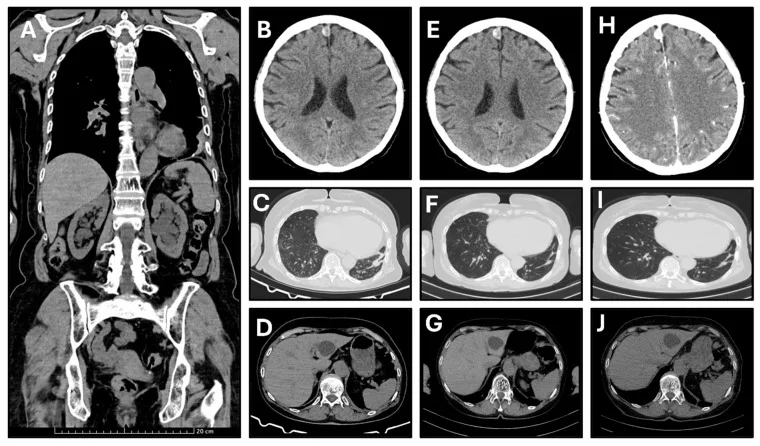
As of April 2026, she had stable disease for more than 9 months on first-line osimertinib, with no progressive disease, no recurrent pleural effusion, ECOG improvement from 2 to 0, and no treatment-related adverse events.

PubMed Central
OutcomeResponding Well
Kelsey, who was diagnosed with Stage IV Lung CancerLung Cancer

Stage IV EGFR Lung Cancer: Kelsey's Patient Story

Patient Info: Kelsey, Female, Under 40 | Stage IV

Biomarkers: EGFR mutation; later ALK mutation after progression

Metastatic Site: Bone — pelvis and spine/L5

Living with Stage IV lung cancer on a clinical trial after progression, with current treatment described as working and quality of life improved.

The Patient Story
OutcomeResponding Well
Daniel, who was diagnosed with Stage II Non-Small Cell Lung CancerLung Cancer

Stage II EGFR Non-Small Cell Lung Cancer: Daniel's Patient Story

Patient Info: Daniel West, Male, 50s | Stage II

Biomarkers: EGFR positive

As of April 2026, Daniel had shown no evidence of active disease for more than 2 years, while remaining on daily osimertinib through June 2026 and receiving checkups and scans every 3 months for stable monitored lung nodules.

MD Anderson
OutcomeCare Ongoing
A patient, who was diagnosed with Stage IV Lung AdenocarcinomaLung Cancer

EGFR-Mutant Lung Adenocarcinoma With Bone and Leptomeningeal Metastases

Patient Info: Anonymized, male, 40s | Stage IV

Biomarkers: EGFR exon 19 deletion; acquired EGFR T790M mutation

Metastatic Site: bone, leptomeninges

In May 2025, leptomeningeal disease remained present and he continued combination chemotherapy with bevacizumab and high-dose furmonertinib, leaving hospital in stable condition after cycle 8.

PubMed Central
OutcomeCare Ongoing
Michelle, who was diagnosed with Non-Small Cell Lung CancerLung Cancer

EGFR Non-Small Cell Lung Cancer: Michelle's Patient Story

Patient Info: Michelle Vacca, Female, 40s

Biomarkers: EGFR mutation at recurrence; later rare mutation not named

As of November 2025, Michelle still actively had recurrent NSCLC, but her disease had remained stable on targeted therapy and an investigational kinase inhibitor clinical trial, allowing good quality of life.

City of Hope
OutcomeLiving With Cancer
A patient, who was diagnosed with Stage IV Non-Small Cell Lung CancerLung Cancer

Stage IVA EGFR-mutant lung adenocarcinoma: response to triple targeted therapy and surgery

Patient Info: Anonymized, Female, 50s | Stage IV

Biomarkers: Initial EGFR exon 19 deletion; acquired BRAF V600E mutation in progressive lesion while EGFR exon 19 deletion persisted

Metastatic Site: pleura, pulmonary metastases; mediastinal and left…

As of May 2025, she continued osimertinib, dabrafenib, and trametinib after segmentectomy/lymphadenectomy, with 1% viable residual tumor in resected lung lesions, complete nodal pathologic response, and no disease progression.

PubMed Central
OutcomeResponding Well
A patient, who was diagnosed with Stage IV Non-Small Cell Lung CancerLung Cancer

Stage IV lung adenocarcinoma with gelatinous malignant pleural effusion managed with PleurX catheter and hyaluronidase

Patient Info: Anonymized, Female, 40s | Stage IV

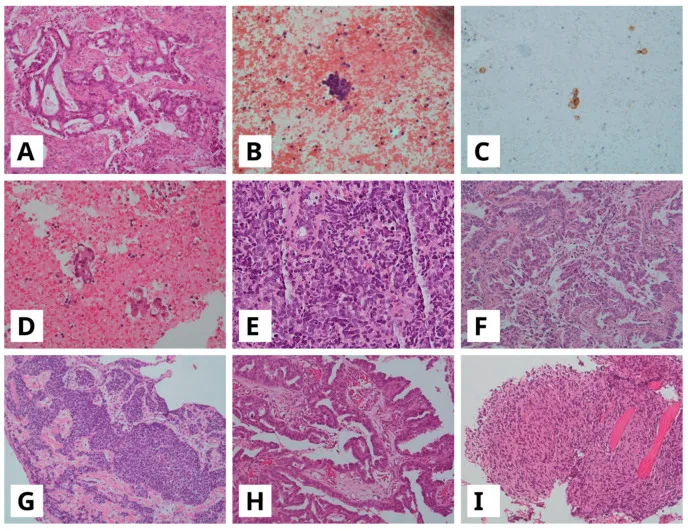
Biomarkers: TTF-1-positive; Napsin A-positive; non-small-cell carcinoma consistent with adenocarcinoma; next-generation sequencing pending

Metastatic Site: pleura / malignant pleural effusion

Her Stage IV lung adenocarcinoma symptoms improved through pleural drainage with PleurX catheter and intrapleural hyaluronidase while oncology planned definitive chemoradiation and possible biomarker-guided therapy.

PubMed Central
OutcomeCare Ongoing