Bevacizumab for Lung Cancer: 37 Real Stories

37 stories match lung cancer and bevacizumab. 36 of them mention chemotherapy.

A patient, who was diagnosed with Stage IV Non-Small Cell Lung CancerLung Cancer

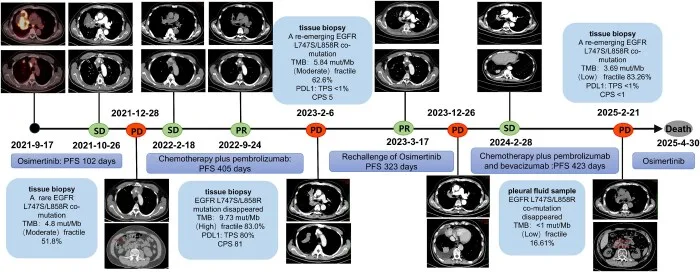
Stage IVA EGFR-mutant lung adenocarcinoma: clonal evolution, chemoimmunotherapy response, osimertinib rechallenge, and death after progression

Patient Info: Anonymized, Male, 60s | Stage IV

Biomarkers: Markers changed over time: started with EGFR L747S/L858R; later MET-amplified, PD-L1 TPS 80%, high TMB clone; later EGFR reappeared.

Metastatic Site: pleura, peritoneal nodule, retroperitoneal lymph nodes

The patient died on 30 April 2025 after progression through multiple lines and infection related to treatment-associated myelosuppression.

PubMed Central
OutcomeIn Memory
A patient, who was diagnosed with Stage IV Non-Small Cell Lung CancerLung Cancer

Stage IV EGFR-mutated lung adenocarcinoma: high-dose furmonertinib after CNS progression

Patient Info: Anonymized, Female, 50s | Stage IV

Biomarkers: Initial EGFR L858R mutation. Later blood testing showed EGFR p.S553Y variation; CEA rose and fell with treatment.

Metastatic Site: brain/meninges; bilateral pleura/lungs; mediastinal…

As of June-September 2024, the left lung lesion was stable to slightly smaller on escalated furmonertinib, but brain/CNS lesions had progressed and required dose escalation to 240 mg/day; later imaging was declined.

PubMed Central
OutcomeSetback / Progression
A patient, who was diagnosed with Stage IV Lung AdenocarcinomaLung Cancer

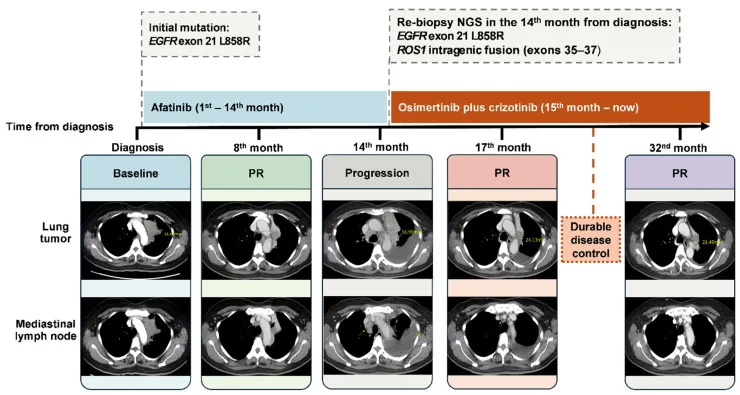
Stage IV EGFR-mutated lung cancer responds after targeted therapy intolerance

Patient Info: Anonymized, Female, 50s | Stage IV

Biomarkers: EGFR L858R mutation; PIK3CA E545K mutation; acquired ROS1 rearrangement

Metastatic Site: pleura|pericardium|bone|lungs

Chemotherapy produced a partial response that remained sustained for 7 months at the latest follow-up.

PubMed Central
OutcomeResponding Well
A patient, who was diagnosed with Stage I Lung AdenocarcinomaLung Cancer

Synchronous Stage IA lung adenocarcinoma and grade 4 glioblastoma: lung nodule regressed during brain-cancer therapy

Patient Info: Anonymized, Female, 70+ | Stage I

Biomarkers: Lung molecular biomarkers not reported; glioblastoma biomarker details not summarized in library fields

The Stage IA lung adenocarcinoma was monitored without lung-directed therapy and decreased from 18 mm to 9 mm while CNS-directed glioblastoma treatment continued; she remained alive with no lung cancer progression.

PubMed Central
OutcomeCare Ongoing
A patient, who was diagnosed with Lung CancerLung Cancer

Pulmonary epithelioid hemangioendothelioma with complete response after neoadjuvant therapy

Patient Info: Anonymized, Male, 60s

Biomarkers: WWTR1-CAMTA1 fusion; vascular markers supported epithelioid hemangioendothelioma; lung cancer markers were absent.

The patient achieved radiographic disappearance of the lung tumor after neoadjuvant paclitaxel/carboplatin plus bevacizumab. Surgery then showed no residual tumor and lymph nodes were negative; CT follow-up through April 2024 showed no recurrence.

PubMed Central
OutcomeCancer-Free / NED
A patient, who was diagnosed with Stage IV Lung AdenocarcinomaLung Cancer

EGFR-Mutant Lung Adenocarcinoma With Bone and Leptomeningeal Metastases

Patient Info: Anonymized, male, 40s | Stage IV

Biomarkers: EGFR exon 19 deletion; acquired EGFR T790M mutation

Metastatic Site: bone, leptomeninges

In May 2025, leptomeningeal disease remained present and he continued combination chemotherapy with bevacizumab and high-dose furmonertinib, leaving hospital in stable condition after cycle 8.

PubMed Central
OutcomeCare Ongoing
A patient, who was diagnosed with Stage IV Non-Small Cell Lung CancerLung Cancer

MET exon 14 skipping lung adenocarcinoma: sequential MET-TKI toxicity and ongoing chemotherapy

Patient Info: Anonymized, Male, 70+ | Stage IV

Biomarkers: MET exon 14 skipping mutation; EGFR negative; ALK negative; ROS1 negative; PD-L1 tumor proportion score 10%

Metastatic Site: pleura

The cancer recurred with pleural dissemination after surgery and adjuvant UFT. Sequential MET inhibitors and systemic therapies provided periods of disease control but were limited by ILD and non-ILD toxicities; at the report, he remained on carboplatin, pemetrexed, and bevacizumab.

PubMed Central
OutcomeLiving With Cancer
A patient, who was diagnosed with Stage IV Lung AdenocarcinomaLung Cancer

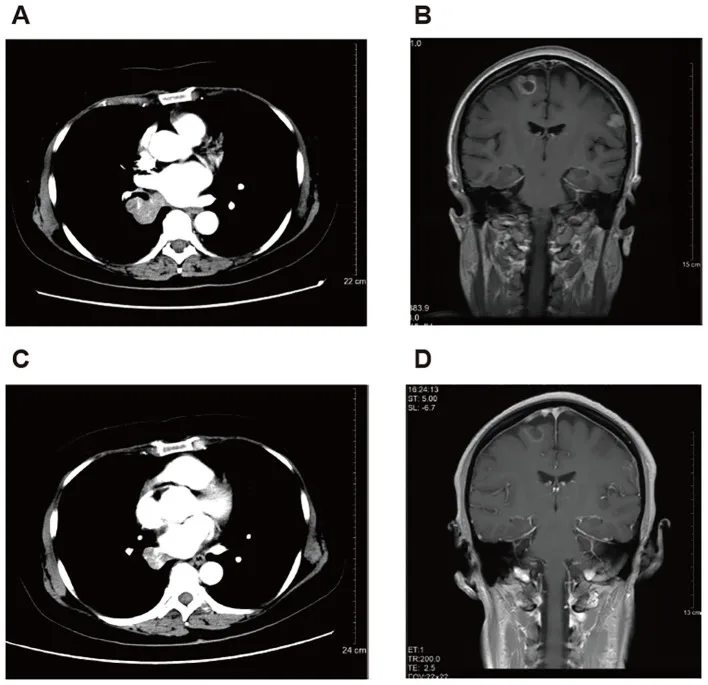
Stage IV NSCLC with brain and leptomeningeal metastases responding to radiotherapy, camrelizumab, GM-CSF, and chemotherapy

Patient Info: Anonymized, Male, 50s | Stage IV

Biomarkers: Lung cancer markers supported adenocarcinoma. PD-L1 negative; no common lung driver found; TMB high; MSI not detected.

Metastatic Site: brain, leptomeningeal disease, left supraclavicular…

As of March 2025, leptomeningeal metastases had complete response, brain lesions had further regression, the lung lesion had decreased from 76 mm to 21 mm, and overall disease remained in partial response with 69 months of progression-free survival since radiotherapy.

PubMed Central
OutcomeResponding Well
A patient, who was diagnosed with Stage IV Non-Small Cell Lung CancerLung Cancer

Stage IVB SMARCA4-deficient NSCLC with brain metastasis: stable disease after surgery, radiation, chemotherapy, immunotherapy, and bevacizumab

Patient Info: Anonymized, Male, 70+ | Stage IV

Biomarkers: SMARCA4/BRG-1 loss with TP53 and other mutations; TMB high; PD-L1 <1%; MSI-H not detected.

Metastatic Site: brain

As of October 2025, the patient had stable disease, no brain recurrence, a controlled left lower-lobe lung lesion, and manageable treatment toxicity while continuing bevacizumab plus pemetrexed maintenance.

PubMed Central
OutcomeLiving With Cancer
A patient, who was diagnosed with Stage IV Lung AdenocarcinomaLung Cancer

Stage IVA lung adenocarcinoma: fatal hemoptysis from pulmonary artery pseudoaneurysm after chemoradiotherapy

Patient Info: Anonymized, Female, 40s | Stage IV

Biomarkers: CEA 62 ng/mL; CA19-9 and neuron-specific enolase within normal limits; no molecular biomarkers reported

Metastatic Site: bone (11th thoracic vertebra)

The patient died from airway obstruction after massive hemoptysis caused by rupture of a pulmonary artery pseudoaneurysm that developed at the tumor-invaded pulmonary artery site after chemoradiotherapy.

PubMed Central
OutcomeIn Memory
A patient, who was diagnosed with Stage IV Non-Small Cell Lung CancerLung Cancer

Metastatic lung adenocarcinoma with HER2 V659E/amplification responding to trastuzumab deruxtecan

Patient Info: Anonymized, Female, 50s | Stage IV

Biomarkers: Initial lung testing showed no EGFR/ALK/ROS1 and PD-L1 TPS 3%. Later biopsy found HER2 V659E plus HER2 amplification.

Metastatic Site: liver, bone, brain

As of September 2024, metastatic lung adenocarcinoma had a sustained partial response to trastuzumab deruxtecan after HER2 V659E mutation and HER2 amplification were identified.

PubMed Central
OutcomeResponding Well
A patient, who was diagnosed with Stage IV Lung AdenocarcinomaLung Cancer

Recurrent lung adenocarcinoma with bevacizumab-associated glomerular microangiopathy

Patient Info: Anonymized, Male, 50s | Stage IV

Biomarkers: No tumor molecular biomarkers reported. Kidney biopsy and complement/immune deposits supported bevacizumab-related kidney microangiopathy.

Metastatic Site: pleura

He was living with recurrent metastatic lung adenocarcinoma after pleural spread and had persistent renal dysfunction and severe proteinuria from bevacizumab-associated glomerular microangiopathy despite stopping bevacizumab.

PubMed Central
OutcomeLiving With Cancer
A patient, who was diagnosed with Stage IV Lung CancerLung Cancer

Stage I Pleomorphic Lung Cancer Recurring With Bone Metastasis Within Five Months

Patient Info: Anonymized, male, 60s | Stage IV

Biomarkers: PD-L1 high; no detected driver mutation

Metastatic Site: bone

PET-CT in December 2024 showed a partial response. As of February 2025, he remained on sintilimab and bevacizumab maintenance with about 9 months of progression-free survival after recurrence treatment.

PubMed Central
OutcomeResponding Well
A patient, who was diagnosed with Stage IV Non-Small Cell Lung CancerLung Cancer

Stage 4 SMARCA4-deficient lung cancer: ongoing treatment response

Patient Info: Anonymized, Male, 50s | Stage IV

Biomarkers: SMARCA4-deficient lung cancer with BRG-1 loss, CK/CK7 positive, Ki-67 >40%. CEA

Metastatic Site: sigmoid colon, left adrenal gland

After colon metastasis surgery, continued radiotherapy, and later gemcitabine/nedaplatin/bevacizumab/camrelizumab for adrenal metastasis, the cancer showed a favorable response with no further recurrence or new metastasis reported.

PubMed Central
OutcomeResponding Well
Luna, who was diagnosed with Stage IV Lung AdenocarcinomaLung Cancer

Stage IV ROS1 Lung Adenocarcinoma: Luna's Patient Story

Patient Info: Luna, Female, 50s | Stage IV

Biomarkers: ROS1 rearrangement; EGFR negative; ALK negative

Metastatic Site: liver; bones

Luna had Stage IV ROS1-positive lung adenocarcinoma with liver and bone metastases. After progression on initial chemotherapy, crizotinib led to tumor shrinkage and controlled her cancer for almost 12 years as of March 2025.

The Patient Story
OutcomeResponding Well
A patient, who was diagnosed with Stage IV Lung AdenocarcinomaLung Cancer

Stage 4 lung adenocarcinoma with RET fusion responding to pralsetinib

Patient Info: Anonymized, Male, 60s | Stage IV

Biomarkers: RET fusion

Metastatic Site: pleura

As of March 2025, he had recovered from grade 3 Pneumocystis jirovecii pneumonia, restarted pralsetinib, and had no progressive disease or recurrence of adverse events over 13 months.

PubMed Central
OutcomeResponding Well
A patient, who was diagnosed with Stage IV Lung AdenocarcinomaLung Cancer

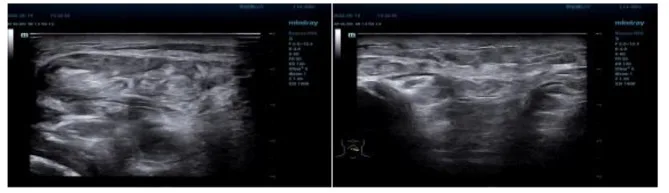
Lung Adenocarcinoma With Rare Skin Metastasis to the Neck

Patient Info: Anonymized, male, 50s | Stage IV

Metastatic Site: neck skin

The lung cancer later spread to the neck skin, and he died during the following year after stopping further treatment.

PubMed Central
OutcomeIn Memory
A patient, who was diagnosed with Stage IV Non-Small Cell Lung CancerLung Cancer

Advanced Non-Small Cell Lung Cancer With ERBB2 and TP53 Mutations

Patient Info: Anonymized, male, 50s | Stage IV

Biomarkers: ERBB2 exon 20 Y772-A775dup mutation; TP53 mutation; PD-L1 TPS 0%

Metastatic Site: liver, bone, both lungs

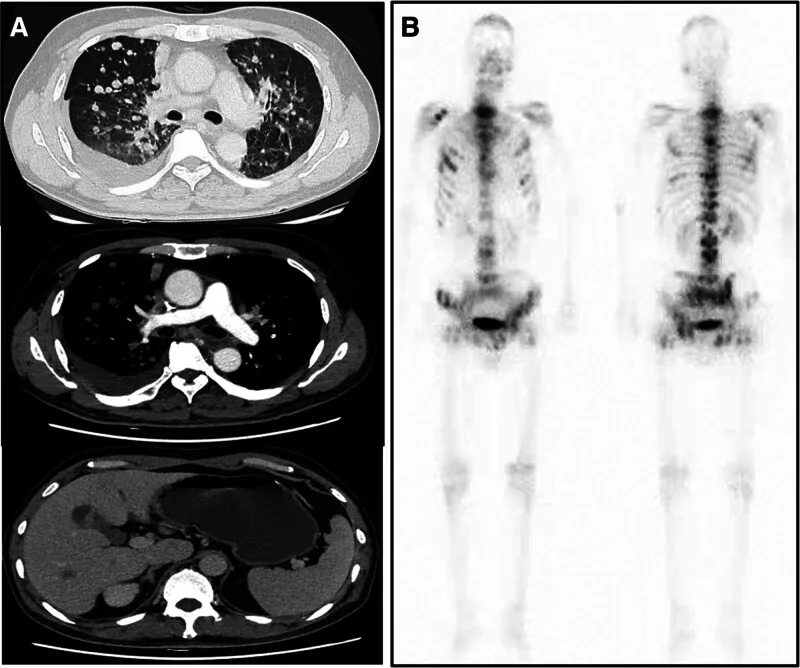
Imaging after treatment showed stable disease, and he remained in good condition while continuing maintenance pemetrexed and bevacizumab.

PubMed Central
OutcomeStable Disease
A patient, who was diagnosed with Stage IV Lung AdenocarcinomaLung Cancer

Metastatic Lung Adenocarcinoma With a Serious Immune-Therapy Pituitary Complication

Patient Info: Anonymized, male, 60s | Stage IV

Biomarkers: No detected EGFR, ALK, ROS1, RET, MET or HER2 alterations

Metastatic Site: brain, meninges, skull, bone, pituitary

The cancer had progressed to extensive brain, skull and bone involvement after several treatments. Steroid treatment improved the severe thirst, high urine output and other symptoms from immune-related hypophysitis.

PubMed Central
OutcomeSetback / Progression
A patient, who was diagnosed with Stage IV Small Cell Lung CancerLung Cancer

Small Cell Lung Cancer With Paraneoplastic Cushing Syndrome Treated With Immunochemotherapy

Patient Info: Anonymized, male, 60s | Stage IV

Biomarkers: PD-L1 negative; low tumor mutation burden; microsatellite stable

Metastatic Site: liver, abdominal wall, left ilium

He lived 20 months after diagnosis. After repeated treatment responses and later progression, he died in September 2023 from respiratory and cardiac failure during a severe infection following treatment-related myelosuppression.

PubMed Central
OutcomeIn Memory
A patient, who was diagnosed with Stage II Lung AdenocarcinomaLung Cancer

Recurrent Lung Adenocarcinoma Complicated by a Tracheopericardial Fistula

Patient Info: Anonymized, male, 70+ | Stage II

Biomarkers: No gene mutations identified on postoperative testing

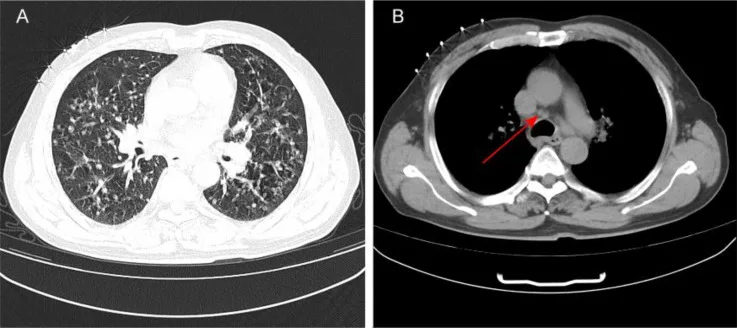
He died during the June 2024 admission, about 7½ years after his November 2016 lung-cancer diagnosis, after massive hemoptysis occurred in the setting of a tracheopericardial fistula and recurrent cancer.

PubMed Central
OutcomeIn Memory
A patient, who was diagnosed with Stage IV Lung CancerLung Cancer

Metastatic Lung Cancer With Morphine-Induced Fever During Palliative Radiation

Patient Info: Anonymized, female, 50s | Stage IV

Metastatic Site: brain, bone

She remained on dacomitinib while receiving radiation for painful metastatic disease in 2022. After morphine was identified as the cause of recurrent fever and stopped, her symptoms resolved and she was discharged in satisfactory condition.

PubMed Central
OutcomeCare Ongoing