Lung Cancer: 854 Real Stories

854 stories match lung cancer. 428 of them mention chemotherapy.

A patient, who was diagnosed with Stage IV Non-Small Cell Lung CancerLung Cancer

Stage IVA EGFR-mutant lung adenocarcinoma: response to triple targeted therapy and surgery

Patient Info: Anonymized, Female, 50s | Stage IV

Biomarkers: Initial EGFR exon 19 deletion; acquired BRAF V600E mutation in progressive lesion while EGFR exon 19 deletion persisted

Metastatic Site: pleura, pulmonary metastases; mediastinal and left…

As of May 2025, she continued osimertinib, dabrafenib, and trametinib after segmentectomy/lymphadenectomy, with 1% viable residual tumor in resected lung lesions, complete nodal pathologic response, and no disease progression.

PubMed Central
OutcomeResponding Well
A patient, who was diagnosed with Stage IV Lung AdenocarcinomaLung Cancer

Stage IVB ROS1-rearranged lung adenocarcinoma with bilateral ocular metastases: durable response to entrectinib

Patient Info: Anonymized, Male, 40s | Stage IV

Biomarkers: EZR-ROS1 fusion with mutation frequency 42.99%; TTF-1-positive in lung and left-eye tumor tissue

Metastatic Site: bilateral uveal/ocular metastases; bronchial lymph…

After about 3 years on entrectinib, systemic disease remained well controlled with partial remission, both eyes had best corrected visual acuity of 20/20, and no treatment-related discomfort or adverse events were reported.

PubMed Central
OutcomeResponding Well
A patient, who was diagnosed with Stage IV Non-Small Cell Lung CancerLung Cancer

EGFR L858R lung adenocarcinoma presenting as rectal and peritoneal metastases

Patient Info: Anonymized, Male, 70+ | Stage IV

Biomarkers: Rectal/peritoneal tumors supported lung origin. Key result: EGFR L858R with TP53 mutations; no other actionable lung alteration reported.

Metastatic Site: rectum; peritoneum; omentum; mesentery; colonic wall

After transverse colostomy and confirmation of EGFR L858R-mutant lung adenocarcinoma metastasis, aumolertinib led to clinical stabilization; palliative radiotherapy was later given to the rectal lesion, but long-term follow-up was not yet available.

PubMed Central
OutcomeResponding Well
A patient, who was diagnosed with Stage III Lung AdenocarcinomaLung Cancer

Stage IIIA lung adenocarcinoma: complete metabolic remission after chemoradiotherapy, complicated by radiation esophagitis

Patient Info: Anonymized, Male, 70+ | Stage III

Biomarkers: No molecular biomarkers reported

The primary lung lesion achieved complete metabolic remission after concurrent chemoradiotherapy, and radiation esophagitis/stricture improved with conservative management until swallowing returned to a normal diet by 16 months.

PubMed Central
OutcomeCancer-Free / NED
A patient, who was diagnosed with Stage IV Non-Small Cell Lung CancerLung Cancer

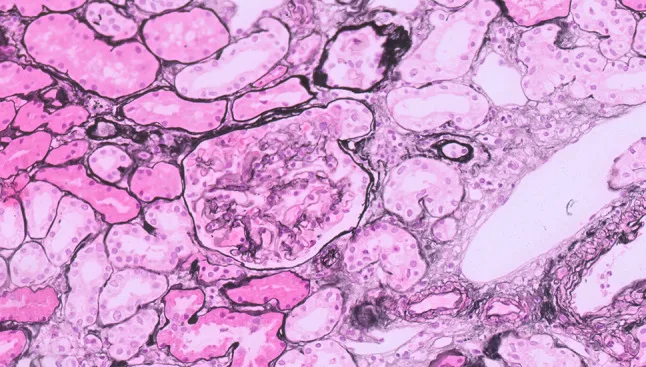
Stage IV lung adenocarcinoma with paraneoplastic nephrotic syndrome during pembrolizumab therapy

Patient Info: Anonymized, Male, 60s | Stage IV

Biomarkers: PD-L1 tumor proportion score >50% by Roche SP263 assay; KRAS exon 3 mutation; NGS/FISH did not identify targets for first-line targeted therapy

Metastatic Site: brain, bone

Pembrolizumab produced partial response and improved nephrotic-syndrome parameters, but bone metastases progressed in September 2022 and the right upper-lobe target lesion progressed 2 months later, leading to carboplatin plus pemetrexed.

PubMed Central
OutcomeSetback / Progression
A patient, who was diagnosed with Stage IV Lung Squamous Cell CarcinomaLung Cancer

Stage IVA right lung squamous cell carcinoma: partial response complicated by camrelizumab-related pneumonitis and pulmonary bullae

Patient Info: Anonymized, Male, 70+ | Stage IV

Biomarkers: Squamous lung cancer marker profile: P40/CK5/6 positive, TTF-1/Napsin A negative. CEA/CYFRA tumor markers were elevated. PD-L1 not reported.

Metastatic Site: suspected pleural involvement / right pleural effusion

The cancer had a partial response to albumin-bound paclitaxel, carboplatin, and camrelizumab; camrelizumab was stopped after suspected immune-related pneumonitis, pulmonary embolism, and reversible pulmonary bullae, which improved after methylprednisolone was resumed.

PubMed Central
OutcomeResponding Well
Emily, who was diagnosed with Stage IV Lung CancerLung Cancer

Stage IV EGFR Lung Cancer: Emily's Patient Story

Patient Info: Emily, Female, 40s | Stage IV

Biomarkers: EGFR mutation

Metastatic Site: Right lung; right 8th rib; sacrum; pancreas; brain

Emily had Stage IV EGFR-mutated lung cancer treated with daily targeted therapy, 4 rounds of chemotherapy, and later radiation. As of September 2025, she felt well and described being almost/basically in remission, but her cancer remained treatable rather than curable and she continued daily targeted therapy.

The Patient Story

OutcomeResponding Well
Lauren, who was diagnosed with Stage IV Non-Small Cell Lung CancerLung Cancer

Stage IV HER2-Positive Non-Small Cell Lung Cancer: Lauren's Patient Story

Patient Info: Lauren, Female, Under 40 | Stage IV

Biomarkers: HER2 mutation

Metastatic Site: Bones/ribs/shoulder; liver

As of September 2025, after about 4 months of targeted therapy, Lauren reported better quality of life, resolved bone pain, improved liver pain, improved liver enzymes, and manageable infusion-week side effects.

The Patient Story
OutcomeResponding Well
Shauna, who was diagnosed with Stage IV Lung CancerLung Cancer

Stage IV ALK Lung Cancer: Shauna's Patient Story

Patient Info: Shauna, Female, 50s | Stage IV

Biomarkers: ALK-positive

Metastatic Site: Both lungs

Shauna had Stage IV ALK-positive lung cancer involving both lungs. She was stable for about 5 years on her first TKI, had radiation for limited lung growth, and later switched to a newer TKI with stable scans. She explicitly said she had never had no evidence of disease, so the record should not be labeled NED.

The Patient Story

OutcomeLiving With Cancer
A patient, who was diagnosed with Stage III Lung AdenocarcinomaLung Cancer

Stage IIIA KRAS p.G12V lung adenocarcinoma: pathologic complete response after chemoimmunotherapy and surgery

Patient Info: Anonymized, Female, 70+ | Stage III

Biomarkers: KRAS p.G12V mutation; PD-L1 0% tumor-cell staining; <1% tumor-associated inflammatory-cell staining; no EGFR, ALK, or ROS1 driver mutation reported

Pathology after lobectomy showed a pathologic complete response, and surveillance imaging 12 months later showed no evidence of disease recurrence.

PubMed Central
OutcomeCancer-Free / NED
A patient, who was diagnosed with Stage III Lung AdenocarcinomaLung Cancer

Stage IIIA lung adenocarcinoma complicated by severe atezolizumab-induced liver toxicity

Patient Info: Anonymized, Male, 60s | Stage III

Biomarkers: PD-L1 49%; case text describes triple-negative status without expanding the specific markers

The patient was discharged clinically stable but with guarded prognosis after atezolizumab-induced vanishing bile duct syndrome, requiring prednisone, mycophenolate mofetil, ursodeoxycholic acid, prophylaxis, and close oncology/internal medicine follow-up.

PubMed Central
OutcomeCare Ongoing
Steven, who was diagnosed with Stage IV Non-Small Cell Lung CancerLung Cancer

Stage IV ALK Non-Small Cell Lung Cancer: Steven's Patient Story

Patient Info: Steven Huff, Male, Under 40 | Stage IV

Biomarkers: ALK-positive

Metastatic Site: Lungs; liver; spine; sacrum; chest lymph nodes;…

Steven had Stage IV ALK-positive NSCLC and responded well to twice-daily oral targeted therapy, with several years of stable scans and a return to teaching and family life. As of September 2025, he remained on active treatment rather than being cancer-free.

The Patient Story
OutcomeResponding Well
A patient, who was diagnosed with Lung AdenocarcinomaLung Cancer

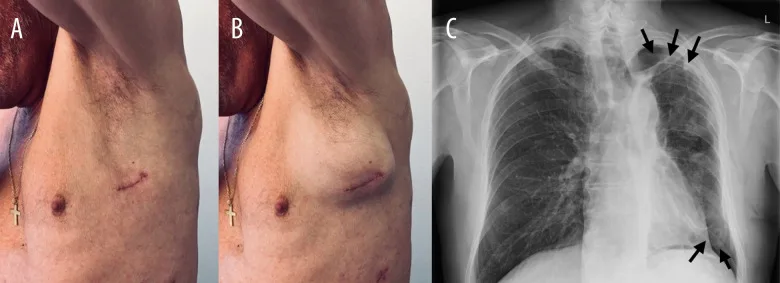
Lung adenocarcinoma surgery complicated by postoperative chest wall hernia

Patient Info: Anonymized, Male, 70+

He completed VATS left lower lobectomy for lung adenocarcinoma and later mesh repair of a postoperative chest wall hernia; at 6 months after hernia repair, the hernia had not recurred.

PubMed Central
OutcomeSurvivorship / Completed Treatment
A patient, who was diagnosed with Stage IV Small Cell Lung CancerLung Cancer

Extensive-stage small-cell lung cancer with immune-related diabetes and stable disease at 2 years

Patient Info: Anonymized, Female, 60s | Stage IV

Biomarkers: Tumor PD-L1 not reported. Immune-related diabetes showed very low C-peptide and negative diabetes autoantibodies; thyroiditis also occurred.

Metastatic Site: pancreas; pleura/pleural effusion; mediastinal lymph…

Two years after the SCLC diagnosis, she was alive with stable oncologic disease after later brain metastases were treated with whole-brain radiotherapy, and she remained insulin-dependent.

PubMed Central
OutcomeLiving With Cancer
A patient, who was diagnosed with Lung AdenocarcinomaLung Cancer

Localized lung adenocarcinoma: lobectomy followed by air-leak repair

Patient Info: Anonymized, Male, 60s

After lobectomy and a second thoracoscopic repair for persistent postoperative air leak, the air leak resolved by postoperative day 3 and had not recurred at 2-month follow-up.

PubMed Central
OutcomeSurvivorship / Completed Treatment
A patient, who was diagnosed with Small Cell Lung CancerLung Cancer

Small-cell lung cancer with anti-NMDAR encephalitis: neurologic recovery and cancer care ongoing

Patient Info: Anonymized, Male, 70+

Biomarkers: Anti-NMDAR antibodies positive in cerebrospinal fluid; tumor molecular markers not reported

He recovered without significant neurologic sequelae and had no recurrence of neuropsychiatric symptoms; SCLC treatment with carboplatin and paclitaxel began after discharge, and cancer remission status was not documented.

PubMed Central
OutcomeCare Ongoing
Allison, who was diagnosed with Stage IV Lung AdenocarcinomaLung Cancer

Stage IV ALK Lung Adenocarcinoma: Allison's Patient Story

Patient Info: Allison, Female, 40s | Stage IV

Biomarkers: ALK-positive fusion; later ALK resistance mutations reported

Metastatic Site: Bone (spine, femur, ribs, shoulder); brain

Allison was living with Stage IV ALK-positive lung cancer and had a strong response to targeted therapy: brain lesions cleared, most PET activity resolved, and the primary tumor shrank to about 1.5 cm. As of August 2025, she remained on second-line targeted therapy.

The Patient Story
OutcomeResponding Well
A patient, who was diagnosed with Stage IV Non-Small Cell Lung CancerLung Cancer

Metastatic lung adenocarcinoma with brain and iliac bone response to chemoimmunotherapy

Patient Info: Anonymized, Male, 60s | Stage IV

Biomarkers: PD-L1-negative; no EGFR, ALK, ROS1, RET, KRAS, BRAF, MET, HER2, or NTRK alteration detected; TP53 mutation found.

Metastatic Site: left iliac bone, brain

Brain metastases achieved complete remission without cranial irradiation, and lung, bone, and brain lesions remained stable at last follow-up, with PFS of 35 months and OS exceeding 40 months.

PubMed Central
OutcomeResponding Well
Wyatt, who was diagnosed with Lung CancerLung Cancer

KRAS Lung Cancer: Wyatt's Patient Story

Patient Info: Wyatt, Male

Biomarkers: KRAS mutation mentioned indirectly; exact variant not stated in available source text

Wyatt was living with lung cancer on ongoing chemotherapy and immunotherapy, with multiple prior lines of treatment and significant side effects. As of August 2025, he had tried to access clinical trials but had not enrolled.

The Patient Story
OutcomeLiving With Cancer