Chemotherapy for Lung Cancer: 428 Real Stories

428 stories match lung cancer and chemotherapy. 224 of them mention immunotherapy.

A patient, who was diagnosed with Stage III Non-Small Cell Lung CancerLung Cancer

Stage IIIB non-squamous NSCLC on chemoimmunotherapy: alcohol-related hypertonic hyponatremia corrected during oncology follow-up

Patient Info: Anonymized, Male, 50s | Stage III

Biomarkers: Tumor biomarkers not reported. Severe hyponatremia workup showed high serum osmolality and ethanol level.

He remained under oncology follow-up for Stage IIIB non-squamous NSCLC while alcohol-related hypertonic hyponatremia improved after detoxification and alcohol cessation.

PubMed Central
OutcomeCare Ongoing
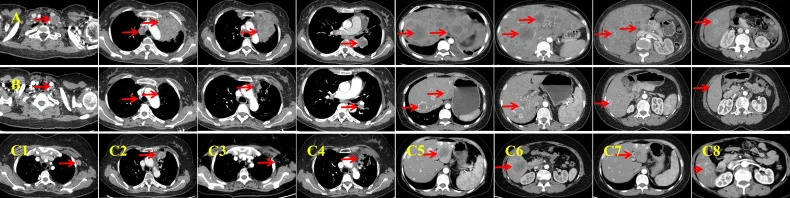
Kristen, who was diagnosed with Stage IV Small Cell Lung CancerLung Cancer

Stage IV Small Cell Lung Cancer: Kristen's Patient Story

Patient Info: Kristen, Female | Stage IV

Metastatic Site: liver, abdominal wall, bone

Kristen had metastatic small cell lung cancer with liver, abdominal wall, and bone involvement. As of July 2025, she had completed chemotherapy, had organ-tumor shrinkage, had immunotherapy on hold because of shortness of breath, and was planning bone-directed treatment and possible immunotherapy restart.

The Patient Story
OutcomeCare Ongoing
A patient, who was diagnosed with Stage IV Lung AdenocarcinomaLung Cancer

ALK-rearranged Stage IVA lung adenocarcinoma: partial response to pembrolizumab as eighth-line treatment

Patient Info: Anonymized, Male, 70+ | Stage IV

Biomarkers: ALK strongly positive by IHC 3+; ALK rearrangement confirmed by FISH; PD-L1 expression 95% by 22C3 immunostaining; CEA 2.3 ng/mL at diagnosis

Metastatic Site: brain

Nine months after pembrolizumab was started as eighth-line therapy, he maintained a partial response after prior progression on multiple ALK inhibitors and chemotherapies.

PubMed Central
OutcomeResponding Well
A patient, who was diagnosed with Stage III Non-Small Cell Lung CancerLung Cancer

Stage IIIA EGFR lung adenocarcinoma: no recurrence after early osimertinib stop

Patient Info: Anonymized, Female, 70+ | Stage III

Biomarkers: EGFR exon 19 deletion mutation; elevated KL-6 and SP-D during interstitial lung disease episode

During 9 months of follow-up after osimertinib was stopped, she had no recurrence of interstitial lung disease, pulmonary embolism, or non-small cell lung cancer.

PubMed Central
OutcomeCancer-Free / NED
A patient, who was diagnosed with Stage IV Lung AdenocarcinomaLung Cancer

Stage IVA EGFR L858R lung adenocarcinoma with malignant effusions and thrombosis

Patient Info: Anonymized, Male, Under 40 | Stage IV

Biomarkers: EGFR exon 21 L858R mutation; TTF-1 weak positive; Napsin A positive; p40 negative; Ki-67 about 10%

Metastatic Site: malignant pleural effusion; malignant pericardial…

As of May 2025, abdominal pain had resolved, splenic infarction had not progressed, thromboembolic events were regressing, no new thrombus formation was seen, and outpatient follow-up continued while he remained on cancer and anticoagulation management.

PubMed Central
OutcomeCare Ongoing
A patient, who was diagnosed with Stage IV Small Cell Lung CancerLung Cancer

Extensive-stage small cell lung cancer with brain and adrenal progression after prolonged disease control

Patient Info: Anonymized, Male, 50s | Stage IV

Biomarkers: Small-cell lung cancer markers included CD56, CgA and TTF-1; Ki-67 was 80%.

Metastatic Site: brain, right adrenal gland, left adrenal gland

After 31 months of stability on second-line anlotinib with palliative chemoradiotherapy, disease progressed in July 2024 with new brain lesions and adrenal progression; the patient declined additional systemic options and continued anlotinib.

PubMed Central
OutcomeSetback / Progression
A patient, who was diagnosed with Stage IV Non-Small Cell Lung CancerLung Cancer

Metastatic NSCLC with ATM mutations: 28-month response to olaparib before progression

Patient Info: Anonymized, Male, 70+ | Stage IV

Biomarkers: cfDNA showed ATM and ATM mutations. Common NSCLC drivers were negative; initial tumor markers were negative.

Metastatic Site: liver, left pubic bone, bilateral pulmonary nodules,…

After 28 months of remission and improved quality of life on olaparib, June 2024 PET-CT showed progression with a new 1.2 cm hypermetabolic left lower-lobe pulmonary nodule; olaparib was still being continued at the October 2024 clinic visit.

PubMed Central
OutcomeSetback / Progression
A patient, who was diagnosed with Stage III Non-Small Cell Lung CancerLung Cancer

Stage IIIA squamous lung cancer with pathologic complete response after immunochemotherapy

Patient Info: Anonymized, Female, 50s | Stage III

Biomarkers: PD-L1 TPS 90%; PD-L1 CPS 100%; EGFR p.G719S 24.9%; EGFR p.S768I 24.6%; TP53 p.S183* 7.2%; TMB 0.0 Muts/Mb

Systematic imaging in March 2025 showed no recurrence or metastasis, with postoperative disease-free survival longer than 30 months and overall survival longer than 34 months.

PubMed Central
OutcomeCancer-Free / NED
A patient, who was diagnosed with Stage IV Lung CancerLung Cancer

Stage IVA lung adenosquamous carcinoma: complete response after paclitaxel, nedaplatin, and tislelizumab

Patient Info: Anonymized, Male, 60s | Stage IV

Biomarkers: Adenosquamous lung cancer markers; PD-L1 TPS 18%; KRAS, BRAF, PIK3CA, FLT1 mutation; TMB 3.7

Metastatic Site: pleura/chest wall, cervical lymph nodes, axillary…

As of March 30, 2025, he maintained complete response with normal tumor markers, no radiologic evidence of progression or recurrence, and progression-free survival of 46.5 months after paclitaxel/nedaplatin/tislelizumab followed by maintenance tislelizumab.

PubMed Central
OutcomeCancer-Free / NED
A patient, who was diagnosed with Small Cell Lung CancerLung Cancer

Limited-stage small cell lung cancer with no recurrence after 14 years

Patient Info: Anonymized, Female, 60s

Biomarkers: SCLC markers: CD56/TTF-1 positive. Essential thrombocythemia had JAK2 . Cancer predisposition gene testing was negative.

More than 14 years after limited-stage SCLC diagnosis, surveillance imaging confirmed no recurrence, while essential thrombocythemia remained controlled with weekly Pegasys.

PubMed Central
OutcomeCancer-Free / NED
Alexis, who was diagnosed with Stage III Lung CancerLung Cancer

Stage III Lung Cancer: Alexis's Survivor Story

Patient Info: Alexis, Female, Under 40 | Stage III

Biomarkers: No lung tumor biomarker reported

Alexis had Stage III pulmonary neuroendocrine/carcinoid cancer treated with removal of the entire left lung and 4 months of adjuvant pill chemotherapy. Follow-up scans after chemotherapy were clear, and her doctor called the status no evidence of disease; she continues long-term surveillance.

The Patient Story
OutcomeCancer-Free / NED
Jenny, who was diagnosed with Stage IV Non-Small Cell Lung CancerLung Cancer

Stage IV EGFR Non-Small Cell Lung Cancer: Jenny's Patient Story

Patient Info: Jenny Apple, Female | Stage IV

Biomarkers: EGFR exon 20 mutation

Metastatic Site: brain

Jenny Apple had nonsmoking lung adenocarcinoma with an EGFR exon 20 mutation. Her cancer was first found at Stage IIIA / near IIIB and later progressed to Stage IV with brain metastases. She died before the June 2025 story from her husband Kyle.

The Patient Story
OutcomeIn Memory
A patient, who was diagnosed with Stage IV Lung CancerLung Cancer

Stage I Pleomorphic Lung Cancer Recurring With Bone Metastasis Within Five Months

Patient Info: Anonymized, male, 60s | Stage IV

Biomarkers: PD-L1 high; no detected driver mutation

Metastatic Site: bone

PET-CT in December 2024 showed a partial response. As of February 2025, he remained on sintilimab and bevacizumab maintenance with about 9 months of progression-free survival after recurrence treatment.

PubMed Central
OutcomeResponding Well
Alisa, who was diagnosed with Stage IV Non-Small Cell Lung CancerLung Cancer

Stage IV ALK Non-Small Cell Lung Cancer: Alisa's Patient Story

Patient Info: Alisa Secaida, Female, Under 40 | Stage IV

Biomarkers: ALK-positive / ALK-rearranged

Metastatic Site: Brain; lymph nodes

As of May 2025, after alectinib and lung surgery, pathology still showed active tumor and lymph-node cancer cells, and Alisa was receiving IMRT for remaining disease.

City of Hope
OutcomeCare Ongoing