Targeted Therapy for Lung Cancer: 326 Real Stories

326 stories match lung cancer and targeted therapy. 150 of them mention chemotherapy.

A patient, who was diagnosed with Stage III Non-Small Cell Lung CancerLung Cancer

Stage IIIA EGFR lung adenocarcinoma: no recurrence after early osimertinib stop

Patient Info: Anonymized, Female, 70+ | Stage III

Biomarkers: EGFR exon 19 deletion mutation; elevated KL-6 and SP-D during interstitial lung disease episode

During 9 months of follow-up after osimertinib was stopped, she had no recurrence of interstitial lung disease, pulmonary embolism, or non-small cell lung cancer.

PubMed Central
OutcomeCancer-Free / NED
A patient, who was diagnosed with Stage IV Lung AdenocarcinomaLung Cancer

Stage IVA EGFR L858R lung adenocarcinoma with malignant effusions and thrombosis

Patient Info: Anonymized, Male, Under 40 | Stage IV

Biomarkers: EGFR exon 21 L858R mutation; TTF-1 weak positive; Napsin A positive; p40 negative; Ki-67 about 10%

Metastatic Site: malignant pleural effusion; malignant pericardial…

As of May 2025, abdominal pain had resolved, splenic infarction had not progressed, thromboembolic events were regressing, no new thrombus formation was seen, and outpatient follow-up continued while he remained on cancer and anticoagulation management.

PubMed Central
OutcomeCare Ongoing
A patient, who was diagnosed with Stage IV Small Cell Lung CancerLung Cancer

Extensive-stage small cell lung cancer with brain and adrenal progression after prolonged disease control

Patient Info: Anonymized, Male, 50s | Stage IV

Biomarkers: Small-cell lung cancer markers included CD56, CgA and TTF-1; Ki-67 was 80%.

Metastatic Site: brain, right adrenal gland, left adrenal gland

After 31 months of stability on second-line anlotinib with palliative chemoradiotherapy, disease progressed in July 2024 with new brain lesions and adrenal progression; the patient declined additional systemic options and continued anlotinib.

PubMed Central
OutcomeSetback / Progression
A patient, who was diagnosed with Stage IV Non-Small Cell Lung CancerLung Cancer

Metastatic NSCLC with ATM mutations: 28-month response to olaparib before progression

Patient Info: Anonymized, Male, 70+ | Stage IV

Biomarkers: cfDNA showed ATM and ATM mutations. Common NSCLC drivers were negative; initial tumor markers were negative.

Metastatic Site: liver, left pubic bone, bilateral pulmonary nodules,…

After 28 months of remission and improved quality of life on olaparib, June 2024 PET-CT showed progression with a new 1.2 cm hypermetabolic left lower-lobe pulmonary nodule; olaparib was still being continued at the October 2024 clinic visit.

PubMed Central
OutcomeSetback / Progression
Samantha, who was diagnosed with Stage II Lung CancerLung Cancer

Stage II EGFR Lung Cancer: Samantha's Patient Story

Patient Info: Samantha Vaughn, Female | Stage II

Biomarkers: EGFR mutation

Samantha had Stage II EGFR-mutated lung cancer removed surgically and was receiving post-operative daily Tagrisso through a clinical trial. As of June 2025, she reported clear results so far but remained on active targeted therapy.

The Patient Story
OutcomeCare Ongoing
A patient, who was diagnosed with Stage IV Lung CancerLung Cancer

Stage I Pleomorphic Lung Cancer Recurring With Bone Metastasis Within Five Months

Patient Info: Anonymized, male, 60s | Stage IV

Biomarkers: PD-L1 high; no detected driver mutation

Metastatic Site: bone

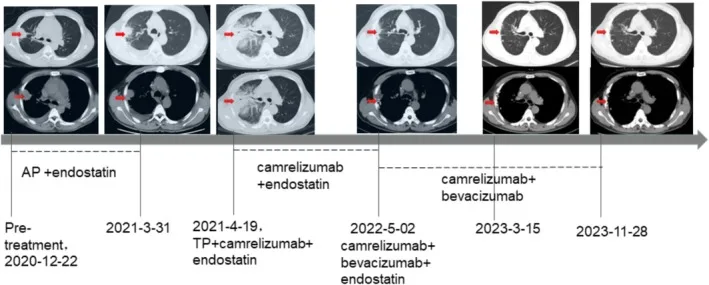
PET-CT in December 2024 showed a partial response. As of February 2025, he remained on sintilimab and bevacizumab maintenance with about 9 months of progression-free survival after recurrence treatment.

PubMed Central
OutcomeResponding Well
Alisa, who was diagnosed with Stage IV Non-Small Cell Lung CancerLung Cancer

Stage IV ALK Non-Small Cell Lung Cancer: Alisa's Patient Story

Patient Info: Alisa Secaida, Female, Under 40 | Stage IV

Biomarkers: ALK-positive / ALK-rearranged

Metastatic Site: Brain; lymph nodes

As of May 2025, after alectinib and lung surgery, pathology still showed active tumor and lymph-node cancer cells, and Alisa was receiving IMRT for remaining disease.

City of Hope
OutcomeCare Ongoing
Natasha, who was diagnosed with Stage IV Lung CancerLung Cancer

Stage IV EGFR Lung Cancer: Natasha's Patient Story

Patient Info: Natasha, Female | Stage IV

Biomarkers: EGFR-positive

Metastatic Site: brain

Natasha had Stage IV EGFR-positive lung cancer with brain metastases. Tagrisso/osimertinib was her main treatment, but a new brain metastasis later appeared and was treated with Gamma Knife. As of May 2025, she was awaiting follow-up MRI while continuing care.

The Patient Story
OutcomeSetback / Progression
Leah, who was diagnosed with Stage IV Lung CancerLung Cancer

How We Got Here: 6 Young Lung Cancer Patients & Their Paths To Surgery- Part 1

Patient Info: Leah Phillips, Female | Stage IV

Biomarkers: EGFR exon 19 deletion

Metastatic Site: bone (pelvis; spine; ribs)

As of April 2025, Leah was living with Stage IV EGFR exon 19 deletion lung cancer while continuing Tagrisso after SBRT and right middle lobe lobectomy.

YouTube (JA search)
OutcomeLiving With Cancer
A patient, who was diagnosed with Stage IV Non-Small Cell Lung CancerLung Cancer

Metastatic SMARCA4-Deficient Lung Cancer Controlled for More Than Two Years With Tislelizumab and Fruquintinib

Patient Info: Anonymized, male, 60s | Stage IV

Biomarkers: PD-L1 8%; no target-sensitive mutation identified

Metastatic Site: left adrenal gland, cervical lymph nodes

After radiotherapy reduced the cervical-node metastasis, imaging on April 26, 2024 showed stable disease. He ended trial treatment after 2 years and continued regular follow-up.

PubMed Central
OutcomeStable Disease
A patient, who was diagnosed with Stage III Non-Small Cell Lung CancerLung Cancer

Stage IIIA double ALK-fusion lung adenocarcinoma: major pathological response to neoadjuvant alectinib

Patient Info: Anonymized, Male, 50s | Stage III

Biomarkers: ALK-rearranged lung adenocarcinoma with both ELMOD3-ALK and EML4-ALK fusions. CEA/NSE/CA19-9 decreased after alectinib.

As of April 2025, he had continued alectinib for 4 years after surgery, with more than 48 months of disease-free survival, no recurrence, and no serious drug-related toxicity.

PubMed Central
OutcomeCancer-Free / NED
A patient, who was diagnosed with Stage IV Lung AdenocarcinomaLung Cancer

Stage 4 ALK-rearranged lung cancer: complete response with alectinib and SBRT

Patient Info: Anonymized, Female, 70+ | Stage IV

Biomarkers: Initial tumor: EML4-ALK fusion, EGFR wild type. Later tumor: EGFR L858R/T790M and TP53 L194R, without ALK rearrangement.

Metastatic Site: pleura, lymph nodes

As of March 2025, the original ALK-rearranged metastatic disease had responded to alectinib, the separate EGFR-mutant right upper-lobe lesion had responded to SBRT, and PET-CT showed no hypermetabolic lung lesion.

PubMed Central
OutcomeCancer-Free / NED
A patient, who was diagnosed with Stage IV Non-Small Cell Lung CancerLung Cancer

Stage 4 SMARCA4-deficient lung cancer: ongoing treatment response

Patient Info: Anonymized, Male, 50s | Stage IV

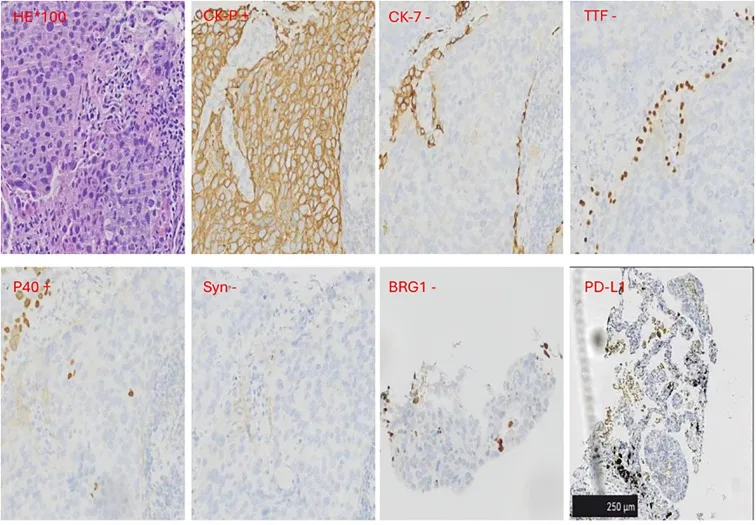
Biomarkers: SMARCA4-deficient lung cancer with BRG-1 loss, CK/CK7 positive, Ki-67 >40%. CEA

Metastatic Site: sigmoid colon, left adrenal gland

After colon metastasis surgery, continued radiotherapy, and later gemcitabine/nedaplatin/bevacizumab/camrelizumab for adrenal metastasis, the cancer showed a favorable response with no further recurrence or new metastasis reported.

PubMed Central
OutcomeResponding Well
Luna, who was diagnosed with Stage IV Lung AdenocarcinomaLung Cancer

Stage IV ROS1 Lung Adenocarcinoma: Luna's Patient Story

Patient Info: Luna, Female, 50s | Stage IV

Biomarkers: ROS1 rearrangement; EGFR negative; ALK negative

Metastatic Site: liver; bones

Luna had Stage IV ROS1-positive lung adenocarcinoma with liver and bone metastases. After progression on initial chemotherapy, crizotinib led to tumor shrinkage and controlled her cancer for almost 12 years as of March 2025.

The Patient Story
OutcomeResponding Well
A patient, who was diagnosed with Stage I Small Cell Lung CancerLung Cancer

ALK-Fusion Small Cell Lung Cancer Responding to Ensartinib

Patient Info: Anonymized, female, 70+ | Stage I

Biomarkers: EML4-ALK fusion; TP53 and RB1 mutations; PD-L1 at least 50%

The recurrent hilar lymph nodes shrank on ensartinib, and treatment was still ongoing at the January 2025 cutoff with more than 12 months without progression.

PubMed Central
OutcomeResponding Well
Rosemary, who was diagnosed with Stage IV Lung CancerLung Cancer

Stage IV KRAS Lung Cancer: Rosemary's Patient Story

Patient Info: Rosemary Conway, female, 60s | Stage IV

Biomarkers: KRAS mutation

After 14 months on daraxonracib in a clinical trial, Rosemary’s Stage IV lung cancer had stopped growing and she had returned to walking and lifting weights.

Dana-Farber
OutcomeStable Disease
A patient, who was diagnosed with Stage IV Non-Small Cell Lung CancerLung Cancer

EML4-ALK lung cancer: complete remission on alectinib for 4 years

Patient Info: Anonymized, Female, 60s | Stage IV

Biomarkers: EML4-ALK fusion

Metastatic Site: brain

Alectinib produced complete remission for nearly 4 years; after grade 3 colitis/ulcers, she switched to ceritinib and maintained stable tumor control without recurrent intestinal ulcers or colitis.

PubMed Central
OutcomeResponding Well
Jeff, who was diagnosed with Stage IV Non-Small Cell Lung CancerLung Cancer

Stage IV EGFR Non-Small Cell Lung Cancer: Jeff's Patient Story

Patient Info: Jeff, Male, 60s | Stage IV

Biomarkers: EGFR-positive; exon 19 mentioned

Metastatic Site: brain; bones — ribs, femur/hip, clavicle

Jeff has Stage IV EGFR-positive non-small cell lung cancer with brain and bone metastases. Biomarker testing changed the plan from radiation/chemotherapy toward Tagrisso targeted therapy. As of March 2025, he was living with metastatic lung cancer and emphasizing hope and self-advocacy.

The Patient Story
OutcomeLiving With Cancer
A patient, who was diagnosed with Stage IV Small Cell Lung CancerLung Cancer

EGFR-Mutant Lung Adenocarcinoma That Transformed to Small Cell Lung Cancer

Patient Info: Anonymized, female, 40s | Stage IV

Biomarkers: EGFR exon 19 deletion; acquired EGFR T790M mutation

Metastatic Site: liver

The cancer progressed after transformation to small cell lung cancer, and she died 49 months after the original diagnosis.

PubMed Central
OutcomeIn Memory
A patient, who was diagnosed with Stage IV Small Cell Lung CancerLung Cancer

EGFR-Mutant Lung Adenocarcinoma That Transformed to Small Cell Lung Cancer

Patient Info: Anonymized, female, 40s | Stage IV

Biomarkers: EGFR exon 19 deletion

Metastatic Site: brain, adrenal gland, liver, thyroid

The cancer progressed after small-cell transformation with adrenal, thyroid, liver and brain involvement, and she died 52.7 months after the original diagnosis from disease progression and organ failure.

PubMed Central
OutcomeIn Memory