Surgery for Lung Cancer: 356 Real Stories

356 stories match lung cancer and surgery. 177 of them mention chemotherapy.

A patient, who was diagnosed with Lung AdenocarcinomaLung Cancer

Stage IA1 lung adenocarcinoma: disease-free after VATS right lower lobectomy

Patient Info: Anonymized, Male, 70+

Biomarkers: No molecular biomarkers reported; final pathology pT1aN0M0 with no lymph node metastases

Final pathology showed pT1aN0M0 Stage IA1 lung adenocarcinoma with no lymph node metastases, and he remained disease-free at 1-year follow-up.

PubMed Central
OutcomeCancer-Free / NED
Michelle, who was diagnosed with Non-Small Cell Lung CancerLung Cancer

EGFR Non-Small Cell Lung Cancer: Michelle's Patient Story

Patient Info: Michelle Vacca, Female, 40s

Biomarkers: EGFR mutation at recurrence; later rare mutation not named

As of November 2025, Michelle still actively had recurrent NSCLC, but her disease had remained stable on targeted therapy and an investigational kinase inhibitor clinical trial, allowing good quality of life.

City of Hope
OutcomeLiving With Cancer
A patient, who was diagnosed with Stage I Lung AdenocarcinomaLung Cancer

Second primary Stage I lung adenocarcinoma treated with segmentectomy and adjuvant pembrolizumab

Patient Info: Anonymized, Female, 70+ | Stage I

Biomarkers: PD-L1 <1%; no common targetable lung cancer changes found in EGFR, ALK, KRAS, BRAF, MET, PIK3CA, RET, ROS1, or NTRK.

At 6-month oncologic follow-up, PET-CT showed complete metabolic response with no evidence of residual disease after segmentectomy and adjuvant pembrolizumab.

PubMed Central
OutcomeCancer-Free / NED
A patient, who was diagnosed with Stage III Lung AdenocarcinomaLung Cancer

Stage IIIB RET-fusion lung adenocarcinoma: disease-free after pralsetinib, surgery and maintenance therapy

Patient Info: Anonymized, Male, Under 40 | Stage III

Biomarkers: RET exon 12 fusion. Lung-origin markers were present

After neoadjuvant pralsetinib, surgery showed pathological complete response with negative lymph nodes. As of 16 April 2025, surveillance imaging showed no recurrence while he remained on pralsetinib 300 mg once daily.

PubMed Central
OutcomeCancer-Free / NED
A patient, who was diagnosed with Stage IV Non-Small Cell Lung CancerLung Cancer

Stage IVA EGFR-mutant lung adenocarcinoma: response to triple targeted therapy and surgery

Patient Info: Anonymized, Female, 50s | Stage IV

Biomarkers: Initial EGFR exon 19 deletion; acquired BRAF V600E mutation in progressive lesion while EGFR exon 19 deletion persisted

Metastatic Site: pleura, pulmonary metastases; mediastinal and left…

As of May 2025, she continued osimertinib, dabrafenib, and trametinib after segmentectomy/lymphadenectomy, with 1% viable residual tumor in resected lung lesions, complete nodal pathologic response, and no disease progression.

PubMed Central
OutcomeResponding Well
A patient, who was diagnosed with Stage IV Non-Small Cell Lung CancerLung Cancer

EGFR L858R lung adenocarcinoma presenting as rectal and peritoneal metastases

Patient Info: Anonymized, Male, 70+ | Stage IV

Biomarkers: Rectal/peritoneal tumors supported lung origin. Key result: EGFR L858R with TP53 mutations; no other actionable lung alteration reported.

Metastatic Site: rectum; peritoneum; omentum; mesentery; colonic wall

After transverse colostomy and confirmation of EGFR L858R-mutant lung adenocarcinoma metastasis, aumolertinib led to clinical stabilization; palliative radiotherapy was later given to the rectal lesion, but long-term follow-up was not yet available.

PubMed Central
OutcomeResponding Well
A patient, who was diagnosed with Stage III Lung AdenocarcinomaLung Cancer

Stage IIIA KRAS p.G12V lung adenocarcinoma: pathologic complete response after chemoimmunotherapy and surgery

Patient Info: Anonymized, Female, 70+ | Stage III

Biomarkers: KRAS p.G12V mutation; PD-L1 0% tumor-cell staining; <1% tumor-associated inflammatory-cell staining; no EGFR, ALK, or ROS1 driver mutation reported

Pathology after lobectomy showed a pathologic complete response, and surveillance imaging 12 months later showed no evidence of disease recurrence.

PubMed Central
OutcomeCancer-Free / NED
A patient, who was diagnosed with Stage III Lung AdenocarcinomaLung Cancer

Stage IIIA lung adenocarcinoma complicated by severe atezolizumab-induced liver toxicity

Patient Info: Anonymized, Male, 60s | Stage III

Biomarkers: PD-L1 49%; case text describes triple-negative status without expanding the specific markers

The patient was discharged clinically stable but with guarded prognosis after atezolizumab-induced vanishing bile duct syndrome, requiring prednisone, mycophenolate mofetil, ursodeoxycholic acid, prophylaxis, and close oncology/internal medicine follow-up.

PubMed Central
OutcomeCare Ongoing
A patient, who was diagnosed with Lung AdenocarcinomaLung Cancer

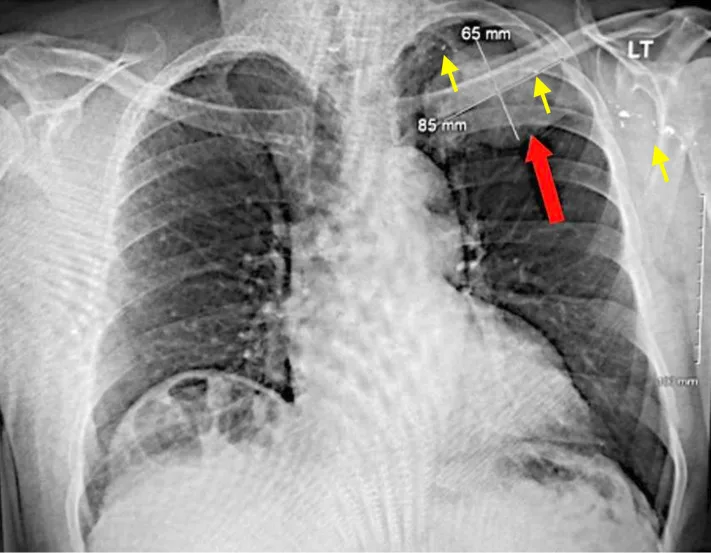
Lung adenocarcinoma surgery complicated by postoperative chest wall hernia

Patient Info: Anonymized, Male, 70+

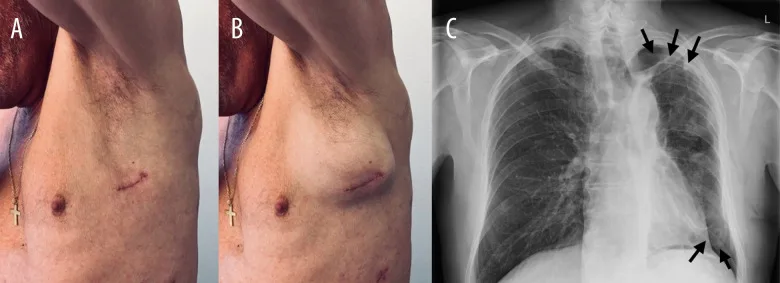
He completed VATS left lower lobectomy for lung adenocarcinoma and later mesh repair of a postoperative chest wall hernia; at 6 months after hernia repair, the hernia had not recurred.

PubMed Central
OutcomeSurvivorship / Completed Treatment
A patient, who was diagnosed with Lung AdenocarcinomaLung Cancer

Localized lung adenocarcinoma: lobectomy followed by air-leak repair

Patient Info: Anonymized, Male, 60s

After lobectomy and a second thoracoscopic repair for persistent postoperative air leak, the air leak resolved by postoperative day 3 and had not recurred at 2-month follow-up.

PubMed Central
OutcomeSurvivorship / Completed Treatment
A patient, who was diagnosed with Stage IV Non-Small Cell Lung CancerLung Cancer

Metastatic lung adenocarcinoma with brain and iliac bone response to chemoimmunotherapy

Patient Info: Anonymized, Male, 60s | Stage IV

Biomarkers: PD-L1-negative; no EGFR, ALK, ROS1, RET, KRAS, BRAF, MET, HER2, or NTRK alteration detected; TP53 mutation found.

Metastatic Site: left iliac bone, brain

Brain metastases achieved complete remission without cranial irradiation, and lung, bone, and brain lesions remained stable at last follow-up, with PFS of 35 months and OS exceeding 40 months.

PubMed Central
OutcomeResponding Well
A patient, who was diagnosed with Stage IV Lung AdenocarcinomaLung Cancer

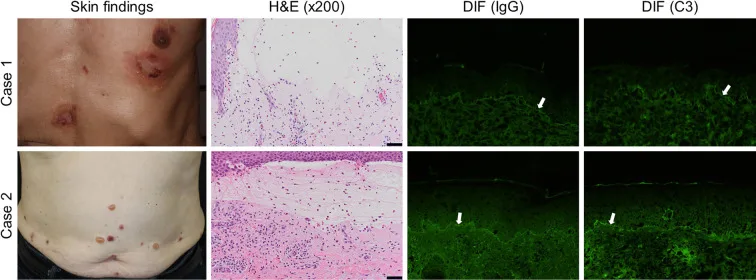
Recurrent lung adenocarcinoma with bevacizumab-associated glomerular microangiopathy

Patient Info: Anonymized, Male, 50s | Stage IV

Biomarkers: No tumor molecular biomarkers reported. Kidney biopsy and complement/immune deposits supported bevacizumab-related kidney microangiopathy.

Metastatic Site: pleura

He was living with recurrent metastatic lung adenocarcinoma after pleural spread and had persistent renal dysfunction and severe proteinuria from bevacizumab-associated glomerular microangiopathy despite stopping bevacizumab.

PubMed Central
OutcomeLiving With Cancer
A patient, who was diagnosed with Stage III Non-Small Cell Lung CancerLung Cancer

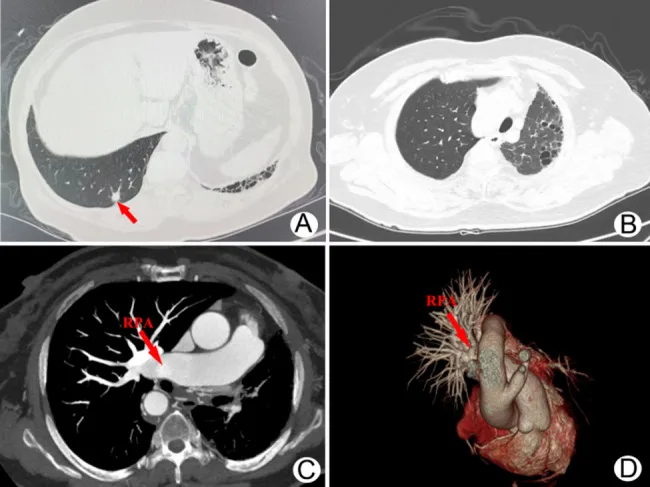
Stage IIIA EGFR lung adenocarcinoma: no recurrence after early osimertinib stop

Patient Info: Anonymized, Female, 70+ | Stage III

Biomarkers: EGFR exon 19 deletion mutation; elevated KL-6 and SP-D during interstitial lung disease episode

During 9 months of follow-up after osimertinib was stopped, she had no recurrence of interstitial lung disease, pulmonary embolism, or non-small cell lung cancer.

PubMed Central
OutcomeCancer-Free / NED