Anastrozole: 75 Real Stories

75 stories match anastrozole. 66 of them mention surgery.

A patient, who was diagnosed with Stage III Invasive Ductal CarcinomaBreast Cancer

Left breast epithelioid MPNST with concurrent right breast cancer: no recurrence after surgery

Patient Info: Anonymized, Female, 70+ | Stage III

Biomarkers: Left MPNST markers included S100 and SOX10 positivity. Right breast cancer was ER/PR-positive, HER2-negative/1+

As of March 2025, 3 years after bilateral mastectomy, there was no recurrence of the left epithelioid MPNST or the concurrent right breast invasive ductal carcinoma.

PubMed Central
OutcomeCancer-Free / NED
A patient, who was diagnosed with Stage IV Breast CancerBreast Cancer

Stage 4 hormone receptor-positive breast cancer: remission with PARP inhibitor

Patient Info: Anonymized, Female, 40s | Stage IV

Biomarkers: HR-positive breast cancer with HER2-low/negative recurrence, and pathogenic BRCA2 R2318* mutation.

Metastatic Site: pleura

As of January 2025, she had maintained complete response for 36 months after sequential FEC/docetaxel and olaparib for hormone receptor-positive, HER2-negative/HER2-low metastatic breast cancer with BRCA2 R2318* mutation.

PubMed Central
OutcomeCancer-Free / NED
A patient, who was diagnosed with Stage I Breast CancerBreast Cancer

Stage I ER-positive/HER2-positive breast cancer with radiation-associated morphea

Patient Info: Anonymized, Female, 70+ | Stage I

Biomarkers: ER-positive; PR-negative; HER2-positive

No evidence of breast cancer recurrence after 2018 treatment; ongoing issue was generalized morphea and breast deformity related to prior radiation, improved with mycophenolate by April 2024.

PubMed Central
OutcomeCancer-Free / NED
A patient, who was diagnosed with Stage I Invasive Ductal CarcinomaBreast Cancer

Stage I triple-negative solid basaloid adenoid cystic breast cancer treated with mastectomy and oral chemotherapy

Patient Info: Anonymized, Female, 70+ | Stage I

Biomarkers: Current tumor was triple-negative with high Ki-67 and c-kit/CK7 staining. Prior breast cancer was ER-positive, HER2-positive, PR-negative.

One year after mastectomy and postoperative tegafur-gimeracil-oteracil potassium, she was recovering well without signs of metastasis.

PubMed Central
OutcomeSurvivorship / Completed Treatment
A patient, who was diagnosed with Stage III Invasive Ductal CarcinomaBreast Cancer

Stage III Breast Cancer Complicated by a Large Liver Abscess

Patient Info: Anonymized, Female, 70+ | Stage III

Biomarkers: ER-positive, HER2-negative

Continuing adjuvant anastrozole and oncology follow-up after mastectomy for Stage III breast cancer.

PubMed Central
OutcomeCare Ongoing
A patient, who was diagnosed with Invasive Lobular CarcinomaBreast Cancer

Two sisters with invasive lobular breast cancer and a shared CDH1 mutation

Patient Info: Anonymized, Female | Stage Metastatic/Advanced

Biomarkers: Both sisters had pathogenic CDH1 p.. Breast cancers were HER2-negative; older sister also had a PTCH1 variant of uncertain significance.

As of January 2025, both sisters were under ongoing hereditary diffuse gastric cancer surveillance with annual EGD after breast cancer treatment; no signs of HDGC or metastatic breast cancer were reported.

PubMed Central
OutcomeCare Ongoing
MB
Breast Cancer

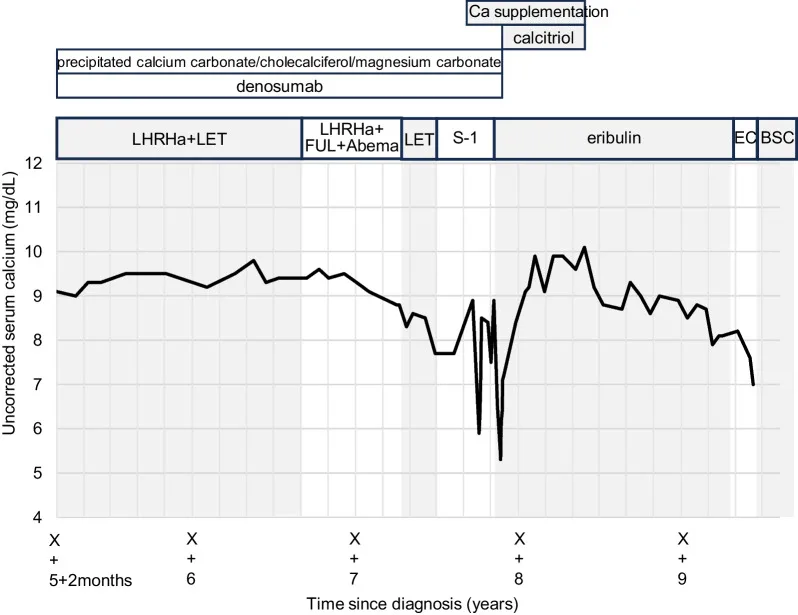
Metastatic breast cancer with receptor evolution: sequential endocrine, immunotherapy, CDK4/6, and antibody-drug conjugate treatment

Patient Info: Anonymized, Female, 50s | Stage IV

Biomarkers: Markers changed over time: initial tumor ER-positive/HER2-negative; local recurrence triple-negative/HER2-low; pleural fluid ER-negative.

Metastatic Site: mediastinal lymph nodes, pleura; pulmonary nodules…

More than 7 years after diagnosis, she remained on sequential systemic therapy for metastatic breast cancer, with at least a partial response 3 months after starting sacituzumab govitecan for presumed triple-negative pleural disease.

PubMed Central
OutcomeResponding Well
A patient, who was diagnosed with Stage IV Breast CancerBreast Cancer

Breast Cancer Recurrence in the Small Intestine and Bone More Than 5 Years After Diagnosis

Patient Info: Anonymized, Female, 50s | Stage IV

Biomarkers: Initial ER-positive, PR-positive, HER2-negative; metastatic lesion ER-negative, PR-negative, triple negative

Metastatic Site: small intestine, bone, right fallopian tube

More than 5 years after her December 2018 diagnosis, she was alive at 1-year follow-up after metastatic recurrence, with multiple bone metastases still present.

PubMed Central
OutcomeLiving With Cancer
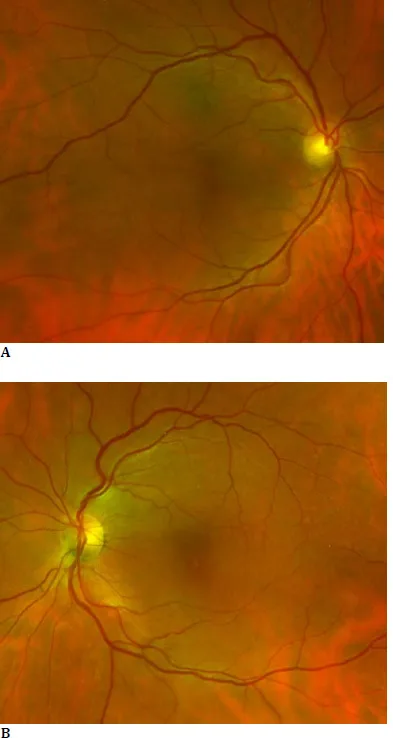
A patient, who was diagnosed with Breast CancerBreast Cancer

Breast carcinoma in remission with stable cancer-associated retinal findings during follow-up

Patient Info: Anonymized, Female, 70+

Biomarkers: Breast cancer marker details not fully reported. CRMP-5 antibody changed from positive to negative; anti-retinal antibodies were present.

The breast carcinoma was described as in remission, and visual acuity and visual fields remained stable without progressive visual loss across 3 years of ophthalmic follow-up.

PubMed Central
OutcomeCancer-Free / NED
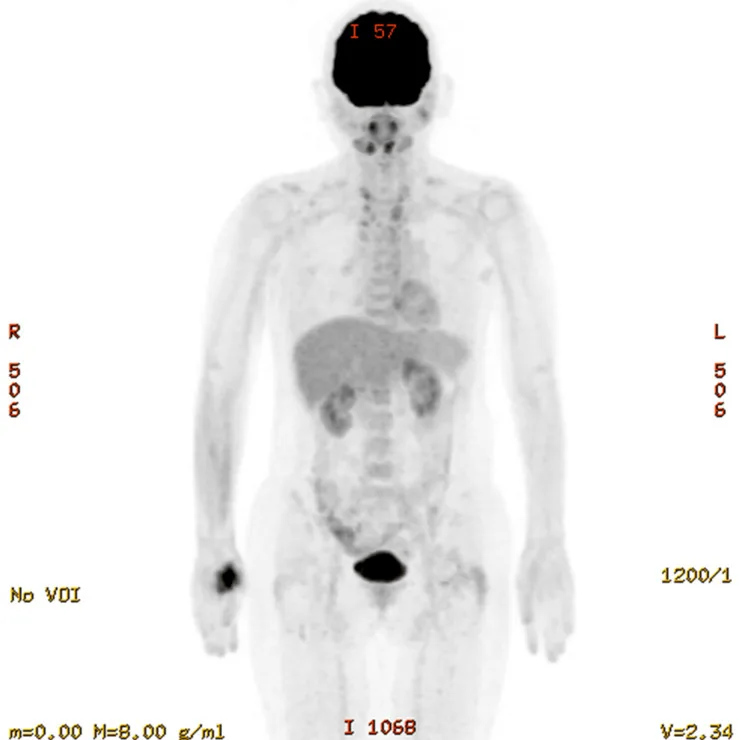
A patient, who was diagnosed with Stage IV Invasive Ductal CarcinomaBreast Cancer

Stage 4 breast cancer: ongoing treatment with multi-line chemotherapy

Patient Info: Anonymized, Female, 40s | Stage IV

Biomarkers: Initial tumor: hormone receptor-negative; HER2 2+. 2011 recurrence: ER 10%; PR 70%; HER2 2+.

Metastatic Site: pleura/pleural effusion; lung

Metastatic breast cancer with malignant pleural effusion achieved complete response after chemotherapy and long-term endocrine therapy; PET-CT in October 2023 still showed complete response, with ongoing cardiac and bone-health management.

PubMed Central
OutcomeCancer-Free / NED
A patient, who was diagnosed with Stage II Invasive Ductal CarcinomaBreast Cancer

ER-positive breast cancer: mastectomy after hormone therapy

Patient Info: Anonymized, Female, 50s | Stage II

Biomarkers: Breast cancer was ER+ and HER2-low/negative. PR changed from positive on biopsy to negative on final pathology; HNA-1 antibody found for neutropenia.

Stage IIA ER-positive invasive ductal breast cancer had no recurrence 3 years after endocrine therapy and total mastectomy with sentinel lymph node biopsy; autoimmune neutropenia was monitored rather than directly treated.

PubMed Central
OutcomeCancer-Free / NED
A patient, who was diagnosed with Invasive Ductal CarcinomaBreast Cancer

Right-Sided Ductal Carcinoma in Situ Before a Second Breast Cancer

Patient Info: Anonymized, female, 60s

Biomarkers: ER-positive; PR-positive; HER2 1+

A woman treated for right-sided ductal carcinoma in situ in 2018 later developed a separate invasive cancer in the opposite breast.

PubMed Central
OutcomeNot reported
A patient, who was diagnosed with Stage IV Invasive Ductal CarcinomaBreast Cancer

Triple-positive breast cancer: complete response to targeted therapy

Patient Info: Anonymized, Female, 40s | Stage IV

Biomarkers: Triple-positive breast cancer; SBDS variants present; no detected TP53 variant on MyeloSeq.

Metastatic Site: liver

Stage IV triple-positive breast cancer with liver metastasis achieved complete response after paclitaxel, trastuzumab, pertuzumab, and G-CSF support; complete response was maintained for 18 months after treatment initiation while on maintenance HER2-directed and endocrine therapy.

PubMed Central
OutcomeCancer-Free / NED
Samantha, who was diagnosed with Stage IV Breast CancerBreast Cancer

Stage IV Breast Cancer: Samantha's Patient Story

Patient Info: Samantha, Female, Under 40 | Stage IV

Biomarkers: Hormone-positive breast cancer; specific receptor details not reported

Metastatic Site: bone: rib, spine, pelvis

As of July 2024, Samantha was living with Stage IV hormone-positive breast cancer with bone metastases. Current treatment was working in most areas, but a breast tumor continued to grow and was surgically removed; ongoing treatment and 3-month scans were reported.

YouTube — The Patient Story

OutcomeLiving With Cancer
A patient, who was diagnosed with Stage I Invasive Ductal CarcinomaBreast Cancer

HER2-positive breast cancer: surgery after neoadjuvant therapy

Patient Info: Anonymized, Female, 60s | Stage I

Biomarkers: ER 1% weakly positive; PR-negative; HER2-positive

No evidence of disease on follow-up while taking anastrozole after pathologic complete response to neoadjuvant T-DM1, lumpectomy/SLNB, radiotherapy, and adjuvant trastuzumab for Stage I HER2-positive breast cancer.

PubMed Central
OutcomeCancer-Free / NED
A patient, who was diagnosed with Stage IV Invasive Lobular CarcinomaBreast Cancer

Invasive lobular breast cancer with isolated scalp metastasis: excision and endocrine therapy

Patient Info: Anonymized, Female, 50s | Stage IV

Biomarkers: Original breast tumor: ER-positive; PR-positive; scalp metastasis: CK7-positive; ER-positive; GCDFP-15 partially positive

Metastatic Site: scalp/skin

As of April 2024, she had no signs of recurrence in the breast or scalp and no distant metastasis after excision of the isolated scalp metastasis while continuing anastrozole.

PubMed Central
OutcomeCancer-Free / NED
A patient, who was diagnosed with Breast CancerBreast Cancer

Aggressive breast cancer presenting with severe skin infection

Patient Info: Anonymized, Female

Biomarkers: ER 99% positive; PR 99% positive; HER2 1+ / negative; Ki-67 3%; grade 2; 3 interpectoral lymph nodes negative; later axillary-node biopsy benign

She recovered from sepsis and surgery, had no distant metastases and a benign axillary-node biopsy, and was receiving adjuvant radiation with anastrozole ongoing.

PubMed Central
OutcomeCare Ongoing
A patient, who was diagnosed with Stage I Breast CancerBreast Cancer

A Breast Cancer Survivor Later Diagnosed With a Separate Metastatic Cancer Affecting Both Retinas

Patient Info: Anonymized, Female, 60s | Stage I

Biomarkers: ER-positive, PR-positive, HER2-negative

Her last breast-cancer follow-up showed no evidence of disease after 5 years of endocrine therapy. She later developed a separate widely metastatic cancer favored to be gastrointestinal or pancreaticobiliary in origin and died after choosing hospice.

PubMed Central
OutcomeIn Memory
A patient, who was diagnosed with Stage IV Breast CancerBreast Cancer

Metastatic breast cancer: three years in remission with T-DM1 (Kadcyla) treatment

Patient Info: Anonymized, Female | Stage IV

Biomarkers: HER2-positive; hormone receptor-positive

Metastatic Site: liver; spine / bone

T-DM1 produced a complete clinical and radiological response after 7 cycles, sustained for 41 months and 60 cycles while treatment continued.

PubMed Central
OutcomeComplete Response