Supportive Care for Stage 4 Lung Cancer: 72 Real Stories

72 stories match lung cancer, stage 4 and supportive care. 39 of them mention chemotherapy.

Michelle, who was diagnosed with Stage IV Lung CancerLung Cancer

Stage IV ALK Lung Cancer: Michelle's Patient Story

Patient Info: Michelle, Female | Stage IV

Biomarkers: ALK-positive

Metastatic Site: leptomeninges and cerebrospinal fluid / central…

Targeted therapy and proton craniospinal irradiation eliminated detectable leptomeningeal disease. Treatment side effects later passed, and Michelle continued rehabilitation.

LUNGevity
OutcomeResponding Well
Angie, who was diagnosed with Stage IV Lung CancerLung Cancer

Stage IV Lung Cancer: Angie's Patient Story

Patient Info: Angie Brice Hessbruegge, Female, Under 40 | Stage IV

Angie remained on chemotherapy and focused on parenting, counseling, faith, and long-term survivor stories while living with Stage IV lung cancer.

LUNGevity
OutcomeCare Ongoing
Hakim, who was diagnosed with Stage IV Lung CancerLung Cancer

Stage IV Lung Cancer: Hakim's Patient Story

Patient Info: Hakim Rusli, Male | Stage IV

Metastatic Site: Brain

Stage IV lung cancer with brain metastasis became controlled after care at Modern Cancer Hospital Guangzhou; progression slowed and symptoms/supportive issues were managed, but no remission or NED status is reported.

Modern Cancer Hospital Guangzhou (Lung)
OutcomeResponding Well
Mila, who was diagnosed with Stage IV Lung CancerLung Cancer

Stage IV Lung Cancer: Mila's Patient Story

Patient Info: Mila Gardon, Female, 50s | Stage IV

Metastatic Site: Neck lymph nodes; skull; iliac bone

Stage IV lung cancer with spread to neck lymph nodes, skull, and iliac bone responded after cryotherapy and interventional therapy; lung tumors disappeared and tumor marker normalized, but the source does not state full remission or NED.

Modern Cancer Hospital Guangzhou (Lung)
OutcomeResponding Well
Jay, who was diagnosed with Stage IV Lung CancerLung Cancer

Stage IV ALK Lung Cancer: Jay's Survivor Story

Patient Info: Jay Petri, Male | Stage IV

Biomarkers: ALK mutation / ALK-rearranged lung cancer

Metastatic Site: Not reported

Stage IV ALK-positive lung cancer treated through clinical trials at Mass General; he reported being cancer-free for nearly 1.5 years after going through 3 trials.

Massachusetts General Hospital
OutcomeCancer-Free / NED
A patient, who was diagnosed with Stage IV Lung AdenocarcinomaLung Cancer

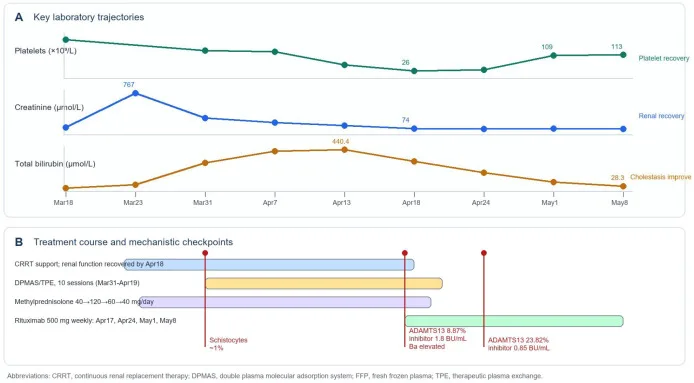
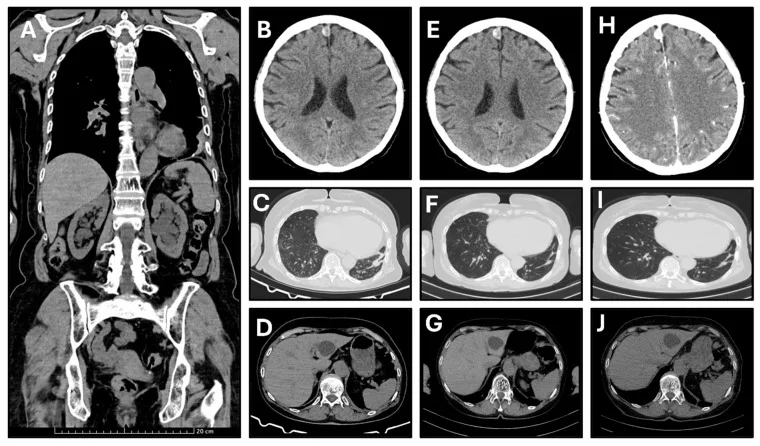
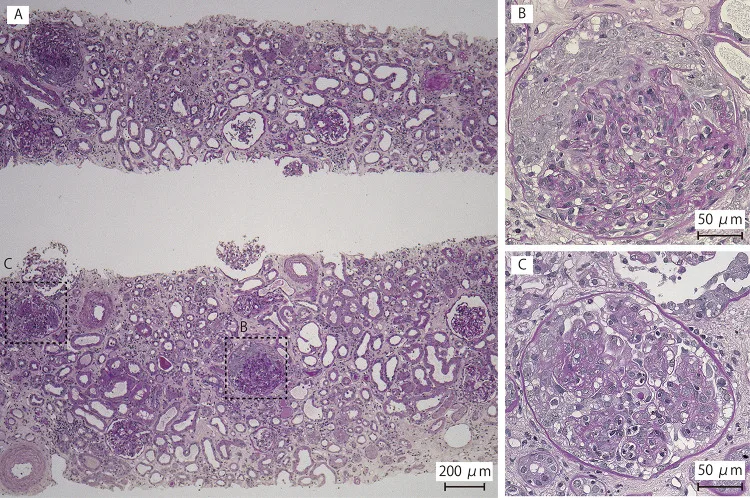
Severe blood-clotting disorder, liver injury, and reversible kidney injury during treatment for Stage IV lung cancer

Patient Info: Anonymized, Male, 60s | Stage IV

Biomarkers: PD-L1 about 1%; KRAS mutation

Metastatic Site: bone (right 4th and 5th ribs)

Restaging before cycle 4 showed a partial response. Cancer treatment was then interrupted as severe acquired iTTP, cholestatic liver injury, and reversible acute kidney injury required intensive management.

PubMed Central
OutcomeCare Ongoing
A patient, who was diagnosed with Stage IV Lung AdenocarcinomaLung Cancer

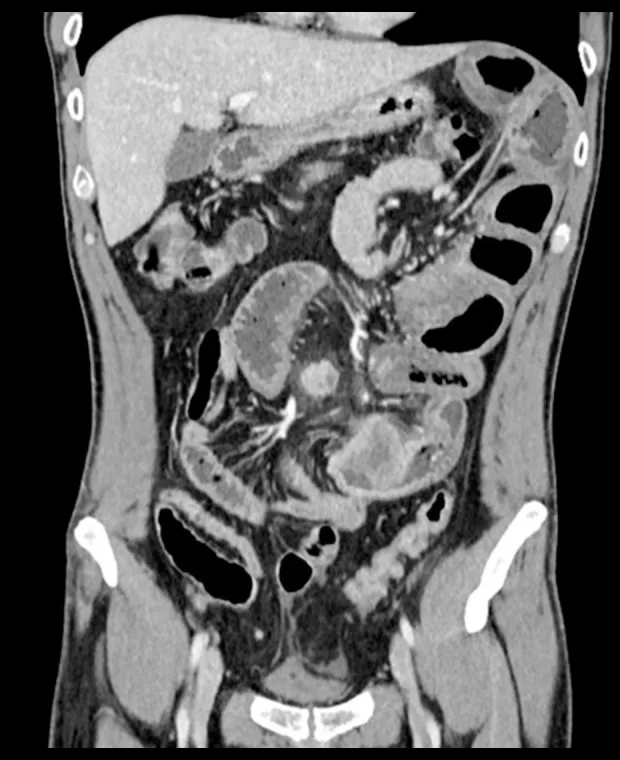
Lung cancer first discovered after a small-bowel blockage

Patient Info: Anonymized, Male, 50s | Stage IV

Metastatic Site: jejunum|brain|bone

The cancer progressed to the brain and spine despite chemotherapy, and he was admitted to palliative care.

PubMed Central
OutcomeSetback / Progression
A patient, who was diagnosed with Stage IV Lung AdenocarcinomaLung Cancer

RET-positive Stage IV lung cancer: targeted therapy stopped after severe side effects

Patient Info: Anonymized, Female, 70+ | Stage IV

Biomarkers: RET fusion

Metastatic Site: brain|bone

Selpercatinib produced early shrinkage of the lung tumor and brain metastases, but it was permanently discontinued because of recurrent severe side effects. She was transferred for supportive care.

PubMed Central
OutcomeLiving With Cancer
A patient, who was diagnosed with Stage IV Non-Small Cell Lung CancerLung Cancer

Stage IV EGFR-mutated lung adenocarcinoma: high-dose furmonertinib after CNS progression

Patient Info: Anonymized, Female, 50s | Stage IV

Biomarkers: Initial EGFR L858R mutation. Later blood testing showed EGFR p.S553Y variation; CEA rose and fell with treatment.

Metastatic Site: brain/meninges; bilateral pleura/lungs; mediastinal…

As of June-September 2024, the left lung lesion was stable to slightly smaller on escalated furmonertinib, but brain/CNS lesions had progressed and required dose escalation to 240 mg/day; later imaging was declined.

PubMed Central
OutcomeSetback / Progression
A patient, who was diagnosed with Stage IV Lung Squamous Cell CarcinomaLung Cancer

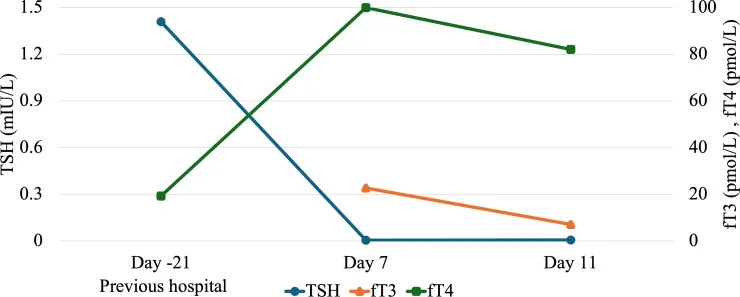
Stage IVA lung squamous cell carcinoma with immune-checkpoint-inhibitor-associated Graves thyroid storm

Patient Info: Anonymized, Male | Stage IV

Biomarkers: Cancer biomarkers not reported. Thyroid storm workup had TSAb/TRAb positivity consistent with Graves disease.

Metastatic Site: not specified in extracted case text

After thyroid storm improved with antithyroid therapy and supportive care, the patient was transferred for further lung-cancer treatment but died of progressive lung cancer about 2 months later.

PubMed Central
OutcomeIn Memory
A patient, who was diagnosed with Stage IV Lung AdenocarcinomaLung Cancer

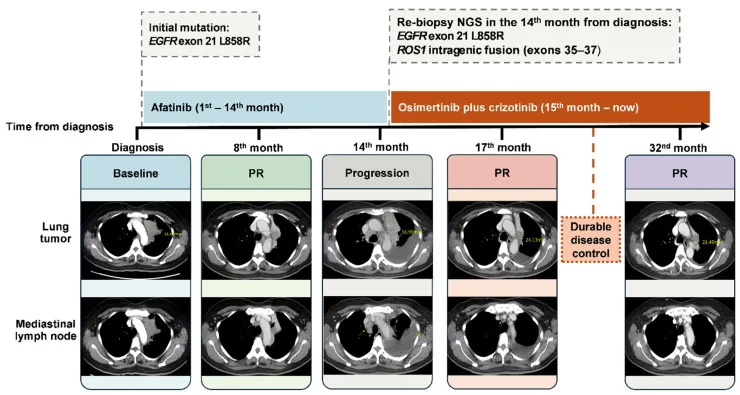
EGFR-mutated Stage IV lung cancer with later brain progression

Patient Info: Anonymized, Female, 60s | Stage IV

Biomarkers: EGFR exon 19 deletion; acquired EGFR C797S mutation; acquired ROS1 rearrangement

Metastatic Site: brain|bone

She died about 20 months after diagnosis after brain progression and a severe postoperative stroke.

PubMed Central
OutcomeIn Memory
A patient, who was diagnosed with Stage IV Lung AdenocarcinomaLung Cancer

Stage IVA EGFR-mutated lung adenocarcinoma: stable disease on first-line osimertinib

Patient Info: Anonymized, Female, 70+ | Stage IV

Biomarkers: EGFR exon 19 deletion; baseline EGFR exon 20 T790M mutation; ALK IHC negative; PD-L1 TPS 30%; TTF-1-positive

Metastatic Site: pleura; malignant pleural-pericardial adhesions

As of April 2026, she had stable disease for more than 9 months on first-line osimertinib, with no progressive disease, no recurrent pleural effusion, ECOG improvement from 2 to 0, and no treatment-related adverse events.

PubMed Central
OutcomeResponding Well
A patient, who was diagnosed with Stage IV Non-Small Cell Lung CancerLung Cancer

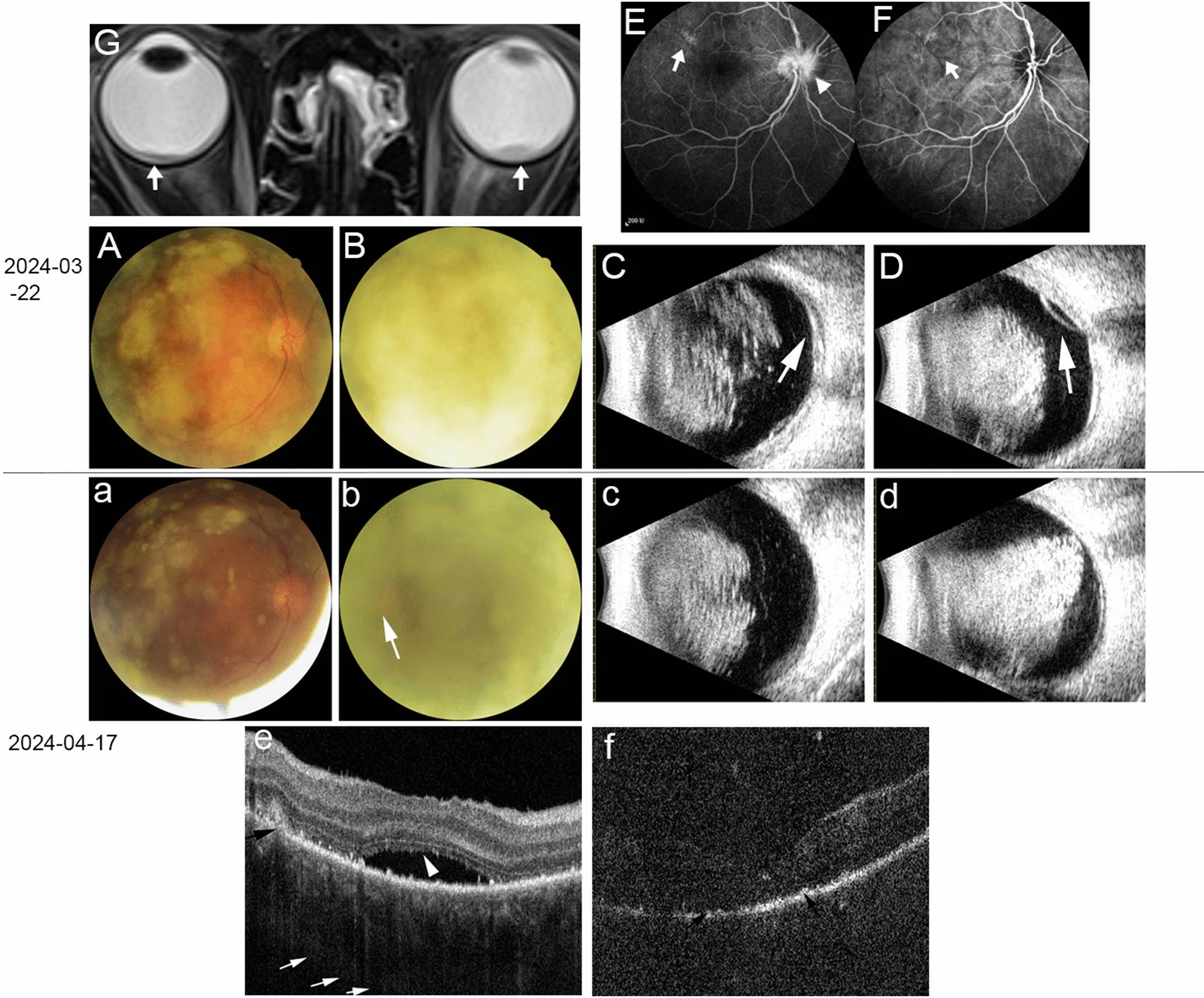
Stage IV squamous NSCLC: durable pembrolizumab response followed by invasive aspergillosis, marrow failure, and death

Patient Info: Anonymized, Male, 50s | Stage IV

Biomarkers: PD-L1 20%

Metastatic Site: bilateral lungs

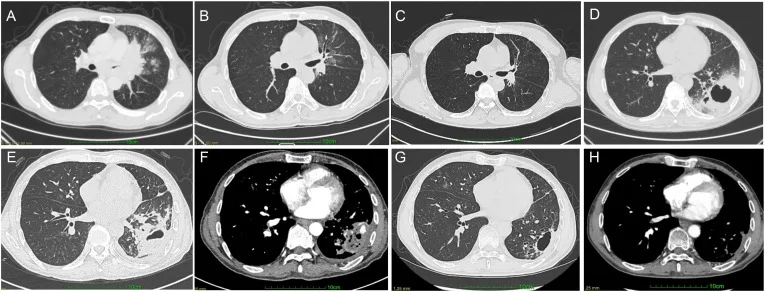
After durable partial response to pembrolizumab-based therapy, he developed severe pulmonary infection, invasive pulmonary aspergillosis, progressive AA-like bone marrow failure with severe cytopenias, declined further treatment, and died at home in early 2025.

PubMed Central
OutcomeIn Memory
A patient, who was diagnosed with Stage IV Lung Squamous Cell CarcinomaLung Cancer

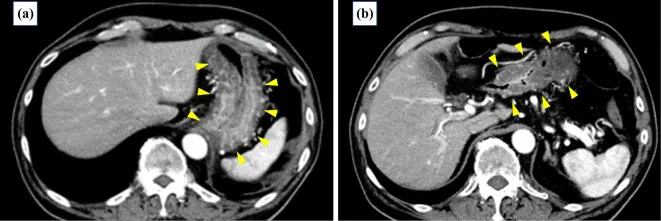
Stage IV squamous lung cancer with steroid-refractory immune-related gastritis after pembrolizumab

Patient Info: Anonymized, Male, 70+ | Stage IV

Biomarkers: Gastric biopsy during immune gastritis showed CD8-positive lymphocyte inflammation, no cancer

After about 2 years of carboplatin, pemetrexed, and pembrolizumab, lung cancer treatment was stopped because of tumor growth; the later immune-related gastritis improved after escalation to infliximab, while the cancer course remained a setback/progression story.

PubMed Central
OutcomeSetback / Progression
A patient, who was diagnosed with Stage IV Lung AdenocarcinomaLung Cancer

Stage IVB lung adenocarcinoma with severe immune-related complications

Patient Info: Anonymized, Male, 70+ | Stage IV

Biomarkers: PD-L1 TPS 20%; BRAF mutation

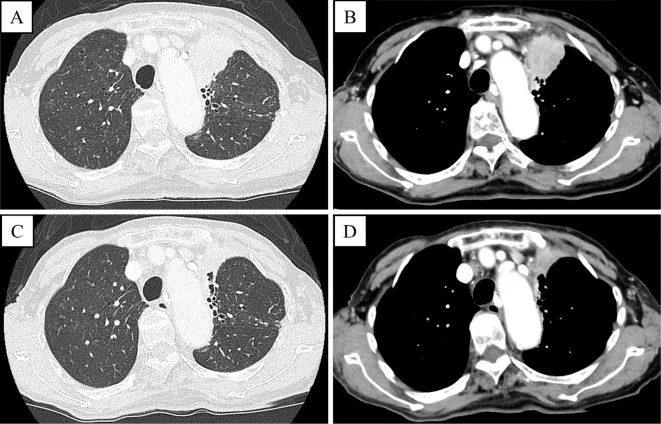
Metastatic Site: left supraclavicular fossa, left axilla, right hilum,…

The patient had an initial partial response to ipilimumab/nivolumab but developed severe immune-related pneumonitis, thrombocytopenia, and aplastic anemia. Cytopenias recovered with eltrombopag, but lung cancer later relapsed with carcinomatous meningitis, and he died 20 months after diagnosis.

PubMed Central
OutcomeIn Memory
A patient, who was diagnosed with Stage IV Lung AdenocarcinomaLung Cancer

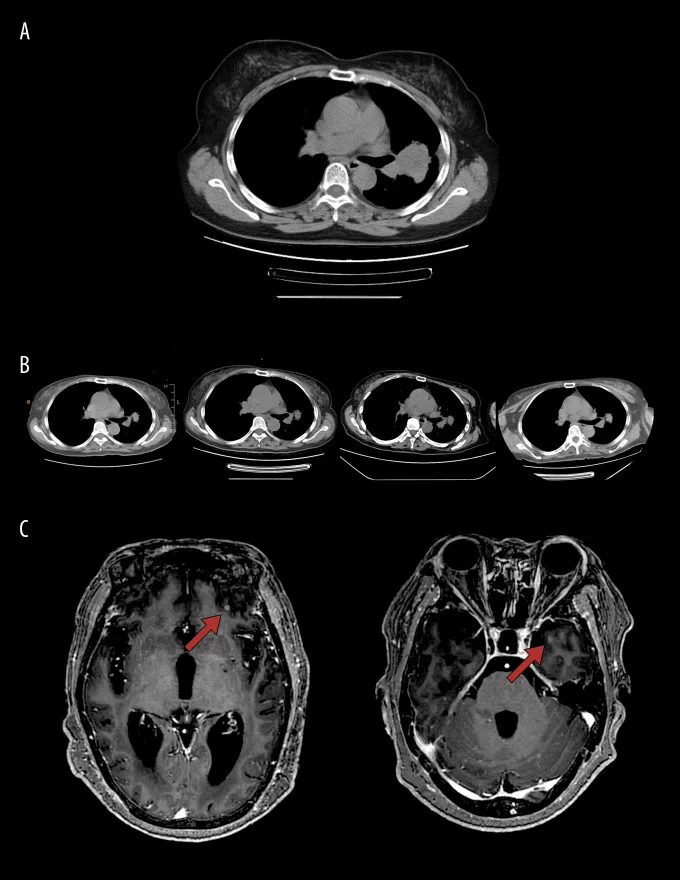
EGFR L858R lung adenocarcinoma with rapid neurologic decline

Patient Info: Anonymized, Female, 40s | Stage IV

Biomarkers: EGFR L858R mutation; CK7-positive; Napsin A-positive; TTF-1-positive; p40-negative; Ki-67 about 1%

Metastatic Site: brain parenchyma and meninges

The patient developed rapidly progressive cognitive decline with multifocal brain lesions. Lung biopsy confirmed EGFR L858R lung adenocarcinoma, and she received amivantamab, but neurologic deterioration continued and she died in the fourth month of the disease course.

PubMed Central
OutcomeIn Memory
A patient, who was diagnosed with Stage IV Lung AdenocarcinomaLung Cancer

BRAF-mutant stage IV lung adenocarcinoma complicated by immunotherapy-induced diabetes

Patient Info: Anonymized, Female, 60s | Stage IV

Biomarkers: BRAF mutation; GADA-positive during immune-related diabetes evaluation

Metastatic Site: left lower lung, pleural

The patient had Stage IV BRAF V600E-mutant lung adenocarcinoma treated with targeted therapy and later tislelizumab. Immunotherapy was suspended after hypoadrenocorticism and diabetic ketosis; she required ongoing insulin therapy, with persistently low C-peptide at 6-month follow-up.

PubMed Central
OutcomeCare Ongoing
A patient, who was diagnosed with Stage IV Lung CancerLung Cancer

Stage IV non-small cell lung cancer: treatment and follow-up story

Patient Info: Anonymized, Male, 40s | Stage IV

Biomarkers: ALK mutation/rearrangement; EGFR negative

Metastatic Site: Bone, including left humerus

As of January 2026, he described about 3 years on ALK-targeted oral therapy, feeling well, exercising 3-4 times per week, and living close to normal life with Stage IV ALK-positive lung cancer.

YouTube (ZH search)
OutcomeResponding Well
A patient, who was diagnosed with Stage IV Non-Small Cell Lung CancerLung Cancer

MET exon 14 skipping lung adenocarcinoma: sequential MET-TKI toxicity and ongoing chemotherapy

Patient Info: Anonymized, Male, 70+ | Stage IV

Biomarkers: MET exon 14 skipping mutation; EGFR negative; ALK negative; ROS1 negative; PD-L1 tumor proportion score 10%

Metastatic Site: pleura

The cancer recurred with pleural dissemination after surgery and adjuvant UFT. Sequential MET inhibitors and systemic therapies provided periods of disease control but were limited by ILD and non-ILD toxicities; at the report, he remained on carboplatin, pemetrexed, and bevacizumab.

PubMed Central
OutcomeLiving With Cancer
A patient, who was diagnosed with Stage IV Lung Squamous Cell CarcinomaLung Cancer

Stage IV squamous lung cancer: complete response followed by fatal bone marrow metastasis

Patient Info: Anonymized, Male, 60s | Stage IV

Biomarkers: with PD-L1 95%. SCC antigen/CYFRA rose at relapse.

Metastatic Site: bone (spine, bilateral humerus, bilateral femur); bone…

As of December 2025, he had died of aspiration pneumonia 1 month after admission for biopsy-confirmed bone marrow metastasis from squamous lung cancer, despite a prior complete response to chemoimmunotherapy and pembrolizumab maintenance.

PubMed Central
OutcomeIn Memory
A patient, who was diagnosed with Stage IV Lung CancerLung Cancer

Stage IV EGFR-mutant lung cancer: treatment and follow-up story

Patient Info: Anonymized, Female | Stage IV

Biomarkers: EGFR-mutated

As of November 2025, she was newly living with Stage IV EGFR-mutated lung cancer after starting first-generation targeted therapy on 5 March and managing treatment side effects during the first 3 months.

YouTube (ZH search)
OutcomeCare Ongoing