Stage 4 Lung Cancer: 435 Real Stories

435 stories match lung cancer and stage 4. 243 of them mention chemotherapy.

A patient, who was diagnosed with Stage IV Lung AdenocarcinomaLung Cancer

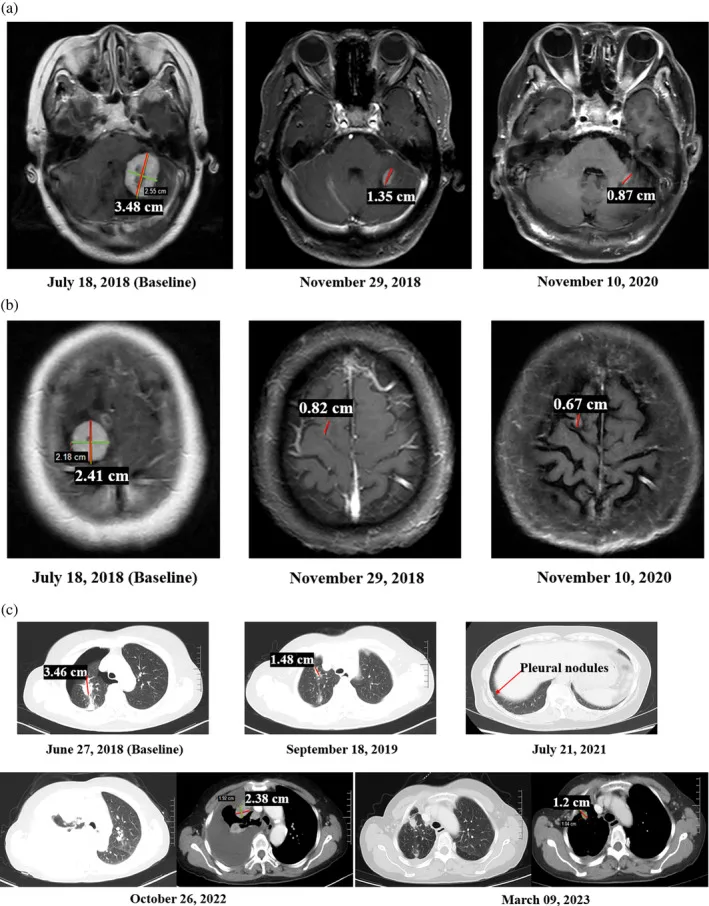
Seven-year response journey in EGFR-mutated metastatic lung adenocarcinoma

Patient Info: Anonymized, Male, 70+ | Stage IV

Biomarkers: EGFR mutation

Metastatic Site: pleura, brain

About 7 years after presentation with metastatic lung adenocarcinoma, he remained on targeted therapy. Gefitinib controlled the disease for 5 years; after brain progression, osimertinib followed by stereotactic radiation produced a complete intracranial response.

PubMed Central
OutcomeResponding Well
A patient, who was diagnosed with Stage IV Lung Squamous Cell CarcinomaLung Cancer

Lung squamous cell carcinoma spreading to bone and intestine

Patient Info: Anonymized, Male, 50s | Stage IV

Biomarkers: PD-L1 positive in almost all tumor cells

Metastatic Site: bone (left femur), intestine, abdomen

Despite chemotherapy, immunotherapy and radiation, the lung cancer progressed with intestinal and extensive abdominal metastases, cachexia and gastrointestinal bleeding. Palliative care was planned, but he chose discharge and received no further treatment.

PubMed Central
OutcomeSetback / Progression
A patient, who was diagnosed with Stage IV Lung AdenocarcinomaLung Cancer

Stage IV PD-L1-negative lung adenocarcinoma: complete response with nivolumab and ipilimumab

Patient Info: Anonymized, Female, 50s | Stage IV

Biomarkers: PD-L1-negative; no targetable molecular alterations on DNA/RNA next-generation sequencing; TP53 alteration reported at 66%

Metastatic Site: left pleural effusion; right adrenal gland;…

As of February 2024, she remained on maintenance nivolumab and ipilimumab after 14 cycles, without significant toxicity and with persistent complete response of Stage IV PD-L1-negative lung adenocarcinoma.

PubMed Central
OutcomeCancer-Free / NED
A patient, who was diagnosed with Stage IV Lung Squamous Cell CarcinomaLung Cancer

Stage 4 lung cancer: complete response to chemo-immunotherapy combo

Patient Info: Anonymized, Male, 40s | Stage IV

Metastatic Site: right hilar lymph nodes, mediastinal lymph nodes

Stage IVA lung squamous cell carcinoma achieved complete response at 12 months. Pembrolizumab was stopped after immune-related RS3PE and likely colitis; 8 months after glucocorticoid initiation, there was no relapse of lung cancer or RS3PE.

PubMed Central
OutcomeCancer-Free / NED
Leah, who was diagnosed with Stage IV Non-Small Cell Lung CancerLung Cancer

Stage IV EGFR Non-Small Cell Lung Cancer: Leah's Patient Story

Patient Info: Leah Phillips, Female, 40s | Stage IV

Biomarkers: EGFR exon 19 deletion

Metastatic Site: bone (spine, pelvis); malignant right pleural…

As of July 2024, Leah remained on daily Tagrisso with stable Stage IV EGFR-mutated lung cancer, no reported progression, healing/sclerotic bone metastases, and durable response for more than 4 years.

The Patient Story

OutcomeResponding Well
A patient, who was diagnosed with Stage IV Lung AdenocarcinomaLung Cancer

Stage IV EGFR-mutated lung cancer with acquired resistance to osimertinib

Patient Info: Anonymized, Female, 70+ | Stage IV

Biomarkers: EGFR L858R; acquired EGFR T790M; acquired EGFR L718Q

Metastatic Site: pleura, bone

After temporary disease control with sequential EGFR-targeted therapies, the right lung lesion enlarged again in June 2021; she was alive at the latest follow-up.

PubMed Central
OutcomeSetback / Progression
A patient, who was diagnosed with Stage IV Lung AdenocarcinomaLung Cancer

Stage IV EGFR-mutated lung cancer treated after osimertinib resistance

Patient Info: Anonymized, Female, 60s | Stage IV

Biomarkers: EGFR L858R, TP53 mutation; acquired EGFR T790M; acquired EGFR L718Q

Metastatic Site: lungs, bone

Dacomitinib produced brief stable disease, but the lung cancer progressed again by September 2021; she was alive at the latest follow-up.

PubMed Central
OutcomeSetback / Progression
A patient, who was diagnosed with Stage IV Lung AdenocarcinomaLung Cancer

Near-complete response to osimertinib in Stage IV lung adenocarcinoma with rare EGFR mutations

Patient Info: Anonymized, Male, 70+ | Stage IV

Biomarkers: EGFR S768I mutation, PD-L1 TPS 2%

Metastatic Site: pleura, bone, lymph nodes

After progression on vinorelbine and carboplatin, osimertinib produced a metabolic complete response by December 2023 and a near-complete radiologic response in March 2024. He remained on osimertinib with good tolerance and stable clinical condition.

PubMed Central
OutcomeResponding Well
A patient, who was diagnosed with Stage IV Lung CancerLung Cancer

Metastatic lung cancer causing severe vena cava obstruction

Patient Info: Anonymized, Male, 70+ | Stage IV

Biomarkers: BRCA2 functional variant

Metastatic Site: bilateral adrenal glands, bone, pleura, lungs,…

Progressive metastatic lung cancer caused rapidly enlarging adrenal disease, worsening bone, pleural, pulmonary and nodal metastases, and malignant inferior vena cava obstruction. Endovascular iliocaval reconstruction restored venous flow without immediate complications.

PubMed Central
OutcomeSetback / Progression
Lenny, who was diagnosed with Stage IV Non-Small Cell Lung CancerLung Cancer

Stage IV Non-Small Cell Lung Cancer: Lenny's Survivor Story

Patient Info: Lenny, Male, 50s | Stage IV

Biomarkers: PD-L1 expression positive

Metastatic Site: right femur; brain/cerebellum

As of July 2024, Lenny described himself as NED/no evidence of disease after surgery, CyberKnife radiation, chemotherapy, and Keytruda-based immunotherapy.

The Patient Story
OutcomeCancer-Free / NED
A patient, who was diagnosed with Stage IV Lung AdenocarcinomaLung Cancer

RET-fusion lung adenocarcinoma responding to pralsetinib and bevacizumab

Patient Info: Anonymized, Male, 50s | Stage IV

Biomarkers: KIF13A-RET fusion

Metastatic Site: pleura

He had 27 months of disease-free survival on pralsetinib before pleural and nodal recurrence. After bevacizumab was added, imaging showed reduction of the pleural lesion and mediastinal nodes and circulating tumor DNA became undetectable in December 2023.

PubMed Central
OutcomeResponding Well
A patient, who was diagnosed with Stage IV Small Cell Lung CancerLung Cancer

Five-year survival with extensive-stage small cell lung cancer on atezolizumab

Patient Info: Anonymized, Male, 50s | Stage IV

Metastatic Site: bilateral lungs, cervical lymph nodes

Five years after diagnosis with extensive-stage small cell lung cancer, he was alive and well on maintenance atezolizumab with no further documented progression after the 2020–2021 rechallenge, reaching 60 months overall survival and about 44 months progression-free survival.

PubMed Central
OutcomeResponding Well
A patient, who was diagnosed with Stage IV Lung AdenocarcinomaLung Cancer

EGFR-mutated lung cancer treated with osimertinib during tuberculosis therapy

Patient Info: Anonymized, female, 70+ | Stage IV

Biomarkers: EGFR exon 19 deletion; acquired EGFR T790M mutation

Metastatic Site: pleura, left axillary lymph node

Osimertinib maintained a partial response throughout 9 months of tuberculosis treatment, with no new abdominal or brain lesions. By the end of tuberculosis treatment, she was more than 7 years from her original lung-cancer diagnosis.

PubMed Central
OutcomeResponding Well
A patient, who was diagnosed with Stage IV Small Cell Lung CancerLung Cancer

EGFR-mutated lung cancer with later small-cell transformation

Patient Info: Anonymized, male, 60s | Stage IV

Biomarkers: EGFR L858R mutation; acquired EGFR T790M mutation

Metastatic Site: pleura/chest wall, ribs, brain, meninges,…

Disease progressed through multiple lines of therapy with brain and meningeal involvement. He died in September 2021, more than 9 years after his original 2012 diagnosis.

PubMed Central
OutcomeIn Memory
A patient, who was diagnosed with Stage IV Lung AdenocarcinomaLung Cancer

More than five years with EGFR-mutated lung cancer and untreated brain metastases

Patient Info: Anonymized, female, 60s | Stage IV

Biomarkers: EGFR L858R mutation; acquired EGFR T790M mutation

Metastatic Site: brain, pleura

Zorifertinib produced partial responses in both brain and extracranial disease, with 3 years of progression-free survival and more than 4 years of intracranial control. By December 2023, she remained alive on aumolertinib with overall survival of more than 65 months, or 5+ years, from treatment start.

PubMed Central
OutcomeResponding Well
A patient, who was diagnosed with Stage IV Lung AdenocarcinomaLung Cancer

MET-Positive Metastatic Lung Cancer That First Appeared as a Breast Mass

Patient Info: Anonymized, Female, 70+ | Stage IV

Biomarkers: MET exon 14 skipping mutation; acquired MET and resistance mutations

Metastatic Site: breast, liver, right adrenal gland

Capmatinib produced a marked response across most disease sites at 3 months, but a right adrenal metastasis progressed by 6 months while other sites continued responding.

PubMed Central
OutcomeSetback / Progression
A patient, who was diagnosed with Stage IV Lung AdenocarcinomaLung Cancer

Stage IVA lung adenocarcinoma with solitary brain metastasis: pCR after brain surgery, chemoradiation, immunotherapy, and lobectomy

Patient Info: Anonymized, Male, 70+ | Stage IV

Biomarkers: PD-L1 75%; negative for driver gene mutations and translocations

Metastatic Site: brain

As of May 2024, he had no recurrence after brain metastasis resection and radiation, carboplatin/pemetrexed/atezolizumab, robot-assisted right upper lobectomy with pathologic complete response, and 13 cycles of maintenance atezolizumab.

PubMed Central
OutcomeCancer-Free / NED
A patient, who was diagnosed with Stage IV Lung AdenocarcinomaLung Cancer

Metastatic lung adenocarcinoma presenting as a pituitary mass

Patient Info: Anonymized, Female, 60s | Stage IV

Biomarkers: Lung adenocarcinoma with ERBB2 plus other mutations, PD-L1 TPS 1%

Metastatic Site: pituitary gland

As of May 2024, metastatic lung adenocarcinoma to the pituitary/sellar region had been diagnosed pathologically; systemic treatment, recurrence status, and longer follow-up were not described.

PubMed Central
OutcomeLiving With Cancer