Paclitaxel: 361 Real Stories

361 stories match paclitaxel. 359 of them mention chemotherapy.

Jacqueline, who was diagnosed with Breast CancerBreast Cancer

Triple-Negative Breast Cancer: Jacqueline's Patient Story

Patient Info: Jacqueline Bennett, Female, Under 40

Biomarkers: Initial ER-negative, PR-negative, HER2-negative; later HER2-positive

Jacqueline completed treatment for initial Stage IA triple-negative breast cancer during pregnancy and later developed a HER2-positive, hormone receptor-negative breast cancer. After 3 of 6 current treatments, the tumor was no longer visible on ultrasound or MRI, with targeted therapy and double mastectomy still planned.

The Patient Story
OutcomeResponding Well
A patient, who was diagnosed with Breast CancerBreast Cancer

Triple-negative breast cancer diagnosed during pregnancy: remission

Patient Info: Anonymized, Female, Under 40

Biomarkers: ER-negative; PR-negative; HER2-negative

The patient remains in remission 30 months after surgery. Immune-related brachial plexopathy after treatment improved after steroids, IVIG, and plasmapheresis, with electrophysiologic resolution and near-complete strength and sensory recovery.

PubMed Central
OutcomeCancer-Free / NED
A patient, who was diagnosed with Lung CancerLung Cancer

Pulmonary epithelioid hemangioendothelioma with complete response after neoadjuvant therapy

Patient Info: Anonymized, Male, 60s

Biomarkers: WWTR1-CAMTA1 fusion; vascular markers supported epithelioid hemangioendothelioma; lung cancer markers were absent.

The patient achieved radiographic disappearance of the lung tumor after neoadjuvant paclitaxel/carboplatin plus bevacizumab. Surgery then showed no residual tumor and lymph nodes were negative; CT follow-up through April 2024 showed no recurrence.

PubMed Central
OutcomeCancer-Free / NED
A patient, who was diagnosed with Breast Squamous Cell CarcinomaBreast Cancer

Non-metastatic metaplastic triple-negative breast cancer with residual disease after chemotherapy

Patient Info: Anonymized, Female, 40s

Biomarkers: Metaplastic triple-negative breast cancer; HER2 0

The patient had an initial partial response to neoadjuvant chemotherapy but then progressed before surgery. Modified radical mastectomy found substantial residual metaplastic carcinoma with 0/21 nodes involved, followed by adjuvant radiotherapy and metronomic capecitabine.

PubMed Central
OutcomeCare Ongoing
Caroline, who was diagnosed with Stage III Breast CancerBreast Cancer

Stage III HER2-Positive Breast Cancer: Caroline's Patient Story

Patient Info: Caroline McNally, Female, Under 40 | Stage III

Biomarkers: Hormone-positive component reported; exact ER/PR/HER2 panel not stated

As of February 2026, Caroline was in active treatment for Stage III hormone-positive breast cancer, receiving Taxol after dose-dense AC and preparing for double mastectomy, likely radiation, and hormone therapy.

Susan G. Komen
OutcomeCare Ongoing
A patient, who was diagnosed with Stage III Breast CancerBreast Cancer

Stage IIIB triple-negative metaplastic breast cancer: urgent mastectomy and reconstruction after rapid progression on neoadjuvant therapy

Patient Info: Anonymized, Female, 40s | Stage III

Biomarkers: ER-negative; PR-negative; HER2-negative; nuclear grade 3

At 18-month follow-up, she was disease-free after urgent mastectomy, axillary dissection, flap/skin-graft reconstruction, resumed chemotherapy, and radiation for rapidly progressive triple-negative metaplastic breast cancer.

PubMed Central
OutcomeCancer-Free / NED
A patient, who was diagnosed with Stage IV Lung Squamous Cell CarcinomaLung Cancer

Stage 4 lung cancer: large tumor managed with targeted care

Patient Info: Anonymized, Male, 70+ | Stage IV

Biomarkers: PD-L1 TPS <1%

Metastatic Site: contralateral lymph nodes, supraclavicular lymph…

The patient had a partial response to CheckMate 9LA despite PD-L1 TPS <1%, later progressed after 24 cycles of immunotherapy, received additional chemotherapy, and died in November 20XX+2.

PubMed Central
OutcomeIn Memory
A patient, who was diagnosed with Stage IV Breast CancerBreast Cancer

Metastatic triple-negative breast cancer with sacituzumab-govitecan pneumonitis and progression

Patient Info: Anonymized, Female, 60s | Stage IV

Biomarkers: ER-negative; PR-negative; HER2-negative

Metastatic Site: lung

Sacituzumab-govitecan pneumonitis improved with corticosteroids and half-dose rechallenge did not reproduce pneumonitis, but follow-up CT showed one new pulmonary metastasis and enlargement of previous lung metastases; PFS on sacituzumab govitecan was 5.37 months.

PubMed Central
OutcomeSetback / Progression
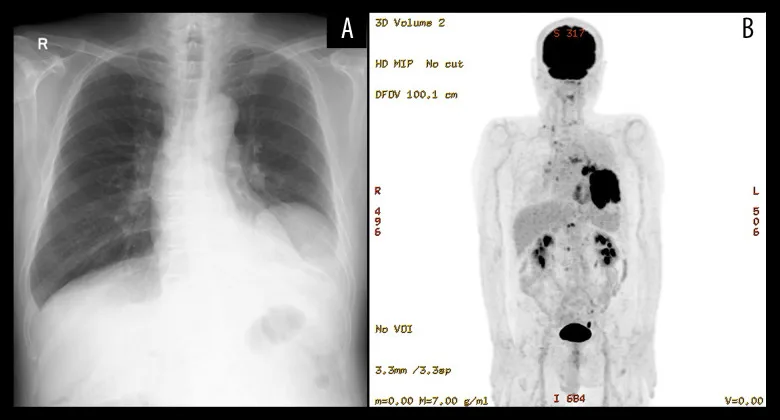
A patient, who was diagnosed with Stage IV Non-Small Cell Lung CancerLung Cancer

Stage 4 lung cancer: persistent cough led to diagnosis

Patient Info: Anonymized, Male, 60s | Stage IV

Biomarkers: KRAS and TP53 ; PD-L1 TPS 95%. Other common lung drivers were not detected.

Metastatic Site: liver, left adrenal gland, lymph nodes, pleural…

After more than 2 years of disease control and partial response on antiangiogenic therapy plus sintilimab, the patient developed fulminant immune-checkpoint-inhibitor-induced type 1 diabetes with severe diabetic ketoacidosis, inflammatory crisis, sepsis, and died shortly after discharge against medical advice.

PubMed Central
OutcomeIn Memory
A patient, who was diagnosed with Stage III Invasive Ductal CarcinomaBreast Cancer

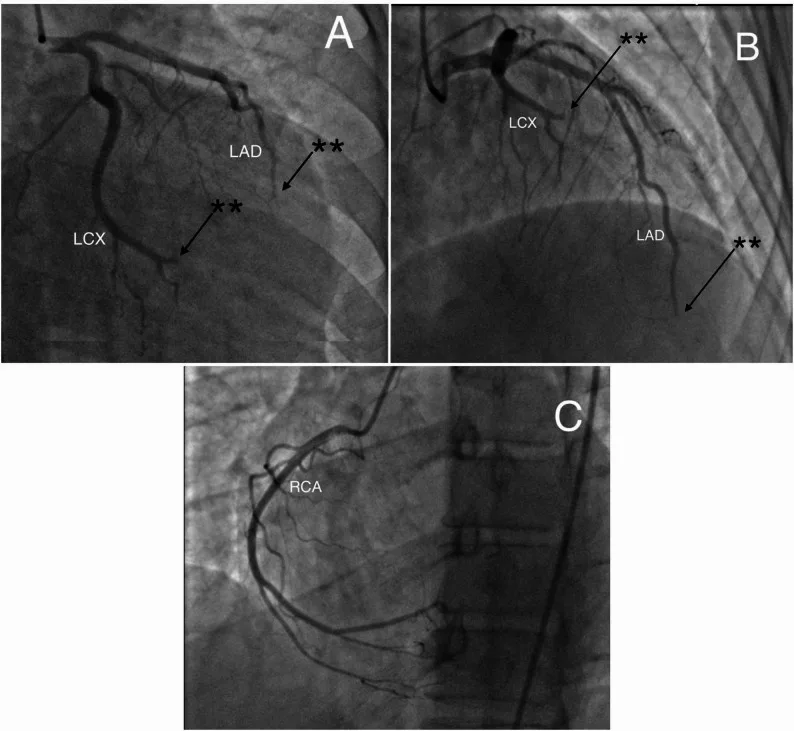
Stage III Breast Cancer Treatment Complicated by Coronary Thrombosis

Patient Info: Anonymized, female, 40s | Stage III

Biomarkers: ER-positive; PR-positive; HER2-negative; Ki-67 25–30%

She achieved complete remission about 12 months after the myocardial infarction and remained in complete oncologic remission at 44 months.

PubMed Central
OutcomeCancer-Free / NED
Lea, who was diagnosed with Stage IV Breast CancerBreast Cancer

Stage IV Breast Cancer: Lea's Patient Story

Patient Info: Lea, Female, Under 40 | Stage IV

Metastatic Site: Bone: hip sockets, femurs, spine; liver

As of January 2026, Lea was living with metastatic breast cancer involving bone and liver and was in active treatment with Taxol after progression changed her treatment plan.

Susan G. Komen
OutcomeLiving With Cancer
A patient, who was diagnosed with Stage III Breast CancerBreast Cancer

Stage 3 triple-negative breast cancer complicated by immunotherapy endocrine toxicity

Patient Info: Anonymized, Female, 40s | Stage III

Biomarkers: ER-negative; PgR-negative/PR-negative; HER2 0; Ki-67 70%; triple-negative breast cancer

After neoadjuvant therapy complicated by immune-related hypothyroidism, adrenal insufficiency, and suspected hypophysitis, surgery showed residual ypT1c ypN0 triple-negative disease. Pembrolizumab was stopped, adjuvant capecitabine was completed in June 2025, and endocrine replacement/follow-up continued.

PubMed Central
OutcomeCare Ongoing
A patient, who was diagnosed with Stage IV Gastric AdenocarcinomaGastric Cancer

Stage IV gastric cancer with benign breast hemangioma during ramucirumab therapy

Patient Info: Anonymized, Female, Under 40 | Stage IV

Biomarkers: Gastric cancer: HER2 negative, PD-L1 TPS >=5%

Metastatic Site: peritoneum; preaortic lymph nodes; omentum

After initial response to FOLFOX/nivolumab and temporary benefit from paclitaxel/ramucirumab and FOLFIRI, the gastric cancer progressed to massive ascites. Trifluridine/tipiracil was attempted, but she died from rapid disease progression.

PubMed Central
OutcomeIn Memory
A patient, who was diagnosed with Stage IV Ovarian CancerOvarian Cancer

Ovarian Cancer Metastatic to an Axillary Lymph Node Without Breast Disease

Patient Info: Anonymized, female, 50s | Stage IV

Biomarkers: BRCA1/2 negative

Metastatic Site: right axillary lymph node

Secondary cytoreductive surgery in April 2025 achieved complete macroscopic cytoreduction, and she was discharged without complications.

PubMed Central
OutcomeCare Ongoing
A patient, who was diagnosed with Breast CancerBreast Cancer

Hormone receptor-positive breast cancer treated with pembrolizumab trial complicated by acquired lipodystrophy

Patient Info: Anonymized, Female, 40s

Biomarkers: HER2-negative breast cancer. Metabolic changes occurred during/after pembrolizumab.

As of December 2025, breast cancer treatment had included neoadjuvant chemotherapy/pembrolizumab, surgery, adjuvant pembrolizumab, and endocrine therapy; CT did not show recurrence during weight-loss evaluation, but she required ongoing metabolic care for pembrolizumab-associated acquired generalized lipodystrophy.

PubMed Central
OutcomeCare Ongoing
A patient, who was diagnosed with Stage IV Breast CancerBreast Cancer

Metastatic Breast Cancer Causing Bile Duct Obstruction and Liver Failure

Patient Info: Anonymized, female, Under 40 | Stage IV

Biomarkers: Metastatic biopsy ER-negative, PR-negative, HER2-negative

Metastatic Site: bone, liver, common bile duct

Her metastatic breast cancer progressed rapidly with diffuse liver involvement and bile-duct invasion, leading to liver failure and death 28 days after admission.

PubMed Central
OutcomeIn Memory
A patient, who was diagnosed with Stage IV Lung Squamous Cell CarcinomaLung Cancer

Stage IV squamous lung cancer: complete response followed by fatal bone marrow metastasis

Patient Info: Anonymized, Male, 60s | Stage IV

Biomarkers: with PD-L1 95%. SCC antigen/CYFRA rose at relapse.

Metastatic Site: bone (spine, bilateral humerus, bilateral femur); bone…

As of December 2025, he had died of aspiration pneumonia 1 month after admission for biopsy-confirmed bone marrow metastasis from squamous lung cancer, despite a prior complete response to chemoimmunotherapy and pembrolizumab maintenance.

PubMed Central
OutcomeIn Memory
A patient, who was diagnosed with Stage IV Lung AdenocarcinomaLung Cancer

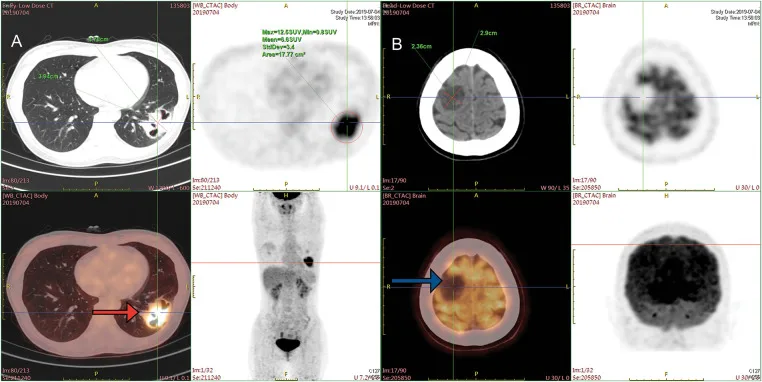
Stage IV NSCLC with brain and leptomeningeal metastases responding to radiotherapy, camrelizumab, GM-CSF, and chemotherapy

Patient Info: Anonymized, Male, 50s | Stage IV

Biomarkers: Lung cancer markers supported adenocarcinoma. PD-L1 negative; no common lung driver found; TMB high; MSI not detected.

Metastatic Site: brain, leptomeningeal disease, left supraclavicular…

As of March 2025, leptomeningeal metastases had complete response, brain lesions had further regression, the lung lesion had decreased from 76 mm to 21 mm, and overall disease remained in partial response with 69 months of progression-free survival since radiotherapy.

PubMed Central
OutcomeResponding Well