Targeted Therapy for Stage 4 Lung Cancer: 241 Real Stories

241 stories match lung cancer, stage 4 and targeted therapy. 116 of them mention chemotherapy.

A patient, who was diagnosed with Stage IV Non-Small Cell Lung CancerLung Cancer

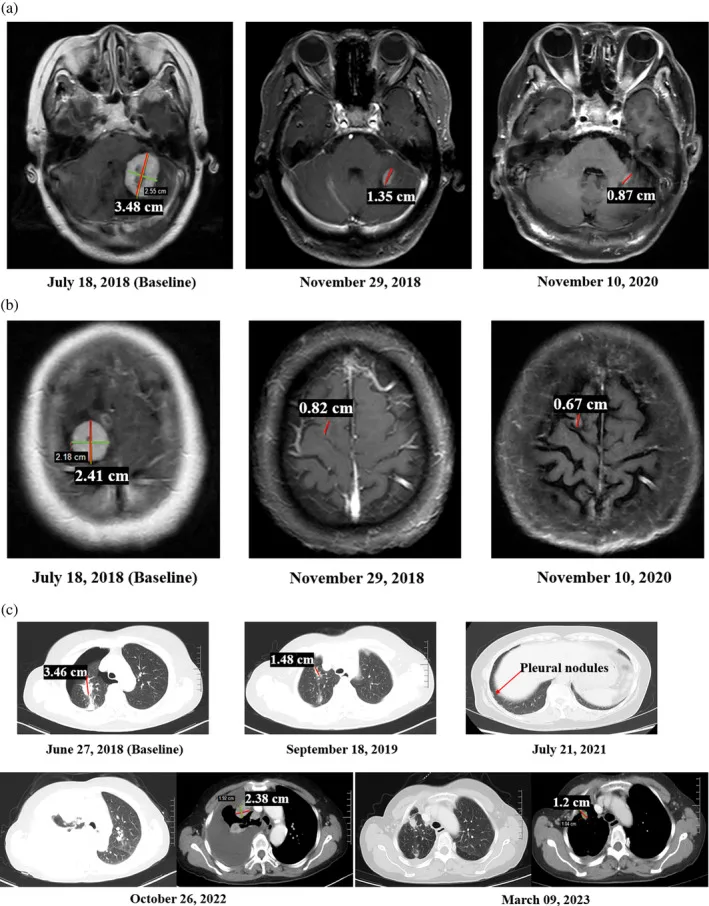
Stage 4 lung cancer with brainstem metastasis: complete remission on chemotherapy

Patient Info: Anonymized, Male, 50s | Stage IV

Metastatic Site: pons, right parietal lobe, brain

Stage IV NSCLC with pontine and right parietal brain metastases achieved complete remission after 2 years of chemotherapy with an anti-VEGF drug; the pontine lesion remained stable, and severe SRS-related central neuropathic pain improved after methadone escalation.

PubMed Central
OutcomeCancer-Free / NED
A patient, who was diagnosed with Stage IV Lung AdenocarcinomaLung Cancer

EGFR exon 19 deletion lung cancer: gefitinib after osimertinib toxicity

Patient Info: Anonymized, Female, 70+ | Stage IV

Biomarkers: EGFR exon 19 deletion

As of August 2024, Stage IVB EGFR exon 19 deletion lung adenocarcinoma was being treated with gefitinib after osimertinib-induced grade 3 interstitial lung disease; ILD had not recurred, and low-dose prednisolone continued.

PubMed Central
OutcomeCare Ongoing
A patient, who was diagnosed with Stage IV Lung AdenocarcinomaLung Cancer

Stage 4 EGFR-mutant lung cancer controlled on gefitinib after osimertinib intolerance

Patient Info: Anonymized, Female, 70+ | Stage IV

Biomarkers: EGFR exon 21 L858R mutation

As of August 2024, Stage IVB EGFR L858R lung adenocarcinoma was being treated with gefitinib after grade 3 osimertinib-induced interstitial lung disease; the cancer had not progressed when steroids were completed and ILD had not recurred on gefitinib.

PubMed Central
OutcomeCare Ongoing
A patient, who was diagnosed with Stage IV Small Cell Lung CancerLung Cancer

EGFR-mutant lung adenocarcinoma transforming to small cell lung cancer during targeted therapy

Patient Info: Anonymized, Female, 60s | Stage IV

Biomarkers: EGFR exon 19 deletion, TP53 mutation, TMB 11 mut/Mb

Metastatic Site: cervical lymph nodes

At the last follow-up in February 2024, 32 months after diagnosis, she was alive and both the primary lung lesion and cervical lymph-node metastasis had decreased on combined chemotherapy, immunotherapy and targeted therapy.

PubMed Central
OutcomeResponding Well
A patient, who was diagnosed with Stage IV Lung AdenocarcinomaLung Cancer

Seven-year response journey in EGFR-mutated metastatic lung adenocarcinoma

Patient Info: Anonymized, Male, 70+ | Stage IV

Biomarkers: EGFR mutation

Metastatic Site: pleura, brain

About 7 years after presentation with metastatic lung adenocarcinoma, he remained on targeted therapy. Gefitinib controlled the disease for 5 years; after brain progression, osimertinib followed by stereotactic radiation produced a complete intracranial response.

PubMed Central
OutcomeResponding Well
A patient, who was diagnosed with Stage IV Lung AdenocarcinomaLung Cancer

Stage IV EGFR-mutated lung cancer with acquired resistance to osimertinib

Patient Info: Anonymized, Female, 70+ | Stage IV

Biomarkers: EGFR L858R; acquired EGFR T790M; acquired EGFR L718Q

Metastatic Site: pleura, bone

After temporary disease control with sequential EGFR-targeted therapies, the right lung lesion enlarged again in June 2021; she was alive at the latest follow-up.

PubMed Central
OutcomeSetback / Progression
Leah, who was diagnosed with Stage IV Non-Small Cell Lung CancerLung Cancer

Stage IV EGFR Non-Small Cell Lung Cancer: Leah's Patient Story

Patient Info: Leah Phillips, Female, 40s | Stage IV

Biomarkers: EGFR exon 19 deletion

Metastatic Site: bone (spine, pelvis); malignant right pleural…

As of July 2024, Leah remained on daily Tagrisso with stable Stage IV EGFR-mutated lung cancer, no reported progression, healing/sclerotic bone metastases, and durable response for more than 4 years.

The Patient Story
OutcomeResponding Well
A patient, who was diagnosed with Stage IV Lung AdenocarcinomaLung Cancer

Stage IV EGFR-mutated lung cancer treated after osimertinib resistance

Patient Info: Anonymized, Female, 60s | Stage IV

Biomarkers: EGFR L858R, TP53 mutation; acquired EGFR T790M; acquired EGFR L718Q

Metastatic Site: lungs, bone

Dacomitinib produced brief stable disease, but the lung cancer progressed again by September 2021; she was alive at the latest follow-up.

PubMed Central
OutcomeSetback / Progression
A patient, who was diagnosed with Stage IV Lung AdenocarcinomaLung Cancer

Near-complete response to osimertinib in Stage IV lung adenocarcinoma with rare EGFR mutations

Patient Info: Anonymized, Male, 70+ | Stage IV

Biomarkers: EGFR S768I mutation, PD-L1 TPS 2%

Metastatic Site: pleura, bone, lymph nodes

After progression on vinorelbine and carboplatin, osimertinib produced a metabolic complete response by December 2023 and a near-complete radiologic response in March 2024. He remained on osimertinib with good tolerance and stable clinical condition.

PubMed Central
OutcomeResponding Well
A patient, who was diagnosed with Stage IV Lung AdenocarcinomaLung Cancer

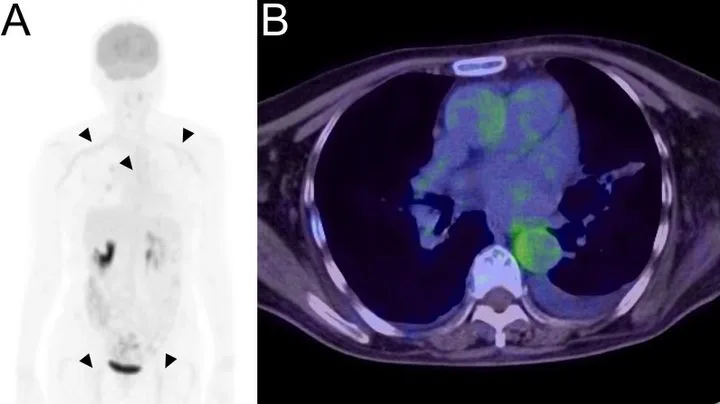
RET-fusion lung adenocarcinoma responding to pralsetinib and bevacizumab

Patient Info: Anonymized, Male, 50s | Stage IV

Biomarkers: KIF13A-RET fusion

Metastatic Site: pleura

He had 27 months of disease-free survival on pralsetinib before pleural and nodal recurrence. After bevacizumab was added, imaging showed reduction of the pleural lesion and mediastinal nodes and circulating tumor DNA became undetectable in December 2023.

PubMed Central
OutcomeResponding Well
A patient, who was diagnosed with Stage IV Lung AdenocarcinomaLung Cancer

EGFR-mutated lung cancer treated with osimertinib during tuberculosis therapy

Patient Info: Anonymized, female, 70+ | Stage IV

Biomarkers: EGFR exon 19 deletion; acquired EGFR T790M mutation

Metastatic Site: pleura, left axillary lymph node

Osimertinib maintained a partial response throughout 9 months of tuberculosis treatment, with no new abdominal or brain lesions. By the end of tuberculosis treatment, she was more than 7 years from her original lung-cancer diagnosis.

PubMed Central
OutcomeResponding Well
A patient, who was diagnosed with Stage IV Small Cell Lung CancerLung Cancer

EGFR-mutated lung cancer with later small-cell transformation

Patient Info: Anonymized, male, 60s | Stage IV

Biomarkers: EGFR L858R mutation; acquired EGFR T790M mutation

Metastatic Site: pleura/chest wall, ribs, brain, meninges,…

Disease progressed through multiple lines of therapy with brain and meningeal involvement. He died in September 2021, more than 9 years after his original 2012 diagnosis.

PubMed Central
OutcomeIn Memory
A patient, who was diagnosed with Stage IV Lung AdenocarcinomaLung Cancer

More than five years with EGFR-mutated lung cancer and untreated brain metastases

Patient Info: Anonymized, female, 60s | Stage IV

Biomarkers: EGFR L858R mutation; acquired EGFR T790M mutation

Metastatic Site: brain, pleura

Zorifertinib produced partial responses in both brain and extracranial disease, with 3 years of progression-free survival and more than 4 years of intracranial control. By December 2023, she remained alive on aumolertinib with overall survival of more than 65 months, or 5+ years, from treatment start.

PubMed Central
OutcomeResponding Well
A patient, who was diagnosed with Stage IV Lung AdenocarcinomaLung Cancer

MET-Positive Metastatic Lung Cancer That First Appeared as a Breast Mass

Patient Info: Anonymized, Female, 70+ | Stage IV

Biomarkers: MET exon 14 skipping mutation; acquired MET and resistance mutations

Metastatic Site: breast, liver, right adrenal gland

Capmatinib produced a marked response across most disease sites at 3 months, but a right adrenal metastasis progressed by 6 months while other sites continued responding.

PubMed Central
OutcomeSetback / Progression
Niko, who was diagnosed with Stage IV Lung AdenocarcinomaLung Cancer

Stage IV ALK Lung Adenocarcinoma: Niko's Patient Story

Patient Info: Niko, Female | Stage IV

Biomarkers: ALK mutation/rearrangement

Metastatic Site: Lymph nodes; Brain

As of May 2024, Niko’s Stage IV ALK-positive lung adenocarcinoma was controlled on ALK-targeted therapy, with no brain lesion seen on follow-up MRI/PET-CT and active disease described as dormant/stable.

YouTube (ZH search)
OutcomeResponding Well
Jeff, who was diagnosed with Stage IV Non-Small Cell Lung CancerLung Cancer

Jeff

Patient Info: Jeff, Male | Stage IV

Biomarkers: EGFR exon 19 deletion

Metastatic Site: brain|bones|lymph nodes

The lung mass shrank, 5 brain lesions and the involved lymph node had no evidence of disease, and Jeff described his condition as stable while continuing osimertinib and bone-strengthening infusions.

Lung Cancer Research Foundation
OutcomeResponding Well
A patient, who was diagnosed with Stage IV Lung AdenocarcinomaLung Cancer

Stage IV BRAF-mutated lung adenocarcinoma responding to second-line chemo-immunotherapy

Patient Info: Anonymized, female, Under 40 | Stage IV

Biomarkers: BRAF exon 15 p.T599dup; PD-L1 5%

Metastatic Site: pleura, pericardium

After progression on BRAF/MEK-targeted therapy, second-line chemo-immunotherapy produced a partial response that was still ongoing after about 1 year of second-line treatment.

PubMed Central
OutcomeResponding Well
A patient, who was diagnosed with Stage IV Lung AdenocarcinomaLung Cancer

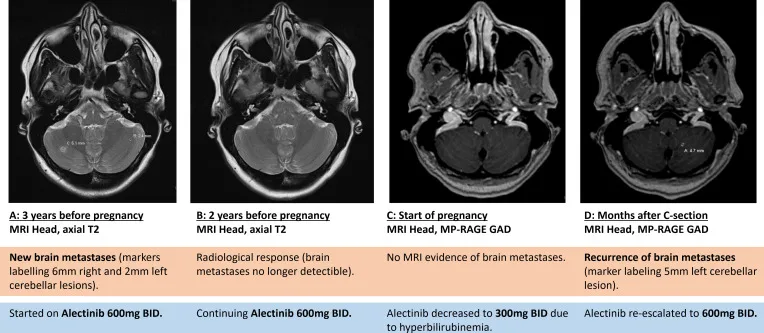
ALK-positive lung cancer treated with alectinib throughout pregnancy

Patient Info: Anonymized, Female | Stage IV

Biomarkers: ALK rearrangement / fusion-positive

Metastatic Site: pleura; liver; bone; brain

Alectinib produced a complete radiologic response and maintained intracranial control through pregnancy. She delivered a healthy infant at 37 weeks, with normal development at 26 months.

PubMed Central
OutcomeResponding Well