MSI High Colorectal Cancer: 24 Real Stories

24 stories match colorectal cancer and MSI high. 21 of them mention surgery.

Cindy, who was diagnosed with Stage IV Colorectal CancerColorectal Cancer

Stage IV MSI-High Colorectal Cancer: Cindy's Patient Story

Patient Info: Cindy Mette, Female | Stage IV

Biomarkers: MSI-high

Cindy’s tumor responded to the experimental Werner helicase inhibitor, with falling CEA levels and radiologic response. The response was continuing in 2025 while she remained on the clinical trial.

MD Anderson
OutcomeResponding Well
JJ, who was diagnosed with Stage IV Colorectal CancerColorectal Cancer

Stage IV MSI-High Colorectal Cancer: JJ's Patient Story

Patient Info: JJ, Male, Under 40 | Stage IV

Biomarkers: Lynch syndrome; microsatellite instability

Metastatic Site: Abdominal wall; lymph nodes throughout the body

At the latest scan, the main abdominal tumor remained stable. JJ had completed 126 rounds of chemo-immunotherapy and continued treatment every 3 weeks; small lung nodules were being watched but were not confirmed as metastases.

The Patient Story
OutcomeStable Disease / Ongoing Therapy
A patient, who was diagnosed with Stage IV Colorectal AdenocarcinomaColorectal Cancer

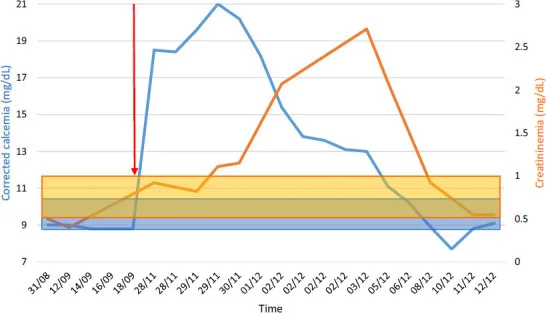
Stage IV MSI-H KRAS-mutant colorectal adenocarcinoma: severe pembrolizumab-associated hypercalcemia resolved with steroids and zoledronic acid

Patient Info: Anonymized, Female, 70+ | Stage IV

Biomarkers: KRAS G12xa mutation; MSI-H; BRAF wild type; NRAS wild type; PTH low-normal

Metastatic Site: liver

After the second pembrolizumab dose, severe hypercalcemia and electrolyte abnormalities resolved with high-dose glucocorticoids, zoledronic acid, and supportive care; cancer response was not yet described.

PubMed Central
OutcomeCare Ongoing
Tommy, who was diagnosed with Stage III Colorectal CancerColorectal Cancer

Stage III MSI-High Colorectal Cancer: Tommy's Survivor Story

Patient Info: Tommy Allen, Male, 50s | Stage III

Biomarkers: MSI-high; Lynch syndrome

As of November 2025, Tommy was cancer-free 5 years after pembrolizumab, ileostomy, Whipple procedure, partial colectomy, and ileostomy closure for Stage III MSI-high colon cancer with Lynch syndrome.

MD Anderson
OutcomeCancer-Free / NED
A patient, who was diagnosed with Stage III Colorectal AdenocarcinomaColorectal Cancer

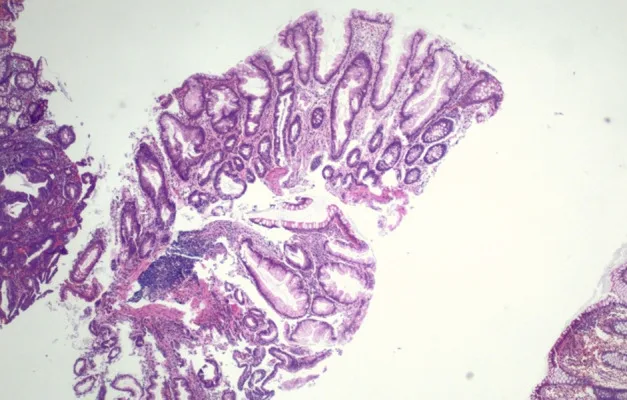
Lynch syndrome bifocal colon cancer: complete pathological remission after sintilimab

Patient Info: Anonymized, Male, 40s | Stage III

Biomarkers: Lynch-associated colon cancer with MSI-H and KRAS/NRAS/BRAF wild type; tumor markers were low or near normal.

As of April 2025, pathology after proximal colectomy showed tumor regression grade 0 with complete pathological remission, and follow-up found no recurrence or metastasis.

PubMed Central
OutcomeCancer-Free / NED
A patient, who was diagnosed with Stage III Colorectal AdenocarcinomaColorectal Cancer

Stage III MSI-H/dMMR ascending colon cancer: complete response to pembrolizumab without surgery

Patient Info: Anonymized, Female, 70+ | Stage III

Biomarkers: dMMR/MSI-H with high TMB, BRAF, BRCA2 mutation, KRAS/NRAS wild-type, HER2-negative, PD-L1-negative; Lynch testing negative.

After 10 months of pembrolizumab, PET/CT showed complete metabolic response and colonoscopy biopsies were negative for malignancy; she continued nonoperative management after declining surgery.

PubMed Central
OutcomeCancer-Free / NED
Sophie, who was diagnosed with Stage IV Colorectal CancerColorectal Cancer

Sophie: Stage IV Colorectal Cancer

Patient Info: Sophie, Female | Stage IV

Biomarkers: BRAF mutation; MSI

Metastatic Site: Liver; lymph nodes; other torso lesions

As of August 2024, Sophie had been declared cancer-free after Stage IV BRAF-mutated/MSI bowel cancer responded to nivolumab/ipilimumab-based immunotherapy, with PET imaging and liver surgery biopsy showing no cancerous cells.

The Patient Story
OutcomeCancer-Free / NED
Sophie, who was diagnosed with Stage IV Colorectal CancerColorectal Cancer

Stage IV BRAF Colorectal Cancer: Sophie's Survivor Story

Patient Info: Sophie, Female | Stage IV

Biomarkers: BRAF-mutated; MSI / microsatellite instability

Metastatic Site: liver; lymph nodes including neck

As of June 2024, Sophie had been off treatment for nearly 3 years and described herself as currently cancer-free after surgery, chemotherapy, immunotherapy, and liver surgery showing no cancer cells.

The Patient Story
OutcomeCancer-Free / NED
Stephanie, who was diagnosed with Colorectal CancerColorectal Cancer

MSI-High Colorectal Cancer: Stephanie's Patient Story

Patient Info: Stephanie Dobson, Female, Under 40

Biomarkers: MSI-high; Lynch syndrome

The rectal tumor was shrinking on immunotherapy and early treatment-related fatigue was improving.

Dana-Farber
OutcomeResponding Well
A patient, who was diagnosed with Colorectal AdenocarcinomaColorectal Cancer

Pembrolizumab produced a complete response in unresectable dMMR colon cancer

Patient Info: Anonymized, female, 70+

Biomarkers: dMMR/MSI-H; MLH1 loss; MSH2 loss; RAS/BRAF wild type; MLH1 promoter hypermethylation

Surgery found a pathological complete response with no residual cancer in the colon or 58 lymph nodes, and follow-up showed no relapse.

PubMed Central
OutcomeCancer-Free / NED
A patient, who was diagnosed with Colorectal AdenocarcinomaColorectal Cancer

Pembrolizumab enabled complete response and surgery for unresectable dMMR colon cancer

Patient Info: Anonymized, male, 60s

Biomarkers: dMMR/MSI-H; MLH1 loss; PMS2 loss; BRAF mutation; MLH1 promoter hypermethylation

The surgical specimen showed a pathological complete response with no residual cancer and 0 of 43 lymph nodes involved, and follow-up showed no relapse.

PubMed Central
OutcomeCancer-Free / NED
A patient, who was diagnosed with Stage IV Colorectal AdenocarcinomaColorectal Cancer

Pembrolizumab and surgery for metastatic dMMR colorectal cancer with major response

Patient Info: Anonymized, female, 50s | Stage IV

Biomarkers: dMMR/MSI-H; MLH1 loss; PMS2 loss; BRAF/RAS wild type; RET::NCOA4 fusion; MLH1 promoter hypermethylation

Metastatic Site: non-regional lymph nodes

Surgery showed a major pathological response with less than 10% viable tumor. Pembrolizumab was restarted after surgery, and no relapse had been documented.

PubMed Central
OutcomeCare Ongoing
A patient, who was diagnosed with Stage IV Colorectal AdenocarcinomaColorectal Cancer

Pembrolizumab led to complete response before surgery for metastatic dMMR colon cancer

Patient Info: Anonymized, male, 70+ | Stage IV

Biomarkers: dMMR/MSI-H; MLH1 loss; PMS2 loss; BRAF mutation; heterozygous MUTYH p. pathogenic variant

Metastatic Site: liver

The 2023 liver resection showed a pathological complete response with no residual tumor, and he entered follow-up without additional therapy.

PubMed Central
OutcomeCancer-Free / NED
A patient, who was diagnosed with Colorectal AdenocarcinomaColorectal Cancer

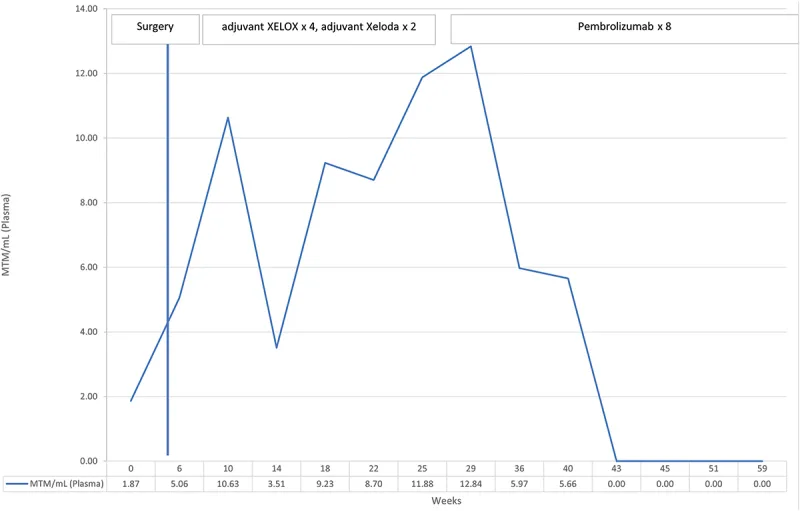
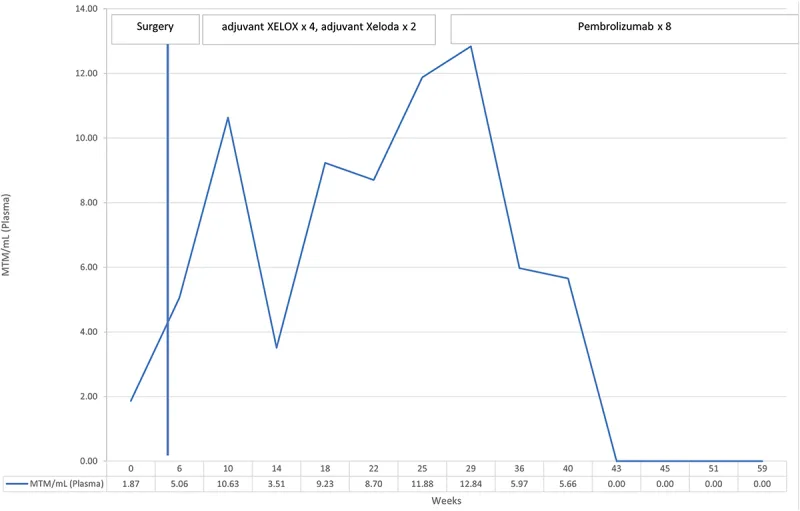
Colorectal cancer: using a blood test (ctDNA) to guide immunotherapy after surgery

Patient Info: Anonymized, Male, 40s

Biomarkers: dMMR/MSI-H; pathogenic germline MLH1 c.1459C>T consistent with Lynch syndrome; postoperative ctDNA rose during chemotherapy and became near-undetectable on pembrolizumab

He continued pembrolizumab with no evidence of disease on interval CT and near-undetectable ctDNA. Grade 1 thyroiditis was monitored without treatment interruption.

PubMed Central
OutcomeIn Treatment
A patient, who was diagnosed with Colorectal AdenocarcinomaColorectal Cancer

Colorectal cancer: using a blood test (ctDNA) to guide immunotherapy after surgery — Case 1

Patient Info: Anonymized, Male, 50s

Biomarkers: KRAS ; TMB 11 mutations/Mb; loss of MLH1 and PMS2; dMMR/MSI-H; germline multigene panel negative; ctDNA positive after surgery and chemotherapy

Pembrolizumab cleared ctDNA within about 3 months. After completing 1 year of immunotherapy, surveillance CT showed no evidence of disease and ctDNA remained negative.

PubMed Central
OutcomeCancer-Free / NED
Shannon, who was diagnosed with Stage II Colorectal CancerColorectal Cancer

Stage II MSI-High Colorectal Cancer: Shannon's Survivor Story

Patient Info: Shannon, Female, Under 40 | Stage II

Biomarkers: MSI-H; Lynch syndrome; MLH1 mutation

As of October 2023, Shannon had no recurrence described while approaching year 5 after Stage IIA colon cancer surgery and continued intensive Lynch syndrome surveillance.

The Patient Story
OutcomeCancer-Free / NED
Kelly, who was diagnosed with Stage III Colorectal CancerColorectal Cancer

Stage III MSI-High Colorectal Cancer: Kelly's Survivor Story

Patient Info: Kelly, Female, Under 40 | Stage III

Biomarkers: dMMR; MSI-H

As of September 2023, Kelly remained in remission after 9 dostarlimab immunotherapy infusions for Stage III dMMR/MSI-H rectal cancer, avoiding the expected chemo/radiation/surgery pathway.

The Patient Story
OutcomeCancer-Free / NED
A patient, who was diagnosed with Stage IV Colorectal AdenocarcinomaColorectal Cancer

A young man with metastatic rectal cancer and inherited BRCA1 and MLH1 mutations

Patient Info: Anonymized, Male, Under 40 | Stage IV

Biomarkers: Germline BRCA1 c.4065_4068delTCAA and MLH1 c.232G>T mutations; tumor microsatellite instability-high; loss of MLH1 and PMS2 expression; elevated tumor mutational burden; loss of heterozygosity of wild-type MLH1.

Metastatic Site: liver

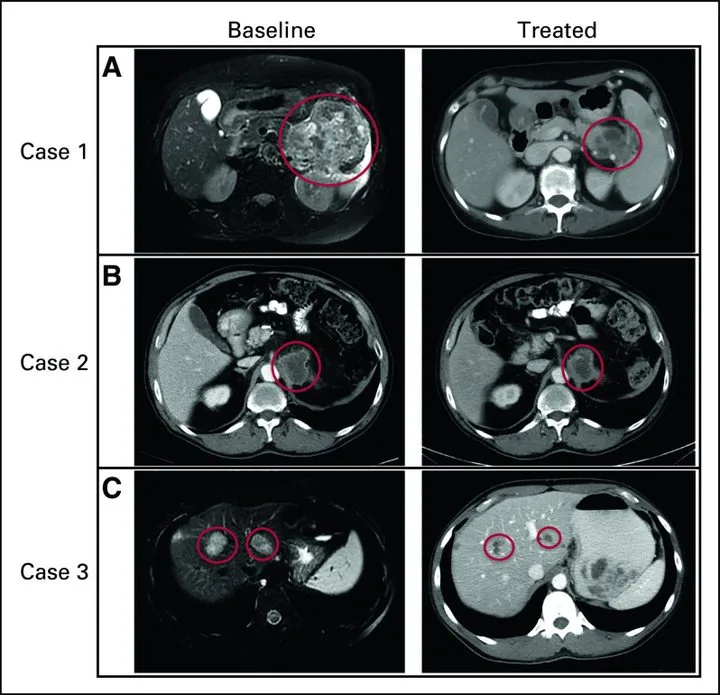
The rectal and liver tumors showed a partial response, no viable carcinoma was found in the resected liver lesions, and maintenance nivolumab continued without evidence of growth or recurrence.

PubMed Central
OutcomeResponding Well
Shannon, who was diagnosed with Stage II Colorectal CancerColorectal Cancer

Cancer Survivor Story: Colon Cancer (Lynch Syndrome)

Patient Info: Shannon, Female, Under 40 | Stage II

Biomarkers: Lynch syndrome; MSI-high / dMMR

As of May 2020, Shannon was considered cancer-free after surgery-only treatment for Stage IIA MSI-high/Lynch-associated colon cancer and remained on strict Lynch syndrome surveillance.

The Patient Story
OutcomeCancer-Free / NED
A patient, who was diagnosed with Colorectal AdenocarcinomaColorectal Cancer

Cecal cancer revealing Muir-Torre syndrome with an MSH2 mutation

Patient Info: Anonymized, female

Biomarkers: MSI-high; loss of MSH2 expression; truncating MSH2 mutation

A woman with multiple sebaceous tumors and a strong family history of colorectal cancer was found to have MSI-high cecal cancer and an MSH2 mutation consistent with Muir-Torre syndrome.

PubMed Central
OutcomeNot reported