Hormone Therapy for Breast Cancer: 454 Real Stories

454 stories match breast cancer and hormone therapy. 383 of them mention surgery.

A patient, who was diagnosed with Stage IV Breast CancerBreast Cancer

Stage 2 breast cancer: lump discovered at 61, successful treatment

Patient Info: Anonymized, Female, 60s | Stage IV

Biomarkers: Breast neuroendocrine tumor was ER/PR strongly positive, HER2 1+

Metastatic Site: lung, mediastinal lymph nodes, bone (ribs, spine,…

After Stage IIA primary breast neuroendocrine tumor treated with lumpectomy, sentinel lymph-node biopsy, radiation, and short-duration anastrozole, the patient developed metastatic recurrence about 2 years later, declined additional therapy, entered hospice, and died 1 month later.

PubMed Central
OutcomeIn Memory
A patient, who was diagnosed with Stage I Invasive Ductal CarcinomaBreast Cancer

Male breast cancer history complicated by suspected bone disease and later IgG-kappa multiple myeloma

Patient Info: Anonymized, Male, 60s | Stage I

Biomarkers: Breast cancer was ER/PR-positive and HER2-negative by FISH. Later workup showed IgG-kappa multiple myeloma with IgH rearrangement.

The patient achieved very good partial response after KBD and completed autologous hematopoietic stem cell transplantation with engraftment, but later died of a novel coronavirus infection.

PubMed Central
OutcomeIn Memory
A patient, who was diagnosed with Breast CancerBreast Cancer

Hormone receptor-positive breast cancer treated with pembrolizumab trial complicated by acquired lipodystrophy

Patient Info: Anonymized, Female, 40s

Biomarkers: HER2-negative breast cancer. Metabolic changes occurred during/after pembrolizumab.

As of December 2025, breast cancer treatment had included neoadjuvant chemotherapy/pembrolizumab, surgery, adjuvant pembrolizumab, and endocrine therapy; CT did not show recurrence during weight-loss evaluation, but she required ongoing metabolic care for pembrolizumab-associated acquired generalized lipodystrophy.

PubMed Central
OutcomeCare Ongoing
A patient, who was diagnosed with Breast AdenocarcinomaBreast Cancer

Breast cancer found during workup for progressive hearing loss and paraneoplastic cochleovestibulopathy

Patient Info: Anonymized, Female, 40s

Biomarkers: Breast cancer was ER ~100% and HER2 2+; CK/CK7/GATA3 supported breast origin. Neuronal autoantibodies were suspected but not identified.

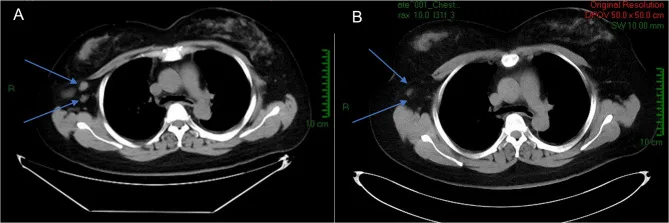
As of December 2025, she remained on endocrine therapy, and serial chest CT at 1-year follow-up showed reduction in right axillary lymph-node size; hearing outcome after cochlear implantation was not assessable.

PubMed Central
OutcomeCare Ongoing
A patient, who was diagnosed with Invasive Ductal CarcinomaBreast Cancer

Breast cancer history with incidental adult cystic nephroma: no renal recurrence after nephrectomy

Patient Info: Anonymized, Female, 40s

Biomarkers: Breast cancer biomarkers not reported. Kidney cystic nephroma showed PAX8 in epithelium and PR in stroma, ER absent.

As of December 2025, the kidney lesion had been resected and proven to be adult cystic nephroma rather than breast cancer metastasis, with no clinical symptoms or radiologic recurrence at 1-year follow-up.

PubMed Central
OutcomeSurvivorship / Completed Treatment
A patient, who was diagnosed with Stage IV Invasive Ductal CarcinomaBreast Cancer

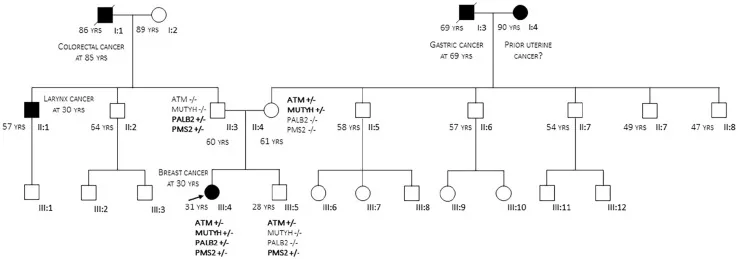
Young Woman With Breast Cancer and Four Inherited Cancer-Risk Variants

Patient Info: Anonymized, female, Under 40 | Stage IV

Biomarkers: ER 40%; PgR 60%; HER2 0; Ki-67 25%; germline pathogenic variants in ATM, PALB2, PMS2

Metastatic Site: brain

The breast cancer spread rapidly to the brain, and she died within a few months.

PubMed Central
OutcomeIn Memory
A patient, who was diagnosed with Stage IV Invasive Ductal CarcinomaBreast Cancer

Stage IV ER/PR-positive breast cancer with retinal vein and artery occlusion during endocrine-targeted therapy

Patient Info: Anonymized, Female, 50s | Stage IV

Biomarkers: ER 70%; PR 100%; HER2-negative; Ki-67 10%

Metastatic Site: bone (cranial vault, right first rib, sternum, D5, D6,…

As of November 2025, she continued care for Stage IV ER/PR-positive breast cancer with bone metastases while also managing severe left-eye retinal vascular occlusion and limited visual recovery.

PubMed Central
OutcomeCare Ongoing
A patient, who was diagnosed with Stage IV Breast AdenocarcinomaBreast Cancer

Synchronous EGFR-mutated lung adenocarcinoma and metastatic breast cancer: surgery and adjuvant therapy

Patient Info: Anonymized, Female, 50s | Stage IV

Biomarkers: Two cancers: lung adenocarcinoma with EGFR exon 19 deletion; breast cancer ER-positive, PR-low, HER2 non-amplified.

Metastatic Site: lung

Follow-up CT on 26 December 2024 showed no recurrence, with disease-free survival estimated at 27 months to 1 April 2025 while on icotinib and letrozole maintenance.

PubMed Central
OutcomeCancer-Free / NED
A patient, who was diagnosed with Stage III Invasive Ductal CarcinomaBreast Cancer

Recurrent breast cancer complicated by T-DXd-associated dermatomyositis and interstitial lung disease

Patient Info: Anonymized, Female, 40s | Stage III

Biomarkers: Initial tumor had weak ER/AR, PR-negative, HER2 0. Recurrence became ER/PR/AR-negative, HER2-low, PD-L1 CPS ~30.

The cancer progressed after adjuvant therapy and again after 6 cycles of gemcitabine/carboplatin. Trastuzumab deruxtecan was followed by dermatomyositis features and interstitial pneumonia, with symptoms worsening despite glucocorticoid treatment after continued exposure.

PubMed Central
OutcomeSetback / Progression
A patient, who was diagnosed with Stage 0 Invasive Ductal CarcinomaBreast Cancer

HER2-positive DCIS with KLHL11 encephalitis and pulmonary adenocarcinoma in situ

Patient Info: Anonymized, Female, Under 40 | Stage 0

Biomarkers: Breast DCIS was ER/PR positive and HER2 positive

After local breast treatment and later lung resection, she was asymptomatic on levetiracetam and tamoxifen, with no recurrent fever, seizures, or ataxia reported.

PubMed Central
OutcomeSurvivorship / Completed Treatment
Stacy, who was diagnosed with Stage III Invasive Lobular CarcinomaBreast Cancer

Stage III Invasive Lobular Carcinoma: Stacy's Survivor Story

Patient Info: Stacy, Female | Stage III

Biomarkers: Hormone receptor-positive; HER2-negative

Stacy completed chemotherapy, mastectomy, radiation and reconstruction. She remained under regular monitoring and was taking Letrozole as part of a planned 10-year course.

Lobular Breast Cancer Alliance

OutcomeCare Ongoing / Survivorship
A patient, who was diagnosed with Stage III Invasive Ductal CarcinomaBreast Cancer

Stage IIIC ER-positive male breast cancer: mastectomy, chemotherapy, radiation, tamoxifen and abemaciclib

Patient Info: Anonymized, Male, 40s | Stage III

Biomarkers: ER 90% positive; PR 60% positive; HER2 score 0; Ki-67 15%; BRCA1 and BRCA2 no pathogenic variants; CEA 2.4 ng/mL; CA15-3 13.6 U/mL

He remained on tamoxifen and dose-adjusted abemaciclib; annual follow-up imaging, including non-contrast CT, showed no local or distant relapse.

PubMed Central
OutcomeCancer-Free / NED
Dalitso, who was diagnosed with Stage IV Invasive Ductal CarcinomaBreast Cancer

Stage IV Invasive Ductal Carcinoma: Dalitso's Patient Story

Patient Info: Dalitso, Female, Under 40 | Stage IV

Metastatic Site: bone: spine, ribs, sternum, hip sockets

Dalitso had severe Stage IV bone-metastatic breast cancer with hospice-level symptoms and later bone progression, but subsequent imaging after a new treatment approach showed no visible active disease.

The Patient Story
OutcomeResponding Well
Marissa, who was diagnosed with Stage IV Invasive Lobular CarcinomaBreast Cancer

Stage IV BRCA2 Invasive Lobular Carcinoma: Marissa's Patient Story

Patient Info: Marissa, Female, Under 40 | Stage IV

Biomarkers: BRCA2 mutation; HER2-negative; PARP inhibitor resistance/progression described

Metastatic Site: bone marrow / bone; lymph nodes; skull lesions

Marissa’s breast tumors resolved after hormone blockers, but she remained in active treatment for Stage IV disease involving bone marrow/bone, lymph nodes, and skull lesions.

The Patient Story
OutcomeResponding Well
A patient, who was diagnosed with Stage II Breast CancerBreast Cancer

Stage IIA ER/PR-positive mucinous breast cancer: tamoxifen plus cryoablation with no recurrence

Patient Info: Anonymized, Female, 70+ | Stage II

Biomarkers: ER/PR strongly positive, HER2 negative; CA15-3 and CEA remained normal during follow-up.

At approximately 32 months after cryoablation, the treated area had decreased to a less distinct 0.7 cm scar-like region, with no evidence of recurrence in either breast, axillae, or distant sites.

PubMed Central
OutcomeCancer-Free / NED