Docetaxel for Breast Cancer: 84 Real Stories

84 stories match breast cancer and docetaxel. 75 of them mention surgery.

A patient, who was diagnosed with Stage IV Invasive Ductal CarcinomaBreast Cancer

MSI-High Metastatic Hormone-Receptor-Positive Breast Cancer Responding to Pembrolizumab

Patient Info: Anonymized, female, 40s | Stage IV

Biomarkers: ER-positive; PR-positive; HER2-negative; MSI-high; BRCA mutation-negative

Metastatic Site: bone, para-aortic lymph nodes, brain

Pembrolizumab produced marked improvement in metastatic bone and nodal disease. After 1 year it was stopped because of appetite loss; 8 months later she was symptom-free and back at work on endocrine therapy, although asymptomatic brain metastases were documented.

PubMed Central
OutcomeLiving With Cancer
A patient, who was diagnosed with Stage IV Invasive Lobular CarcinomaBreast Cancer

Invasive lobular breast cancer with isolated scalp metastasis: excision and endocrine therapy

Patient Info: Anonymized, Female, 50s | Stage IV

Biomarkers: Original breast tumor: ER-positive; PR-positive; scalp metastasis: CK7-positive; ER-positive; GCDFP-15 partially positive

Metastatic Site: scalp/skin

As of April 2024, she had no signs of recurrence in the breast or scalp and no distant metastasis after excision of the isolated scalp metastasis while continuing anastrozole.

PubMed Central
OutcomeCancer-Free / NED
Susana, who was diagnosed with Stage III Breast CancerBreast Cancer

Stage III Breast Cancer: Susana's Patient Story

Patient Info: Susana | Stage III

Treatment is ongoing with docetaxel chemotherapy, with surgery still being planned at the time described.

Our Cancer Stories
OutcomeCare Ongoing
A patient, who was diagnosed with Stage III Breast CancerBreast Cancer

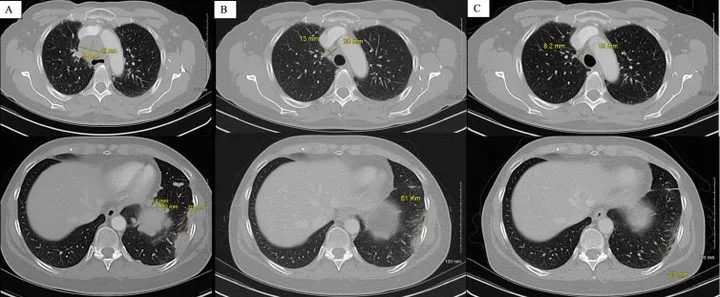
Stage IIIA breast cancer history with benign lipid pneumonia mimicking lung malignancy

Patient Info: Anonymized, Female, 40s | Stage III

Prior Stage IIIA breast cancer treatment was completed; a later suspicious lung lesion proved to be benign lipid pneumonia rather than recurrence or lung cancer, and she was asymptomatic 1 year after lobectomy with continued surveillance for new right-lung changes.

PubMed Central
OutcomeSurvivorship / Completed Treatment
A patient, who was diagnosed with Stage IV Invasive Ductal CarcinomaBreast Cancer

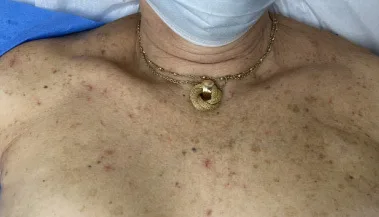
Metastatic HER2-Positive Breast Cancer With Treatment-Related Telangiectasias

Patient Info: Anonymized, female, 60s | Stage IV

Biomarkers: HER2-positive; initially ER-negative and PR-negative; metastatic disease weakly ER-positive and PR-negative; germline testing negative

Metastatic Site: left supraclavicular, mediastinal, axillary and…

Living with HER2-positive breast cancer for 9+ years since her 2014 diagnosis, including metastatic disease since 2017. She remained on reduced-dose tucatinib in 2023 while treatment-related telangiectasias improved after dose reduction and electrocautery.

PubMed Central
OutcomeLiving With Cancer
A patient, who was diagnosed with Stage IV Invasive Ductal CarcinomaBreast Cancer

Male Breast Cancer Controlled for Years Through Multiple Lines of Targeted and Endocrine Therapy

Patient Info: Anonymized, male, 70+ | Stage IV

Biomarkers: Initial tumor ER-positive, PR-positive, HER2-positive; later ER-positive, PR-negative, HER2-negative; PIK3CA mutation; germline BRCA1/2 negative

Metastatic Site: bones, pleura, liver

After a 5-year and 6-month disease-free interval, the cancer recurred in bone and later progressed to the pleura and liver. He died in January 2021, more than 13 years after his 2007 breast-cancer diagnosis.

PubMed Central
OutcomeIn Memory
A patient, who was diagnosed with Stage IV Breast CancerBreast Cancer

Metastatic breast cancer: three years in remission with T-DM1 (Kadcyla) treatment

Patient Info: Anonymized, Female | Stage IV

Biomarkers: HER2-positive; hormone receptor-positive

Metastatic Site: liver; spine / bone

T-DM1 produced a complete clinical and radiological response after 7 cycles, sustained for 41 months and 60 cycles while treatment continued.

PubMed Central
OutcomeComplete Response
Nikki, who was diagnosed with Stage III Inflammatory Breast CancerBreast Cancer

Stage III Inflammatory Breast Cancer: Nikki's Patient Story

Patient Info: Nikki, Female, 40s | Stage III

Biomarkers: Hormone-positive

As of July 2023, Nikki had completed 7 chemotherapy rounds for Stage III inflammatory hormone-positive breast cancer, had no sign of distant spread on PET scans, and was preparing for single mastectomy, radiation, and long-term hormone therapy.

The Patient Story
OutcomeCare Ongoing
Nikki, who was diagnosed with Stage III Inflammatory Breast CancerBreast Cancer

Stage III HER2-Positive Inflammatory Breast Cancer: Nikki's Patient Story

Patient Info: Nikki, Female | Stage III

Biomarkers: HER2-positive; hormone receptor-positive

After 7 chemotherapy rounds, imaging showed no visible disease, but the team expected possible microscopic cancer. A single mastectomy, radiation and long-term hormone therapy were still planned, so she was not classified as cancer-free.

The Patient Story
OutcomeCare Ongoing / Surgery Planned
Renée, who was diagnosed with Stage II Breast CancerBreast Cancer

Stage II Breast Cancer: Renée's Patient Story

Patient Info: Renée, Female, Under 40 | Stage II

Biomarkers: Not genetically inherited; breast cancer linked by her team to prior doxorubicin exposure and total-body radiation

As of February 2023, Renée described stable health, working treatments, good bloodwork, and ongoing long-term hormone/anti-cancer therapy; she did not consider herself cancer-free and preferred survivor/thriver language.

The Patient Story
OutcomeCare Ongoing
A patient, who was diagnosed with Stage IV Invasive Ductal CarcinomaBreast Cancer

Metastatic Breast Cancer Reclassified After NTRK Fusion Testing

Patient Info: Anonymized, Female | Stage IV

Biomarkers: ETV6-NTRK3 fusion detected in tissue but not circulating tumor DNA; ER low-positive; PR-negative; HER2-negative; PD-L1-negative; germline CHEK2 variant of uncertain significance

Metastatic Site: lungs and pleura; hilar, mediastinal and retrocaval…

After tissue testing identified an ETV6-NTRK3 fusion, treatment with larotrectinib produced a rapid clinical and radiological response.

PubMed Central
OutcomeResponding Well
Christal, who was diagnosed with Stage III Breast CancerBreast Cancer

Stage III Breast Cancer: Christal's Survivor Story

Patient Info: Christal Love, Female, Under 40 | Stage III

Biomarkers: hormone-positive; HER2-negative

After chemotherapy complications, surgery, radiation, later preventive removal of the other breast and reconstruction, Christal remained cancer-free for more than 5 years as of June 2022.

City of Hope
OutcomeCancer-Free / NED
Edith, who was diagnosed with Stage III Breast CancerBreast Cancer

Stage III Breast Cancer: Edith's Patient Story

Patient Info: Edith | Stage III

Edith said her breast cancer was in remission while she continued hormone therapy; she had also begun separate treatment for lymphoma.

Our Cancer Stories
OutcomeCare Ongoing
A patient, who was diagnosed with Invasive Lobular CarcinomaBreast Cancer

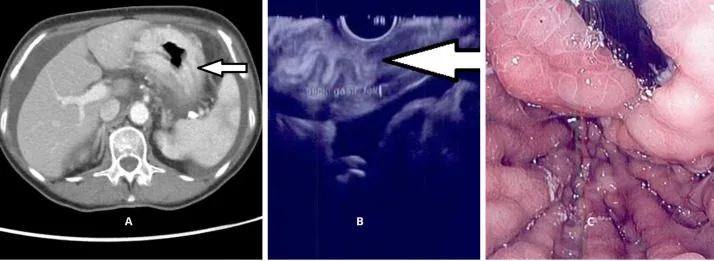
Breast cancer returned in the stomach and peritoneum after three years in remission

Patient Info: Anonymized, Female, 60s | Stage Metastatic/Advanced

Biomarkers: Initial breast tumor: ER 95%, PR 5%, HER2-negative, Nottingham grade 2. Metastatic peritoneal tumor: ER 80%

Metastatic Site: stomach; peritoneum

After metastatic breast cancer was confirmed in the stomach and peritoneum, she chose palliative care and inpatient hospice and died a few weeks later.

PubMed Central
OutcomeIn Memory
A patient, who was diagnosed with Invasive Ductal CarcinomaBreast Cancer

HER2-positive left breast cancer treated with trastuzumab and mastectomy

Patient Info: Anonymized, Female, 60s | Stage Metastatic/Advanced

Biomarkers: ER-negative; PR-negative; HER2/CerbB2 strongly positive; BRCA1/2 negative for known pathogenic variants; FANCA variant of uncertain significance.

She remained alive, asymptomatic, and disease-free while undergoing annual surveillance after treatment for the left HER2-positive breast cancer.

PubMed Central
OutcomeCancer-Free / NED
A patient, who was diagnosed with Breast CancerBreast Cancer

Silicone lymphadenopathy after treatment for recurrent triple-negative breast cancer

Patient Info: Anonymized, Female, 50s

Biomarkers: Triple-negative; BRCA1-negative; BRCA2-negative; latest recurrence Ki-67 60%–70%.

At the May 2020 follow-up, biopsies confirmed silicone-related lymph-node changes rather than cancer, and imaging showed no recurrent disease while six-monthly surveillance continued.

PubMed Central
OutcomeCancer-Free / NED
Alexandra, who was diagnosed with Stage III Breast CancerBreast Cancer

Stage III Breast Cancer: Alexandra's Patient Story

Patient Info: Alexandra, Female, 40s | Stage III

As of 2021, Alexandra was living with Stage III breast cancer and continuing chemotherapy after treatment with docetaxel, carboplatin, antibody drug conjugates, and tamoxifen.

Our Cancer Stories
OutcomeCare Ongoing
Cherie, who was diagnosed with Stage II Breast CancerBreast Cancer

Cherie's Stage 2 Breast Cancer Story After a Second Opinion

Patient Info: Cherie, Female, 50s | Stage II

Cherie described herself as being in remission while continuing hormone therapy. She remained concerned about relapse and used travel and painting to manage anxiety.

Our Cancer Stories
OutcomeCancer-Free / Remission
A patient, who was diagnosed with Invasive Lobular CarcinomaBreast Cancer

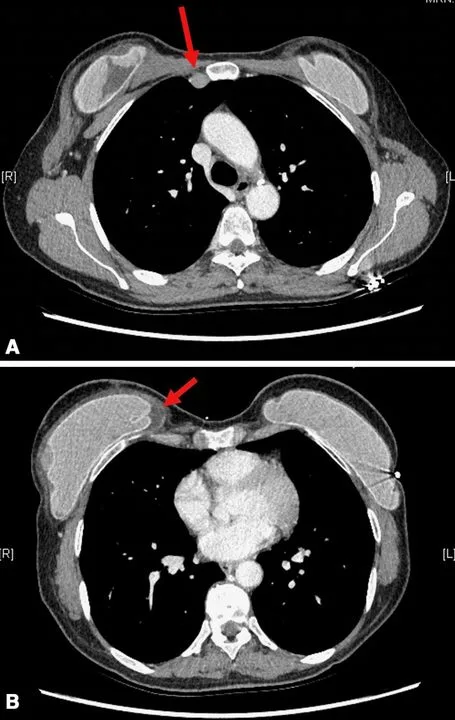
A New Breast Cancer Arising Beneath an Accessory Nipple

Patient Info: Anonymized, Female, 40s

Biomarkers: ER 5%; PR 5–10%; HER2-negative.

After chemotherapy, surgery, endocrine therapy, proton radiation, and later reconstruction revision, she was currently without evidence of disease.

PubMed Central
OutcomeCancer-Free / NED
A patient, who was diagnosed with Invasive Ductal CarcinomaBreast Cancer

Fatal Bowel Infection After the First Chemotherapy Cycle for Early HER2-Positive Breast Cancer

Patient Info: Anonymized, Female, 70+

Biomarkers: ER-positive; PR-positive; HER2-amplified

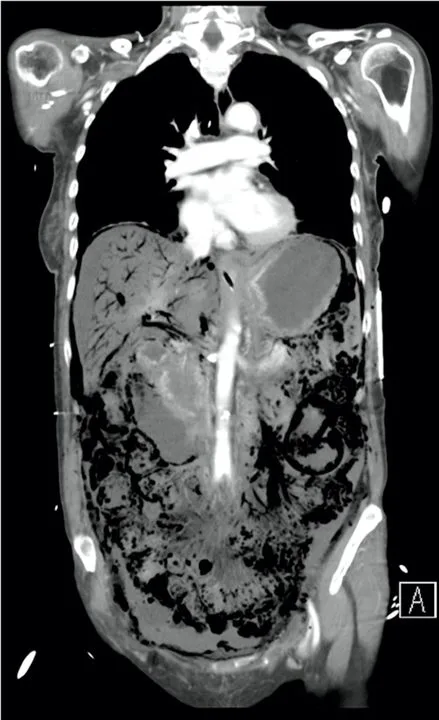
Nine days after the first TCH cycle, she developed fulminant febrile neutropenia and Clostridium septicum sepsis with extensive bowel ischaemia; despite emergency treatment and resuscitation, she died 4 hours after hospital arrival.

PubMed Central
OutcomeIn Memory