Cyclophosphamide: 142 Real Stories

142 stories match cyclophosphamide. 141 of them mention chemotherapy.

A patient, who was diagnosed with Stage IV Invasive Ductal CarcinomaBreast Cancer

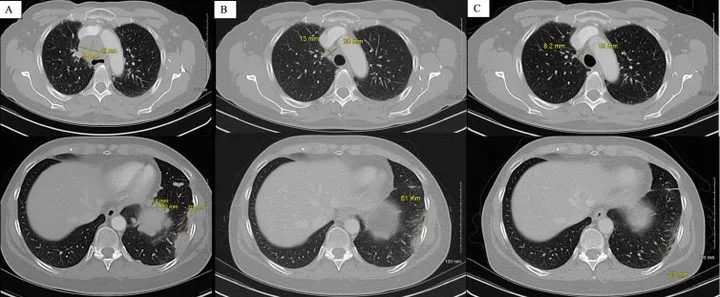
Metastatic Breast Cancer Reclassified After NTRK Fusion Testing

Patient Info: Anonymized, Female | Stage IV

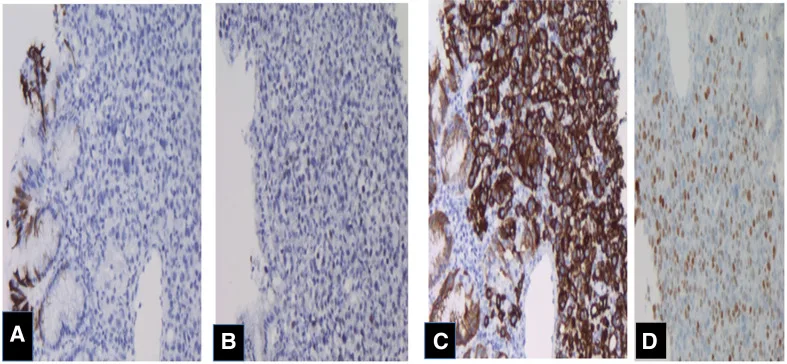
Biomarkers: ETV6-NTRK3 fusion detected in tissue but not circulating tumor DNA; ER low-positive; PR-negative; HER2-negative; PD-L1-negative; germline CHEK2 variant of uncertain significance

Metastatic Site: lungs and pleura; hilar, mediastinal and retrocaval…

After tissue testing identified an ETV6-NTRK3 fusion, treatment with larotrectinib produced a rapid clinical and radiological response.

PubMed Central
OutcomeResponding Well
A patient, who was diagnosed with Breast CancerBreast Cancer

Severe Esophageal Narrowing After Chemotherapy for Breast Cancer

Patient Info: Anonymized, female, 60s

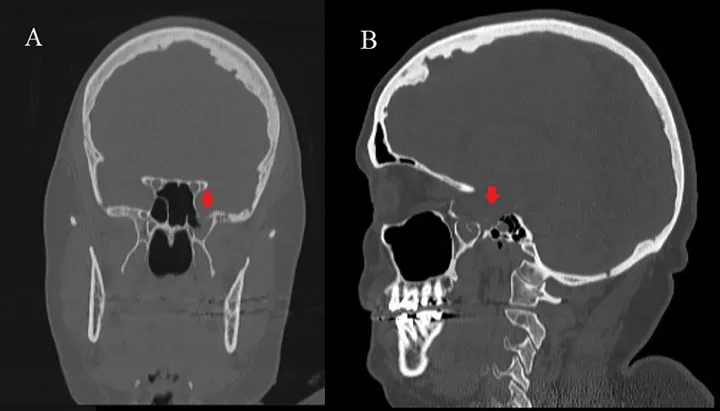
The breast tumor shrank slightly and was considered stable before mastectomy. Her major subsequent problem was persistent treatment-related esophageal narrowing that required nutritional support and later a removable esophageal stent.

PubMed Central
OutcomeNot reported
MB
Breast Cancer

Male breast cancer discovered after years of stiff-person syndrome

Patient Info: Anonymized, Male, 50s

Biomarkers: ER-positive; PR-positive; HER2-negative; anti-amphiphysin antibody positive at 1:64; hereditary cancer panel negative for pathogenic germline variants.

He completed curative-intent breast cancer treatment and reported substantial improvement in upper-body stiffness, although lower-extremity stiffness, cramps, and unsteadiness persisted.

PubMed Central
OutcomeNot reported
A patient, who was diagnosed with Invasive Lobular CarcinomaBreast Cancer

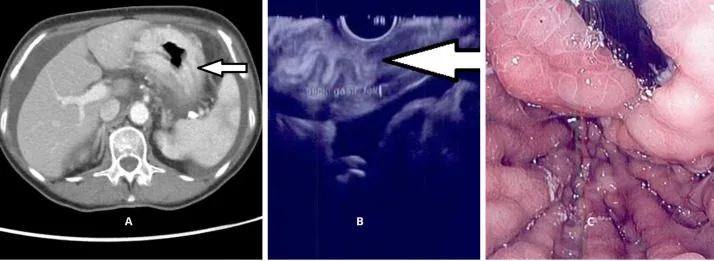
Breast cancer returned in the stomach and peritoneum after three years in remission

Patient Info: Anonymized, Female, 60s | Stage Metastatic/Advanced

Biomarkers: Initial breast tumor: ER 95%, PR 5%, HER2-negative, Nottingham grade 2. Metastatic peritoneal tumor: ER 80%

Metastatic Site: stomach; peritoneum

After metastatic breast cancer was confirmed in the stomach and peritoneum, she chose palliative care and inpatient hospice and died a few weeks later.

PubMed Central
OutcomeIn Memory
A patient, who was diagnosed with Breast CancerBreast Cancer

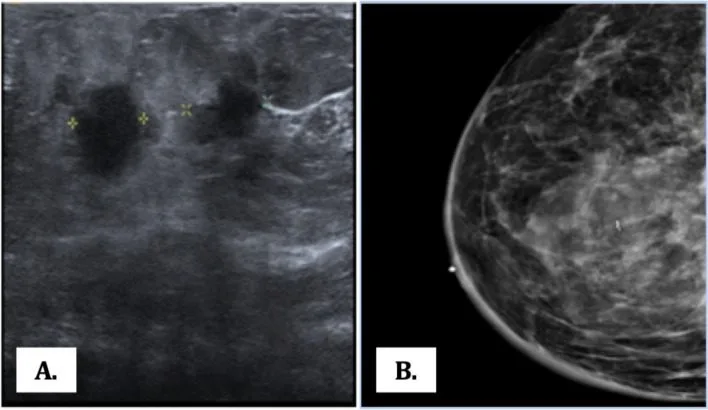
Silicone lymphadenopathy after treatment for recurrent triple-negative breast cancer

Patient Info: Anonymized, Female, 50s

Biomarkers: Triple-negative; BRCA1-negative; BRCA2-negative; latest recurrence Ki-67 60%–70%.

At the May 2020 follow-up, biopsies confirmed silicone-related lymph-node changes rather than cancer, and imaging showed no recurrent disease while six-monthly surveillance continued.

PubMed Central
OutcomeCancer-Free / NED
LA
Breast Cancer

Locally advanced male breast cancer associated with a pathogenic ATM variant

Patient Info: Anonymized, Male, 50s | Stage Metastatic/Advanced

Biomarkers: ER 100% positive; PR 100% positive; HER2-negative; Ki-67 30%; germline pathogenic ATM variant c.2921+1G>A.

Two years after diagnosis, he had an ECOG performance status of 0 and remained without signs of breast-cancer relapse or another primary cancer.

PubMed Central
OutcomeCancer-Free / NED
A patient, who was diagnosed with Stage IV Invasive Ductal CarcinomaBreast Cancer

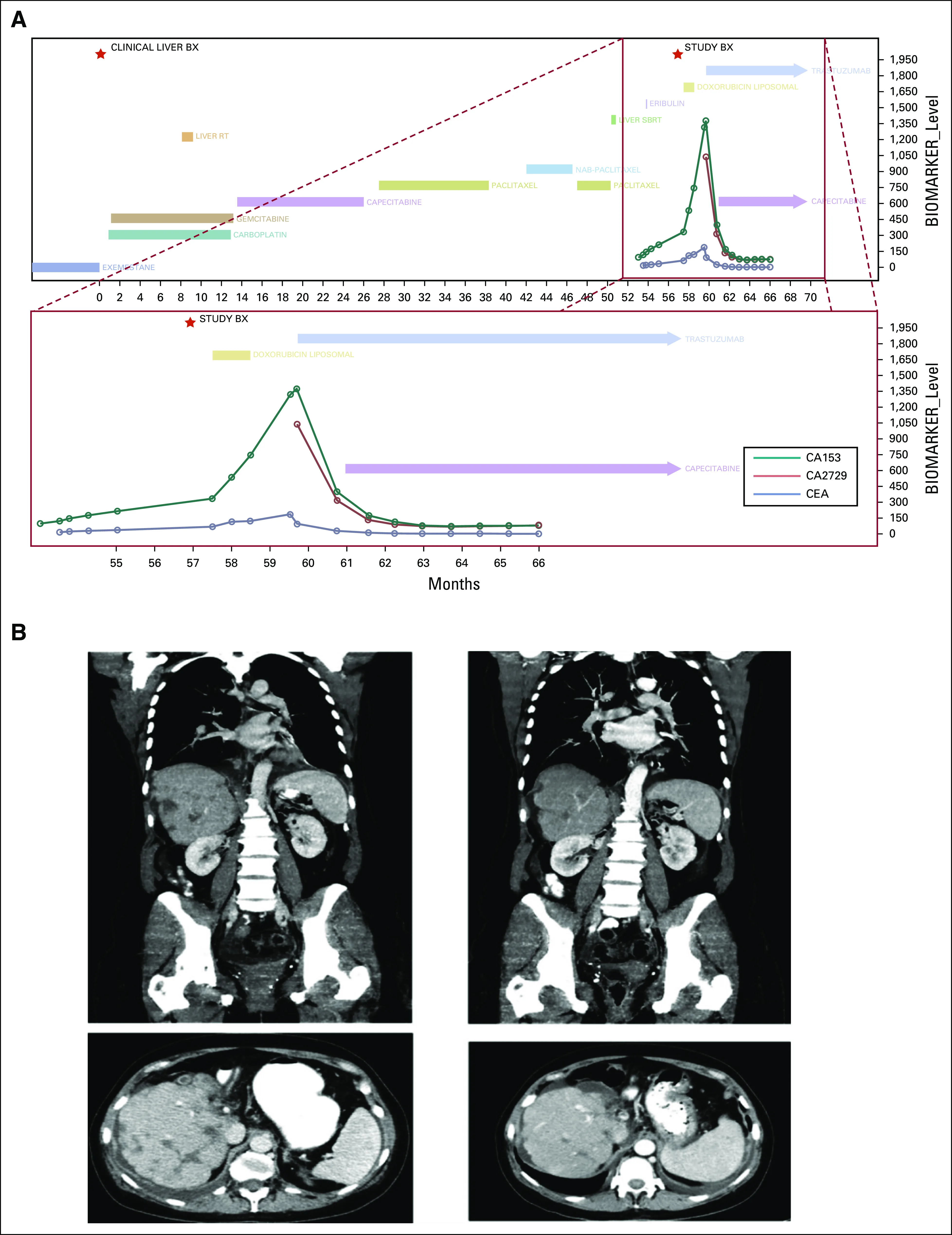
A durable response to trastuzumab in heavily pretreated metastatic breast cancer

Patient Info: Anonymized, Female, 60s | Stage IV

Biomarkers: Initial tumor ER-positive and PR-positive. Metastatic liver biopsy ER-negative and PR-negative with HER2 IHC 1+ and nonamplified. Later biopsy ER and PR weakly positive at 5%–10%, HER2 IHC 1+ and nonamplified, and ERBB3 p. with evidence of HER2/HER3 pathway activation.

Metastatic Site: lungs; hilar and mediastinal lymph nodes; liver; bone

She had ongoing benefit for more than 10 months on trastuzumab and capecitabine, with improved symptoms, lower tumor markers, and a confirmed partial response.

PubMed Central
OutcomeResponding Well
Cherie, who was diagnosed with Stage II Breast CancerBreast Cancer

Cherie's Stage 2 Breast Cancer Story After a Second Opinion

Patient Info: Cherie, Female, 50s | Stage II

Cherie described herself as being in remission while continuing hormone therapy. She remained concerned about relapse and used travel and painting to manage anxiety.

Our Cancer Stories
OutcomeCancer-Free / Remission
A patient, who was diagnosed with Stage IV Invasive Ductal CarcinomaBreast Cancer

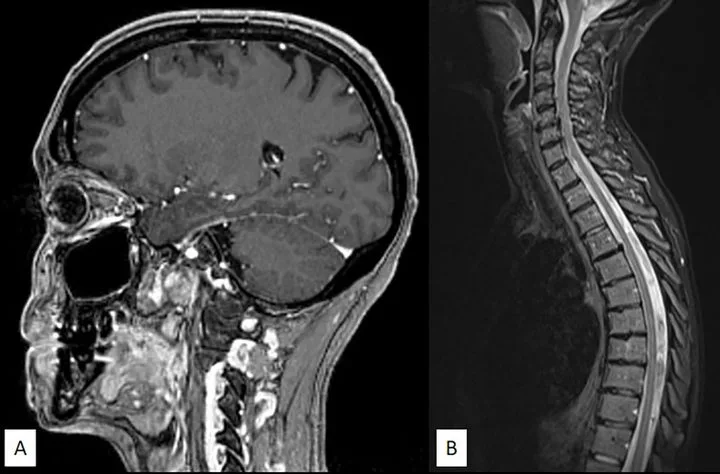
HER2-positive breast cancer diagnosed during pregnancy and later spread to bone and brain

Patient Info: Anonymized, Female, Under 40 | Stage IV

Biomarkers: Initial tumour: ER 0%, PR <1%, HER2 3+

Metastatic Site: bone (L3)|brain

After treatment and surveillance without new lesions, she developed a large symptomatic occipital brain metastasis 14 months after completing paclitaxel and radiation and died after rapid neurological deterioration.

PubMed Central
OutcomeIn Memory
A patient, who was diagnosed with Invasive Ductal CarcinomaBreast Cancer

Triple-Negative Breast Cancer Treated With Mastectomy and Chemotherapy

Patient Info: Anonymized, Female, 40s

Biomarkers: Triple-negative.

The later accessory-breast-tissue cancer was considered a separate new primary after a five-year interval, and she was currently without evidence of disease.

PubMed Central
OutcomeCancer-Free / NED
A patient, who was diagnosed with Invasive Lobular CarcinomaBreast Cancer

A New Breast Cancer Arising Beneath an Accessory Nipple

Patient Info: Anonymized, Female, 40s

Biomarkers: ER 5%; PR 5–10%; HER2-negative.

After chemotherapy, surgery, endocrine therapy, proton radiation, and later reconstruction revision, she was currently without evidence of disease.

PubMed Central
OutcomeCancer-Free / NED
A patient, who was diagnosed with Invasive Ductal CarcinomaBreast Cancer

HER2-Positive Breast Cancer Linked to a Rare Immune-Related Neurological Syndrome

Patient Info: Anonymized, Female, 40s

Biomarkers: HER2-positive in both foci; one focus ER-negative/PR-positive with Ki-67 45%; second focus ER-negative/PR-negative with Ki-67 35%; anti-Yo antibodies positive in serum and CSF; tumour-susceptibility gene panel negative

At 1 year, she had completed trastuzumab, continued tamoxifen, and had no evidence of recurrent breast cancer; intensive rehabilitation improved her mobility, although balance and right-sided neurological deficits persisted.

PubMed Central
OutcomeCancer-Free / NED
A patient, who was diagnosed with Stage IV Invasive Ductal CarcinomaBreast Cancer

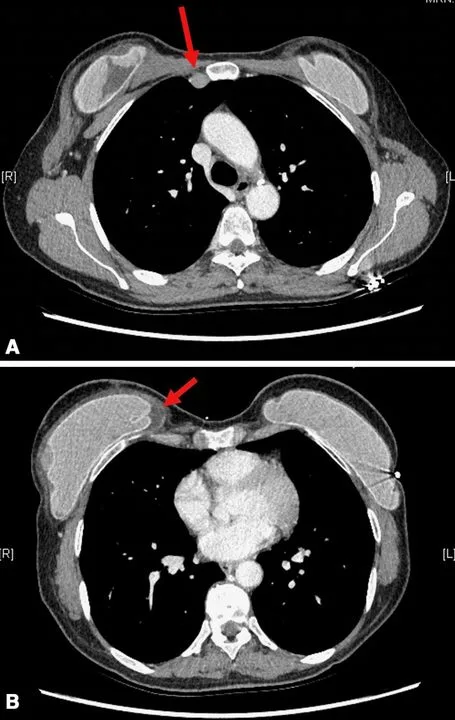
Recurrent Breast Cancer With a Benign-Appearing Chest-Wall Rash

Patient Info: Anonymized, Female | Stage IV

Biomarkers: Initial tumor: ER-positive; PR-negative; HER2-negative.

Metastatic Site: mediastinal lymph nodes

She had recurrent chest-wall and mediastinal metastatic disease; a later rash biopsy showed dermatitis rather than another skin recurrence.

PubMed Central
OutcomeLiving With Cancer
A patient, who was diagnosed with Stage IV Invasive Ductal CarcinomaBreast Cancer

Young woman with ductal breast cancer and bleeding gastric metastases

Patient Info: Anonymized, Female, Under 40 | Stage IV

Biomarkers: ER-positive; PR-negative; HER2-negative

Metastatic Site: pancreas|liver|kidney|stomach

After rapid progression to the pancreas, liver, kidney and stomach, she chose palliative care and died 1 month after presenting with gastrointestinal bleeding.

PubMed Central
OutcomeIn Memory
A patient, who was diagnosed with Stage I Invasive Lobular CarcinomaBreast Cancer

Early breast cancer followed 19 years later by a radiation-related breast sarcoma

Patient Info: Anonymized, Female, 70+ | Stage I

Biomarkers: Strongly ER-positive; strongly PR-positive.

The stage IA breast carcinoma remained disease-free for 19 years; a later right-breast mass was a separate radiation-induced sarcoma rather than recurrent carcinoma.

PubMed Central
OutcomeCancer-Free / NED
A patient, who was diagnosed with Stage III Invasive Ductal CarcinomaBreast Cancer

Dramatic chemotherapy response in stage IIIB triple-negative breast cancer

Patient Info: Anonymized, Female, 40s | Stage III

Biomarkers: ER-negative; PR-negative; HER2-negative; BRCA1-negative; BRCA2-negative; germline FLCN c.1285delC associated with Birt-Hogg-Dubé syndrome; tumor TP53 p.T150fs.

Eighteen months after surgery, she had no recurrence following a dramatic chemotherapy response, bilateral mastectomy, chest-wall radiation, and adjuvant capecitabine.

PubMed Central
OutcomeCancer-Free / NED
A patient, who was diagnosed with Ovarian CancerOvarian Cancer

Ovarian Wilms tumor with early abdominal recurrence

Patient Info: Anonymized, Female, Under 40

Biomarkers: WT1-positive; residual tumor MyoD1-positive

After 3 months of radiation and a further 3 months of chemotherapy, PET showed no FDG-avid malignancy.

PubMed Central
OutcomeCancer-Free / NED
Vanessa, who was diagnosed with Stage III Invasive Ductal CarcinomaBreast Cancer

Stage III Invasive Ductal Carcinoma: Vanessa's Survivor Story

Patient Info: Vanessa Sanders, Female, Under 40 | Stage III

As of November 2019, Vanessa had shown no evidence of disease for 15 years after clinical-trial chemotherapy, breast-conserving surgery and 6 weeks of radiation for Stage III invasive ductal breast cancer.

MD Anderson
OutcomeCancer-Free / NED
A patient, who was diagnosed with Stage III Invasive Ductal CarcinomaBreast Cancer

Nocardia Infection Mimicked Breast Cancer Lung Metastases

Patient Info: Anonymized, Female, 50s | Stage III

Biomarkers: ER-negative; PR-negative; HER2-positive.

The lung nodules resolved with antibiotics and proved infectious rather than metastatic; she remained in good health at the last follow-up in January 2019.

PubMed Central
OutcomeCancer-Free / NED
Margaret, who was diagnosed with Stage II Invasive Ductal CarcinomaBreast Cancer

Breast Cancer Survivor Story: Chemo, Double Mastectomy, Radiation, Reconstruction

Patient Info: Margaret, Female | Stage II

Biomarkers: Oncotype DX score reported around 16-18; genetic testing negative; specific inherited gene not named

As of June 2019, Margaret was in remission after Stage II IDC treated with double mastectomy, AC/Taxol chemotherapy, radiation, and reconstruction.

The Patient Story
OutcomeCancer-Free / NED