Chemotherapy: 1,904 Real Stories

1,904 stories match chemotherapy. 1,436 of them mention surgery.

A patient, who was diagnosed with Stage IV Invasive Ductal CarcinomaBreast Cancer

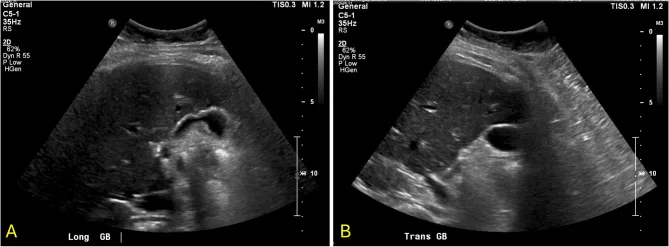
ER/PR/HER2-positive breast cancer: gallbladder, liver, lung, pleural, and bone metastases after incomplete adjuvant therapy

Patient Info: Anonymized, Female, 40s | Stage IV

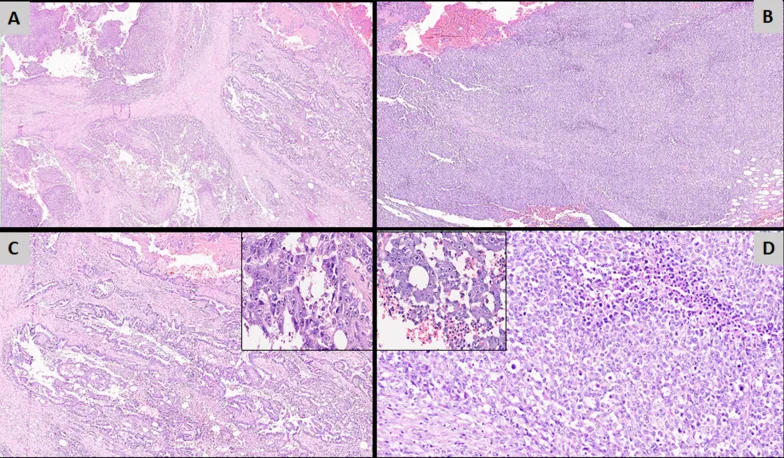
Biomarkers: Triple-positive breast cancer. Gallbladder metastasis kept ER/PR/HER2 positivity and Ki-67 >40%; markers supported breast origin.

Metastatic Site: gallbladder, liver, lung/pleura, bone

The patient died 3 years and 10 months after lumpectomy after metastatic ER/PR/HER2-positive breast cancer involved the gallbladder, liver, lungs/pleura, and bones following incomplete adjuvant therapy and loss to surveillance.

PubMed Central
OutcomeIn Memory
Basma, who was diagnosed with Stage II Breast CancerBreast Cancer

Stage II Breast Cancer: Basma's Patient Story

Patient Info: Basma, Female, 40s | Stage II

As of October 2025, Basma had completed chemotherapy, tumor-removal surgery, and radiation with clear results and full recovery, while continuing daily oral medication and an injection every 3 months for prevention.

Arabic Web Stories
OutcomeCare Ongoing
A patient, who was diagnosed with Stage III Breast CancerBreast Cancer

Stage IIIA triple-negative breast cancer with hypercalcemia from parathyroid adenoma

Patient Info: Anonymized, Female, 50s | Stage III

Biomarkers: ER-negative; PR-negative; HER2-negative

As of October 2025, evaluation for post-chemotherapy weakness showed no local breast cancer recurrence, no lymphadenopathy, and no bone metastases; hypercalcemia resolved after parathyroid adenoma removal while breast cancer care remained ongoing.

PubMed Central
OutcomeCare Ongoing
A patient, who was diagnosed with Stage II Invasive Ductal CarcinomaBreast Cancer

Stage IIA breast collision tumor: disease-free after surgery and adjuvant therapy

Patient Info: Anonymized, Female, 70+ | Stage II

Biomarkers: Two breast tumor parts were ER-positive; one HER2-low/negative and one HER2-positive. BRCA testing was suggested but not done.

Four years after surgery, she remained disease-free after mastectomy, adjuvant chemotherapy, HER2-targeted therapy, and endocrine therapy.

PubMed Central
OutcomeCancer-Free / NED
Starr, who was diagnosed with Stage IV Colorectal CancerColorectal Cancer

Stage IV Colorectal Cancer: Starr's Survivor Story

Patient Info: Starr, Female, 40s | Stage IV

Metastatic Site: Liver; peritoneum; lymph nodes

Starr had Stage IV colon cancer involving the liver, peritoneum, and lymph nodes. After chemotherapy, targeted therapy, and 2 surgeries in early 2025, she was told scans and circulating-tumor testing showed no visible cancer. As of October 2025, she described being in remission.

The Patient Story
OutcomeCancer-Free / NED
Kalei, who was diagnosed with Stage IV Colorectal CancerColorectal Cancer

The Cancer Spread One Year Later…

Patient Info: Kalei, Female, Under 40 | Stage IV

Metastatic Site: Lungs; bilateral lung nodules

Kalei initially had Stage II rectal cancer that responded to chemoradiation and IV chemotherapy without rectal surgery. In 2025, biopsy-proven lung metastasis changed the diagnosis to Stage IV. As of October 2025, she had undergone lung resections with clear margins and remained in ongoing follow-up rather than having a clearly stated NED status.

The Patient Story
OutcomeCare Ongoing
Evelyn, who was diagnosed with Stage IV Ovarian CancerOvarian Cancer

Stage IV Ovarian Cancer: Evelyn's Survivor Story

Patient Info: Evelyn, female | Stage IV

Biomarkers: HRD-positive

After chemotherapy and surgery, Evelyn reported an unremarkable final scan in May 2023 and then completed 2 years of Lynparza maintenance therapy guided by HRD-positive tumor testing.

National Ovarian Cancer Coalition
OutcomeCancer-Free / NED
Ali, who was diagnosed with Stage II Colorectal AdenocarcinomaColorectal Cancer

Stage II Colorectal Adenocarcinoma: Ali's Survivor Story

Patient Info: Ali, Female, Under 40 | Stage II

Ali completed 8 chemotherapy treatments after delivering her daughter by C-section at 35 weeks. A January 2025 scope and biopsy confirmed remission, and later MRI, scope, and colonoscopy surveillance were good. As of October 2025, she remained on close watch-and-wait surveillance.

The Patient Story
OutcomeCancer-Free / NED
A patient, who was diagnosed with Stage IV Non-Small Cell Lung CancerLung Cancer

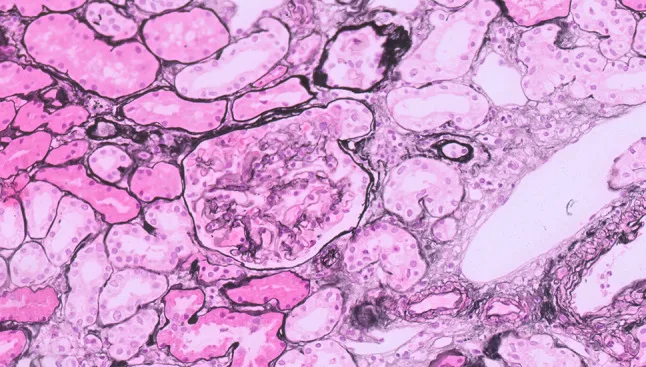
Stage IV lung adenocarcinoma with paraneoplastic nephrotic syndrome during pembrolizumab therapy

Patient Info: Anonymized, Male, 60s | Stage IV

Biomarkers: PD-L1 tumor proportion score >50% by Roche SP263 assay; KRAS exon 3 mutation; NGS/FISH did not identify targets for first-line targeted therapy

Metastatic Site: brain, bone

Pembrolizumab produced partial response and improved nephrotic-syndrome parameters, but bone metastases progressed in September 2022 and the right upper-lobe target lesion progressed 2 months later, leading to carboplatin plus pemetrexed.

PubMed Central
OutcomeSetback / Progression
A patient, who was diagnosed with Stage IV Colorectal CancerColorectal Cancer

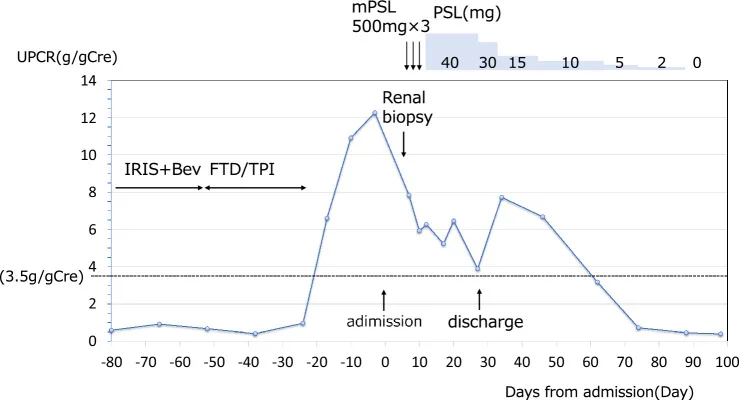
Kidney complication after switching colorectal cancer chemotherapy regimens

Patient Info: Anonymized, Male, 70+ | Stage IV

Metastatic Site: liver

The cancer had worsening liver metastases when FTD/TPI began. After treatment was stopped, steroid therapy resolved edema within 1 month and proteinuria returned to baseline 2.5 months after admission; the later cancer course was not established.

PubMed Central
OutcomeIn Treatment
A patient, who was diagnosed with Stage III Lung AdenocarcinomaLung Cancer

Stage IIIA lung adenocarcinoma: complete metabolic remission after chemoradiotherapy, complicated by radiation esophagitis

Patient Info: Anonymized, Male, 70+ | Stage III

Biomarkers: No molecular biomarkers reported

The primary lung lesion achieved complete metabolic remission after concurrent chemoradiotherapy, and radiation esophagitis/stricture improved with conservative management until swallowing returned to a normal diet by 16 months.

PubMed Central
OutcomeCancer-Free / NED
A patient, who was diagnosed with Stage IV Lung Squamous Cell CarcinomaLung Cancer

Stage IVA right lung squamous cell carcinoma: partial response complicated by camrelizumab-related pneumonitis and pulmonary bullae

Patient Info: Anonymized, Male, 70+ | Stage IV

Biomarkers: Squamous lung cancer marker profile: P40/CK5/6 positive, TTF-1/Napsin A negative. CEA/CYFRA tumor markers were elevated. PD-L1 not reported.

Metastatic Site: suspected pleural involvement / right pleural effusion

The cancer had a partial response to albumin-bound paclitaxel, carboplatin, and camrelizumab; camrelizumab was stopped after suspected immune-related pneumonitis, pulmonary embolism, and reversible pulmonary bullae, which improved after methylprednisolone was resumed.

PubMed Central
OutcomeResponding Well
Karin, who was diagnosed with Breast CancerBreast Cancer

Breast Cancer: Karin's Patient Story

Patient Info: Karin, Female, 50s

As of September 2025, Karin was living with recurrent incurable breast cancer, felt healthy and fit, and had chosen mastectomy with reconstruction, ovary removal, anti-hormone therapy, and complementary therapies after recurrence.

Leben mit Krebs (CH)
OutcomeLiving With Cancer
A patient, who was diagnosed with Stage IV Colorectal AdenocarcinomaColorectal Cancer

Stage IV sigmoid colon cancer: recurrence after FOLFOX, hepatectomy, and colectomy

Patient Info: Anonymized, Male, 60s | Stage IV

Biomarkers: Mismatch repair proficient; microsatellite stable; KRAS wild-type; BRAF wild-type; CEA 3.8 ng/mL at diagnosis

Metastatic Site: liver, lung

As of September 2025, metastatic sigmoid colon cancer had recurred in the lungs and remnant liver after initial FOLFOX, hepatectomy, and colectomy, requiring FOLFIRI plus cetuximab.

PubMed Central
OutcomeSetback / Progression
A patient, who was diagnosed with Stage IV Gastric CancerGastric Cancer

Aggressive SMARCA4-deficient gastric cancer with rapid liver metastases after surgery

Patient Info: Anonymized, Female, 70+ | Stage IV

Biomarkers: SMARCA4 loss; SMARCA4 frameshift mutation

Metastatic Site: liver

Multiple liver metastases appeared within 1 week after surgery. She received 1 chemotherapy cycle but could not continue because of poor condition and was transferred for hospice care.

PubMed Central
OutcomeSetback / Progression
Emily, who was diagnosed with Stage IV Lung CancerLung Cancer

Stage IV EGFR Lung Cancer: Emily's Patient Story

Patient Info: Emily, Female, 40s | Stage IV

Biomarkers: EGFR mutation

Metastatic Site: Right lung; right 8th rib; sacrum; pancreas; brain

Emily had Stage IV EGFR-mutated lung cancer treated with daily targeted therapy, 4 rounds of chemotherapy, and later radiation. As of September 2025, she felt well and described being almost/basically in remission, but her cancer remained treatable rather than curable and she continued daily targeted therapy.

The Patient Story
OutcomeResponding Well
Lauren, who was diagnosed with Stage IV Non-Small Cell Lung CancerLung Cancer

Stage IV HER2-Positive Non-Small Cell Lung Cancer: Lauren's Patient Story

Patient Info: Lauren, Female, Under 40 | Stage IV

Biomarkers: HER2 mutation

Metastatic Site: Bones/ribs/shoulder; liver

As of September 2025, after about 4 months of targeted therapy, Lauren reported better quality of life, resolved bone pain, improved liver pain, improved liver enzymes, and manageable infusion-week side effects.

The Patient Story
OutcomeResponding Well
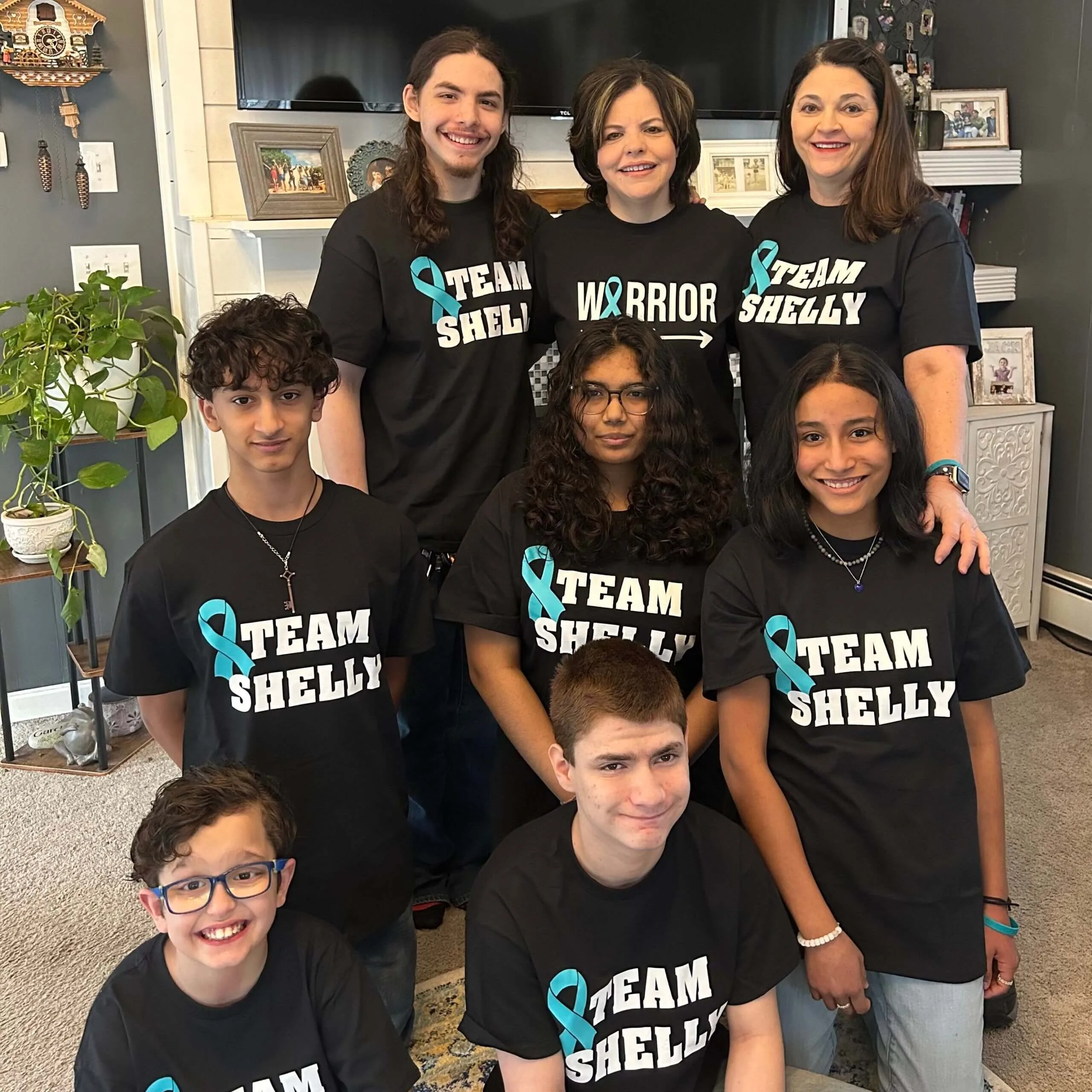
Shelly, who was diagnosed with Stage III Ovarian CancerOvarian Cancer

Stage III Ovarian Cancer: Shelly's Patient Story

Patient Info: Shelly Sepulveda, Female, 40s | Stage III

Living with recurrent ovarian cancer and receiving weekly intravenous chemotherapy after a brief remission.

Dana-Farber
OutcomeCare Ongoing
Jackson, who was diagnosed with Stage IV Colorectal CancerColorectal Cancer

Stage IV BRAF Colorectal Cancer: Jackson's Patient Story

Patient Info: Jackson, Male, Under 40 | Stage IV

Biomarkers: BRAF mutation

Metastatic Site: Liver; peritoneal wall

Jackson had Stage IV BRAF-mutated colon cancer with extensive liver disease and later confirmed peritoneal-wall tumors. His treatment response was strong, with about 90% of liver disease estimated gone, but he remained on active treatment with possible future HIPEC evaluation. As of September 2025, he was responding well but not cancer-free.

The Patient Story
OutcomeResponding Well