Paclitaxel for Triple-Negative Breast Cancer: 56 Real Stories

56 stories match breast cancer, triple-negative and paclitaxel. 52 of them mention surgery.

A patient, who was diagnosed with Invasive Ductal CarcinomaBreast Cancer

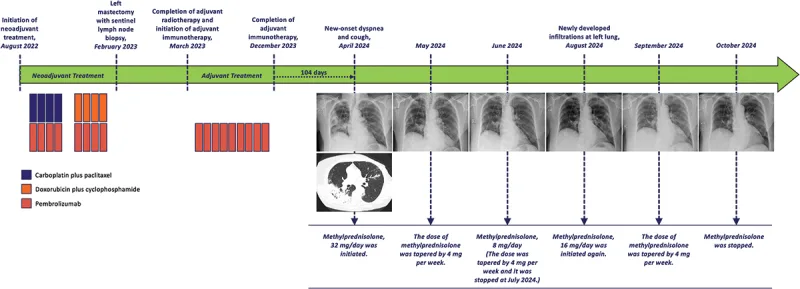
Lung inflammation from pembrolizumab immunotherapy returned months after stopping treatment

Patient Info: Anonymized, Female, 70+

Biomarkers: Estrogen receptor-negative; progesterone receptor-negative; HER2-negative

Surgery confirmed a pathologic complete response, and she remained in breast-cancer remission during routine follow-up after treatment for recurrent pembrolizumab-related pneumonitis.

PubMed Central
OutcomeCancer-Free / NED
Maggie, who was diagnosed with Stage IV Breast CancerBreast Cancer

Stage IV Triple-Negative Breast Cancer: Maggie's Survivor Story

Patient Info: Maggie, Female | Stage IV

Biomarkers: ER-negative; PR-negative; HER2-negative

Metastatic Site: lungs, lymph nodes; possible liver

Diagnosed in 2022 with de novo Stage IV triple-negative breast cancer involving the lungs and lymph nodes, with possible liver involvement. After entering a chemotherapy/immunotherapy clinical trial, she reported being cancer-free / no evidence of disease for well over 1 year as of February 2025.

The Patient Story
OutcomeCancer-Free / NED
Chance, who was diagnosed with Stage II Breast CancerBreast Cancer

Facing Triple-Negative Breast Cancer: Chance’s Story

Patient Info: Chance, Female, Under 40 | Stage II

Biomarkers: ER-negative; PR-negative; HER2-negative; BRCA1 mutation

As of February 2025, Chance described follow-up after Stage II BRCA1-associated triple-negative breast cancer and stated that she did not currently have cancer, while continuing close surveillance.

The Patient Story
OutcomeCancer-Free / NED
Kelly, who was diagnosed with Stage III Breast CancerBreast Cancer

Stage III Triple-Negative Breast Cancer: Kelly's Survivor Story

Patient Info: Kelly, Female, Under 40 | Stage III

Biomarkers: Triple-negative breast cancer; no inherited cancer gene mutation found.

As of February 2025, Kelly identified as a Stage IIIC triple-negative breast cancer survivor after neoadjuvant chemotherapy, double mastectomy with reconstruction, and radiation, and was using her experience to support others through TNBC Thrivers.

The Patient Story
OutcomeSurvivorship / Completed Treatment
A patient, who was diagnosed with Breast CancerBreast Cancer

Stage IIIC triple-negative breast cancer with pembrolizumab-related HLH/DIC and pathologic complete response

Patient Info: Anonymized, Female, Under 40

Biomarkers: Triple-negative/HR-negative breast cancer with germline BRCA1 pathogenic mutation. HLH/DIC episode had high IL-6

Surgery confirmed ypT0ypN0 pathologic complete response after neoadjuvant carboplatin, paclitaxel, and pembrolizumab, and she remained recurrence-free while being monitored without additional cancer-directed treatment.

PubMed Central
OutcomeCancer-Free / NED
MB
Breast Cancer

Metastatic breast cancer with receptor evolution: sequential endocrine, immunotherapy, CDK4/6, and antibody-drug conjugate treatment

Patient Info: Anonymized, Female, 50s | Stage IV

Biomarkers: Markers changed over time: initial tumor ER-positive/HER2-negative; local recurrence triple-negative/HER2-low; pleural fluid ER-negative.

Metastatic Site: mediastinal lymph nodes, pleura; pulmonary nodules…

More than 7 years after diagnosis, she remained on sequential systemic therapy for metastatic breast cancer, with at least a partial response 3 months after starting sacituzumab govitecan for presumed triple-negative pleural disease.

PubMed Central
OutcomeResponding Well
A patient, who was diagnosed with Stage IV Breast CancerBreast Cancer

Breast Cancer Recurrence in the Small Intestine and Bone More Than 5 Years After Diagnosis

Patient Info: Anonymized, Female, 50s | Stage IV

Biomarkers: Initial ER-positive, PR-positive, HER2-negative; metastatic lesion ER-negative, PR-negative, triple negative

Metastatic Site: small intestine, bone, right fallopian tube

More than 5 years after her December 2018 diagnosis, she was alive at 1-year follow-up after metastatic recurrence, with multiple bone metastases still present.

PubMed Central
OutcomeLiving With Cancer
A patient, who was diagnosed with Stage III Breast CancerBreast Cancer

Triple-negative breast cancer: partial response to TAC chemotherapy

Patient Info: Anonymized, Female, 70+ | Stage III

Biomarkers: Triple-negative breast cancer with EGFR positivity and high Ki-67; BRCA1 staining was positive by IHC.

After 1 cycle of TAC chemotherapy, the large ulcerated breast tumor shrank enough for surgery. Radical mastectomy with adjacent flap transfer achieved clear margins and no nodal metastatic cancer; she was recovering at home while awaiting planned postoperative AC-T chemotherapy.

PubMed Central
OutcomeCare Ongoing
A patient, who was diagnosed with Stage IV Breast CancerBreast Cancer

Triple-negative breast cancer: partial response to immunotherapy combination

Patient Info: Anonymized, Female, 40s | Stage IV

Biomarkers: Initial tumor: ER-negative; PR-negative; HER2-negative; Ki-67 >80%

Metastatic Site: left lung, neck lymph nodes, mediastinal lymph nodes

Metastatic triple-negative breast cancer had a partial response after 9 months of pembrolizumab plus MK-4830, with reduced tumor burden, decreased lung and mediastinal metastases, and no new metastatic lesions; immunotherapy continued after prednisone controlled a grade 2 lichenoid eruption.

PubMed Central
OutcomeResponding Well
A patient, who was diagnosed with Stage IV Invasive Ductal CarcinomaBreast Cancer

Triple-positive breast cancer: complete response to targeted therapy

Patient Info: Anonymized, Female, 40s | Stage IV

Biomarkers: Triple-positive breast cancer; SBDS variants present; no detected TP53 variant on MyeloSeq.

Metastatic Site: liver

Stage IV triple-positive breast cancer with liver metastasis achieved complete response after paclitaxel, trastuzumab, pertuzumab, and G-CSF support; complete response was maintained for 18 months after treatment initiation while on maintenance HER2-directed and endocrine therapy.

PubMed Central
OutcomeCancer-Free / NED
A patient, who was diagnosed with Stage IV Breast CancerBreast Cancer

Stage IV triple-negative breast cancer in remission: CBD and exercise for neuropathy

Patient Info: Anonymized, Female, 50s | Stage IV

Biomarkers: Triple-negative breast cancer. Blood and immune inflammation measures were tracked during neuropathy care.

Metastatic Site: liver

She was in remission for more than 5 years after Stage IV breast cancer with a solitary liver metastasis, while later managing chemotherapy-induced peripheral neuropathy with CBD and an exercise program that improved symptoms and function.

PubMed Central
OutcomeCancer-Free / NED
A patient, who was diagnosed with Stage II Invasive Ductal CarcinomaBreast Cancer

Stage 2 triple-negative breast cancer: pathologic complete response to chemotherapy

Patient Info: Anonymized, Female, 40s | Stage II

Biomarkers: Triple-negative breast cancer, with pathogenic PALB2 c.1451T>A variant found in blood/buccal/tumor testing.

As of May 2024, more than 1 year after surgery, she was well and free of cancer after neoadjuvant chemotherapy, mastectomy, reconstruction, and preventive adnexectomy.

PubMed Central
OutcomeCancer-Free / NED
Allison, who was diagnosed with Stage I Breast CancerBreast Cancer

Stage I HR-Positive Breast Cancer: Allison's Survivor Story

Patient Info: Allison Tierney, Female | Stage I

Biomarkers: ER-positive; PR-positive; HER2-positive

As of May 2024, Allison had recently completed her cancer treatment journey and reported successful hair preservation with cold capping during Taxol chemotherapy.

The Patient Story
OutcomeSurvivorship / Completed Treatment
A patient, who was diagnosed with Stage III Invasive Ductal CarcinomaBreast Cancer

Triple-negative breast cancer and ovarian cancer treated with chemotherapy and PARP inhibitor

Patient Info: Anonymized, Female, 40s | Stage III

Biomarkers: Germline pathogenic BRCA2 c.6468_6469del; breast tumor triple-negative

As of April 2024, 6-week follow-up after breast and nodal radiation was unremarkable, erythema had resolved, and no breast, chest wall, respiratory, or axillary abnormality was found; longer-term control was not reported.

PubMed Central
OutcomeCare Ongoing
Allison, who was diagnosed with Stage II Invasive Ductal CarcinomaBreast Cancer

Stage II HR-Positive Invasive Ductal Carcinoma: Allison's Patient Story

Patient Info: Allison Tierney, Female | Stage II

Biomarkers: ER-positive; PR-positive; HER2-positive; CHEK2 mutation; BRCA1/2 negative

As of March 2024, Allison had completed Taxol and Herceptin treatment, was on tamoxifen planned for 10 years, and had moved to 6-month oncology follow-up. No metastatic disease or recurrence was reported.

YouTube — The Patient Story
OutcomeCare Ongoing
Chantal, who was diagnosed with Stage II Breast CancerBreast Cancer

Stage II Triple-Negative Breast Cancer: Chantal's Survivor Story

Patient Info: Chantal, Female, Under 40 | Stage II

Biomarkers: Triple-negative breast cancer; BRCA1 mutation

As of December 2023, Chantal reported that she did not currently have cancer, was followed by medical oncology every 3-4 months, and used Signatera testing because tumor markers were not reliable for her.

The Patient Story
OutcomeCancer-Free / NED
A patient, who was diagnosed with Stage I Breast CancerBreast Cancer

Five Years Without Breast Cancer Recurrence Despite a Markedly Elevated CA 15-3

Patient Info: Anonymized, female, 70+ | Stage I

Biomarkers: ER-positive, PR-positive, HER2-positive

Five years after her Stage I breast-cancer diagnosis, breast imaging and systemic evaluation showed no evidence of recurrence. The markedly elevated CA 15-3 was traced to a separate renal tumor and normalized after nephrectomy.

PubMed Central
OutcomeCancer-Free / NED
A patient, who was diagnosed with Stage IV Invasive Lobular CarcinomaBreast Cancer

Treatment-Refractory Triple-Negative Breast Cancer Treated With Tumor-Infiltrating Lymphocytes

Patient Info: Anonymized, female, Under 40 | Stage IV

Biomarkers: Germline BRCA1 pathogenic variant; later triple-negative phenotype

Metastatic Site: skin, lungs, bones

Tumor burden briefly decreased after tumor-infiltrating lymphocyte therapy, but she developed severe treatment complications followed by rapid cancer relapse and died about 1 month after the TIL/IL-2 treatment began.

PubMed Central
OutcomeIn Memory
Kelly, who was diagnosed with Stage III Breast CancerBreast Cancer

Kelly's Stage 3 Breast Cancer Story: “I’m Still Here & THRIVING!"

Patient Info: Kelly Thomas, Female, Under 40 | Stage III

Biomarkers: Initial triple-negative breast cancer; after surgery

As of August 2023, Kelly was 5 years from her Stage IIIC triple-negative breast cancer diagnosis with no recurrence reported.

The Patient Story
OutcomeCancer-Free / NED
Carol, who was diagnosed with Breast CancerBreast Cancer

BRCA1 Breast Cancer: Carol's Survivor Story

Patient Info: Carol Arnhart

Biomarkers: BRCA1 mutation

She had a complete pathologic response to breast chemotherapy and later reported no evidence of breast cancer.

MD Anderson
OutcomeCancer-Free / NED
Lucy, who was diagnosed with Breast CancerBreast Cancer

Triple-Negative Breast Cancer: Lucy's Survivor Story

Patient Info: Lucy E., Female, Under 40

Biomarkers: BRCA1 mutation; triple-negative breast cancer

As of January 2023, Lucy had been told she was all-clear/cancer-free after chemotherapy, had undergone double mastectomy with staged reconstruction planning, and was continuing close oncology reviews every 3-4 months.

The Patient Story
OutcomeCancer-Free / NED
A patient, who was diagnosed with Stage IV Invasive Ductal CarcinomaBreast Cancer

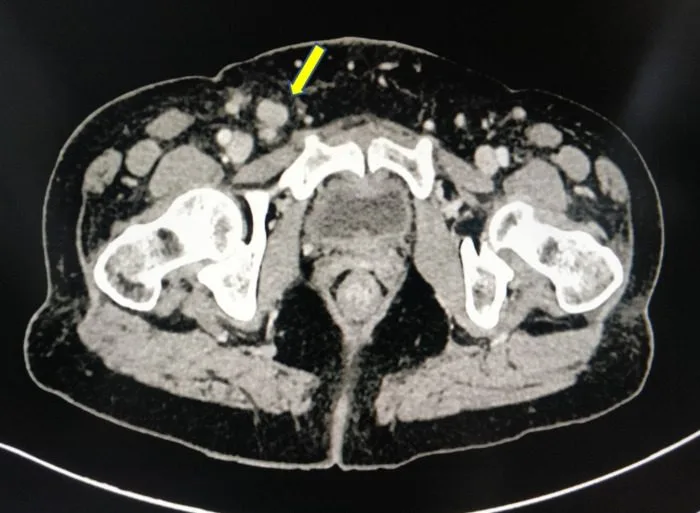
Triple-Negative Breast Cancer Recurring in Groin Lymph Nodes

Patient Info: Anonymized, Female | Stage IV

Biomarkers: ER-negative; PR-negative; HER2-negative

Metastatic Site: right inguinal lymph node; right iliac/pelvic lymph…

Her condition deteriorated after 3 cycles of palliative capecitabine. She developed vomiting, headache and seizures concerning for brain metastases and died about 4 months after the groin metastasis was detected.

PubMed Central
OutcomeIn Memory