Pembrolizumab for Breast Cancer: 25 Real Stories

25 stories match breast cancer and pembrolizumab. 24 of them mention chemotherapy.

Stephanie, who was diagnosed with Stage II Invasive Ductal CarcinomaBreast Cancer

Stage II BRCA1 Invasive Ductal Carcinoma: Stephanie's Patient Story

Patient Info: Stephanie Hargis, Female, Under 40 | Stage II

Biomarkers: ER-negative; PR-negative; HER2-negative; BRCA1 mutation

Stephanie had Stage II triple-negative breast cancer with BRCA1 mutation, then a local recurrence in April 2023 without distant spread; after surgery, chemotherapy, Keytruda, radiation, and Lynparza, she remained in ongoing post-recurrence treatment.

BreastCancer.org (ES)
OutcomeCare Ongoing
A patient, who was diagnosed with Stage II Breast CancerBreast Cancer

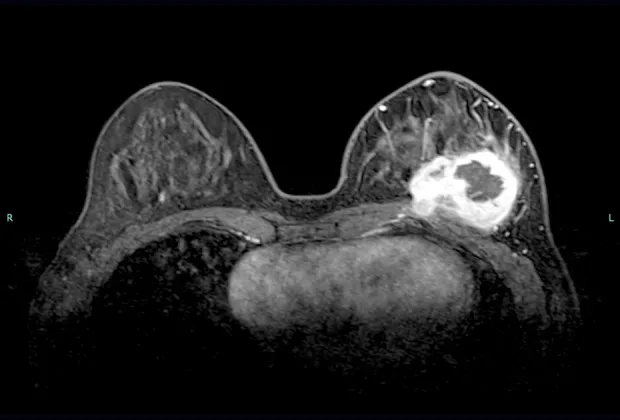
Stage IIA triple-negative neuroendocrine breast carcinoma with chemoimmunotherapy response

Patient Info: Anonymized, Female, 70+ | Stage II

Biomarkers: Triple-negative neuroendocrine breast carcinoma with PD-L1 CPS >=10, and reported germline BRCA1/2 mutation.

As of March 2025, 12 months after surgery, follow-up imaging and tumor-marker testing showed no local recurrence or distant metastasis, and she remained in good general condition.

PubMed Central
OutcomeCancer-Free / NED
A patient, who was diagnosed with Stage IV Breast CancerBreast Cancer

Stage IIB triple-negative metaplastic breast cancer with early metastatic recurrence: durable response to pembrolizumab-based therapy

Patient Info: Anonymized, Female, 50s | Stage IV

Biomarkers: Triple-negative metaplastic breast cancer with PD-L1 CPS 83.2, BRCA1/2 negative

Metastatic Site: lung, sternum

As of May 2026, she had more than 30 months of disease control after pembrolizumab-based therapy for early recurrent metastatic metaplastic breast cancer, with only mild residual sternal uptake and no disease progression.

PubMed Central
OutcomeResponding Well
A patient, who was diagnosed with Breast CancerBreast Cancer

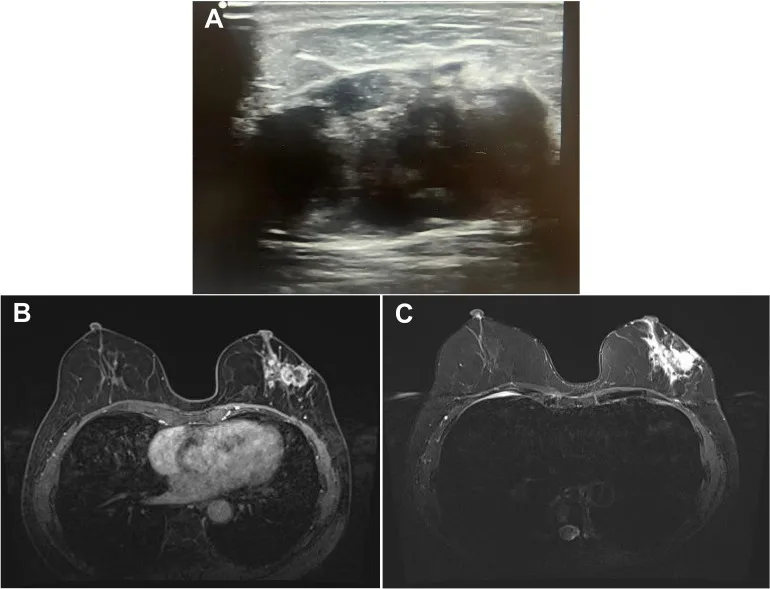
Triple-negative breast cancer diagnosed during pregnancy: remission

Patient Info: Anonymized, Female, Under 40

Biomarkers: ER-negative; PR-negative; HER2-negative

The patient remains in remission 30 months after surgery. Immune-related brachial plexopathy after treatment improved after steroids, IVIG, and plasmapheresis, with electrophysiologic resolution and near-complete strength and sensory recovery.

PubMed Central
OutcomeCancer-Free / NED
A patient, who was diagnosed with Stage III Breast CancerBreast Cancer

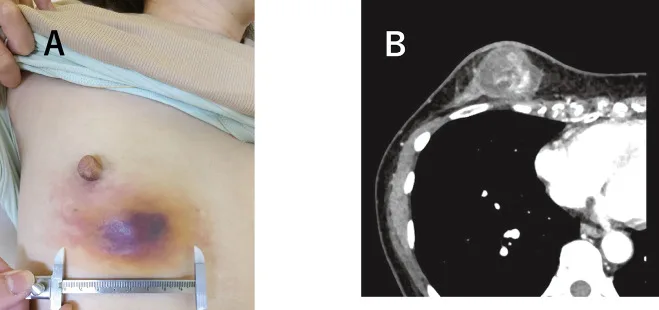
Stage IIIB triple-negative metaplastic breast cancer: urgent mastectomy and reconstruction after rapid progression on neoadjuvant therapy

Patient Info: Anonymized, Female, 40s | Stage III

Biomarkers: ER-negative; PR-negative; HER2-negative; nuclear grade 3

At 18-month follow-up, she was disease-free after urgent mastectomy, axillary dissection, flap/skin-graft reconstruction, resumed chemotherapy, and radiation for rapidly progressive triple-negative metaplastic breast cancer.

PubMed Central
OutcomeCancer-Free / NED
A patient, who was diagnosed with Stage III Breast CancerBreast Cancer

Stage 3 triple-negative breast cancer complicated by immunotherapy endocrine toxicity

Patient Info: Anonymized, Female, 40s | Stage III

Biomarkers: ER-negative; PgR-negative/PR-negative; HER2 0; Ki-67 70%; triple-negative breast cancer

After neoadjuvant therapy complicated by immune-related hypothyroidism, adrenal insufficiency, and suspected hypophysitis, surgery showed residual ypT1c ypN0 triple-negative disease. Pembrolizumab was stopped, adjuvant capecitabine was completed in June 2025, and endocrine replacement/follow-up continued.

PubMed Central
OutcomeCare Ongoing
A patient, who was diagnosed with Breast CancerBreast Cancer

Hormone receptor-positive breast cancer treated with pembrolizumab trial complicated by acquired lipodystrophy

Patient Info: Anonymized, Female, 40s

Biomarkers: HER2-negative breast cancer. Metabolic changes occurred during/after pembrolizumab.

As of December 2025, breast cancer treatment had included neoadjuvant chemotherapy/pembrolizumab, surgery, adjuvant pembrolizumab, and endocrine therapy; CT did not show recurrence during weight-loss evaluation, but she required ongoing metabolic care for pembrolizumab-associated acquired generalized lipodystrophy.

PubMed Central
OutcomeCare Ongoing
A patient, who was diagnosed with Stage III Breast CancerBreast Cancer

Triple-negative breast cancer with pathologic complete response after neoadjuvant chemoimmunotherapy complicated by immune toxicity

Patient Info: Anonymized, Female, 40s | Stage III

Biomarkers: ER-negative; PR-negative; HER2-negative

Left mastectomy on November 17 confirmed pathologic complete response, and 5-month follow-up showed no residual hepatic, dermatological, metabolic, or neurological sequelae from the treatment-related complications.

PubMed Central
OutcomeCancer-Free / NED
A patient, who was diagnosed with Invasive Ductal CarcinomaBreast Cancer

Triple-negative node-positive breast cancer with complete pathologic response and benign nodal nevi

Patient Info: Anonymized, Female, 50s

Biomarkers: Triple-negative breast cancer; BRCA testing negative. Axillary melanocytic cells looked benign.

Pathology showed complete response in the breast, no residual breast carcinoma in the sampled specimen, and axillary nodal melanocytic proliferations interpreted as benign nodal nevi rather than metastatic melanoma or breast carcinoma.

PubMed Central
OutcomeCancer-Free / NED
A patient, who was diagnosed with Invasive Ductal CarcinomaBreast Cancer

Synchronous triple-negative breast cancer and rectal adenocarcinoma complicated by hepatitis B reactivation

Patient Info: Anonymized, Female, 50s

Biomarkers: Triple-negative breast cancer with pathogenic BRCA1 mutation; hepatitis B reactivation occurred during treatment.

At 3-year follow-up, she remained healthy and disease-free after treatment for synchronous triple-negative breast cancer and mid-rectal adenocarcinoma, with hepatitis B reactivation controlled on entecavir.

PubMed Central
OutcomeCancer-Free / NED
Lynn, who was diagnosed with Stage III Breast CancerBreast Cancer

Stage III Triple-Negative Breast Cancer: Lynn's Survivor Story

Patient Info: Lynn Leiro, Female, Under 40 | Stage III

Biomarkers: ER-negative; PR-negative; HER2-negative

Lynn achieved complete response after breast cancer treatment and remission from therapy-related acute lymphocytic leukemia after CAR T cell therapy and bone marrow transplant; as of July 2025, nearly 1 year post-transplant, she was doing better and getting stronger.

City of Hope
OutcomeCancer-Free / NED
A patient, who was diagnosed with Stage III Breast CancerBreast Cancer

Stage IIIB triple-negative breast cancer: complete response after LVAD-supported neoadjuvant immunotherapy

Patient Info: Anonymized, Female, 60s | Stage III

Biomarkers: ER-negative; PR-negative; HER2-negative; Ki-67 95%; nuclear grade 3, triple negative

As of July 2025, breast cancer remained in remission 2.5 years after mastectomy, after neoadjuvant paclitaxel/carboplatin/pembrolizumab, surgery, radiation, and 1 year of adjuvant pembrolizumab.

PubMed Central
OutcomeCancer-Free / NED
A patient, who was diagnosed with Invasive Ductal CarcinomaBreast Cancer

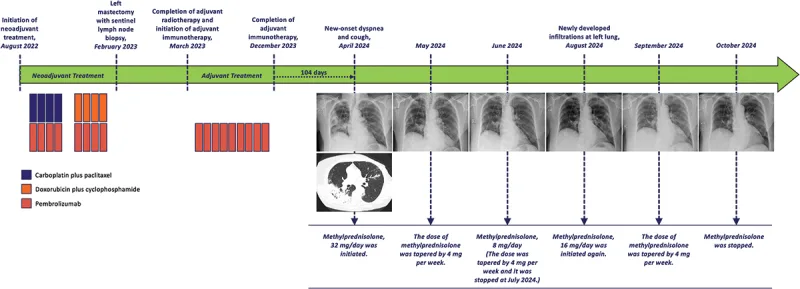
Lung inflammation from pembrolizumab immunotherapy returned months after stopping treatment

Patient Info: Anonymized, Female, 70+

Biomarkers: Estrogen receptor-negative; progesterone receptor-negative; HER2-negative

Surgery confirmed a pathologic complete response, and she remained in breast-cancer remission during routine follow-up after treatment for recurrent pembrolizumab-related pneumonitis.

PubMed Central
OutcomeCancer-Free / NED
A patient, who was diagnosed with Stage III Inflammatory Breast CancerBreast Cancer

Bilateral inflammatory breast cancer treated with pembrolizumab and surgery

Patient Info: Anonymized, Female, 40s | Stage III

Biomarkers: Bilateral breast cancers had different biology: right side ER/PR-positive and HER2 FISH-negative; left side triple-negative/HER2 1+.

As of March 2025, she had no recurrence 6 months after bilateral mastectomy, bilateral axillary lymph node dissection, thoracoabdominal flap closure, and planned postmastectomy radiation for Stage IIIC bilateral inflammatory breast cancer.

PubMed Central
OutcomeCancer-Free / NED
A patient, who was diagnosed with Breast CancerBreast Cancer

Stage IIIC triple-negative breast cancer with pembrolizumab-related HLH/DIC and pathologic complete response

Patient Info: Anonymized, Female, Under 40

Biomarkers: Triple-negative/HR-negative breast cancer with germline BRCA1 pathogenic mutation. HLH/DIC episode had high IL-6

Surgery confirmed ypT0ypN0 pathologic complete response after neoadjuvant carboplatin, paclitaxel, and pembrolizumab, and she remained recurrence-free while being monitored without additional cancer-directed treatment.

PubMed Central
OutcomeCancer-Free / NED
MB
Breast Cancer

Metastatic breast cancer with receptor evolution: sequential endocrine, immunotherapy, CDK4/6, and antibody-drug conjugate treatment

Patient Info: Anonymized, Female, 50s | Stage IV

Biomarkers: Markers changed over time: initial tumor ER-positive/HER2-negative; local recurrence triple-negative/HER2-low; pleural fluid ER-negative.

Metastatic Site: mediastinal lymph nodes, pleura; pulmonary nodules…

More than 7 years after diagnosis, she remained on sequential systemic therapy for metastatic breast cancer, with at least a partial response 3 months after starting sacituzumab govitecan for presumed triple-negative pleural disease.

PubMed Central
OutcomeResponding Well
TB
Breast Cancer

Triple-negative breast cancer in remission after chemotherapy and pembrolizumab

Patient Info: Anonymized, Female, 50s

Biomarkers: ER-negative; PR-negative; HER2-negative

Triple-negative breast cancer was in remission, with PET-CT showing no new primary or secondary tumors, while pembrolizumab-related adrenal insufficiency required ongoing endocrine management.

PubMed Central
OutcomeCancer-Free / NED
A patient, who was diagnosed with Stage IV Breast CancerBreast Cancer

Triple-negative breast cancer: partial response to immunotherapy combination

Patient Info: Anonymized, Female, 40s | Stage IV

Biomarkers: Initial tumor: ER-negative; PR-negative; HER2-negative; Ki-67 >80%

Metastatic Site: left lung, neck lymph nodes, mediastinal lymph nodes

Metastatic triple-negative breast cancer had a partial response after 9 months of pembrolizumab plus MK-4830, with reduced tumor burden, decreased lung and mediastinal metastases, and no new metastatic lesions; immunotherapy continued after prednisone controlled a grade 2 lichenoid eruption.

PubMed Central
OutcomeResponding Well
A patient, who was diagnosed with Stage II Breast CancerBreast Cancer

Stage II Breast Cancer Treatment Complicated by Scleroderma-Like Skin Changes

Patient Info: Anonymized, female, 50s | Stage II

Biomarkers: ER low-positive; PR-negative; HER2-negative

Her cancer remained stable during combination treatment. After morphea-like skin changes developed during therapy, treatment was modified and the skin condition improved 6 months after docetaxel was stopped.

PubMed Central
OutcomeCare Ongoing
A patient, who was diagnosed with Invasive Ductal CarcinomaBreast Cancer

Stage 3 breast cancer: pathologic complete response to neoadjuvant chemotherapy

Patient Info: Anonymized, Female, Under 40

Biomarkers: ER-positive, PR-negative, HER2-negative breast cancer with very high Ki-67. MammaPrint high-risk/basal type; hereditary testing negative.

Free of recurrence at last follow-up after neoadjuvant pembrolizumab plus chemotherapy, breast-conserving surgery with RCB-0/pathologic complete response, adjuvant radiation, and adjuvant pembrolizumab.

PubMed Central
OutcomeCancer-Free / NED
A patient, who was diagnosed with Stage II Invasive Ductal CarcinomaBreast Cancer

Stage 2 triple-negative breast cancer: pathologic complete response to chemotherapy

Patient Info: Anonymized, Female, 40s | Stage II

Biomarkers: Triple-negative breast cancer, with pathogenic PALB2 c.1451T>A variant found in blood/buccal/tumor testing.

As of May 2024, more than 1 year after surgery, she was well and free of cancer after neoadjuvant chemotherapy, mastectomy, reconstruction, and preventive adnexectomy.

PubMed Central
OutcomeCancer-Free / NED
A patient, who was diagnosed with Stage IV Invasive Ductal CarcinomaBreast Cancer

MSI-High Metastatic Hormone-Receptor-Positive Breast Cancer Responding to Pembrolizumab

Patient Info: Anonymized, female, 40s | Stage IV

Biomarkers: ER-positive; PR-positive; HER2-negative; MSI-high; BRCA mutation-negative

Metastatic Site: bone, para-aortic lymph nodes, brain

Pembrolizumab produced marked improvement in metastatic bone and nodal disease. After 1 year it was stopped because of appetite loss; 8 months later she was symptom-free and back at work on endocrine therapy, although asymptomatic brain metastases were documented.

PubMed Central
OutcomeLiving With Cancer